|
|
 |
|
30th Anniversary Celebrations
New Rural Reform Efforts
Political System Reform
Changing Lifestyle
In Foreigners' Eyes
Commentary
Enterprise Stories
Newsmakers
Photo Gallery
Video and Audio
Wang Wenlan Gallery
Slideshow
Key Meetings
Key Reform Theories
Development Blueprint
 Li Hong:
Export-driven road hits snag  Liu Shinan:
Teachers are not children's punching bags  Hong Liang:
Information is power for investors too  You Nuo:
A protracted war against recession  Wang Shi: Let imagination run riot
(china.org.cn)
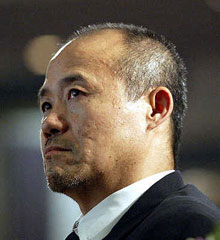
Updated: 2008-10-26 19:26 "Many people think the economic boom will fizzle out shortly, but I think it is just beginning," says Wang Shi, a real estate tycoon in China.
His character tallies with the spirit of our times: optimistic and active, adventurous and hardheaded, tough and curious. A peek into Wang's personal experience as a soldier, student, worker and businessman affords a revealing snapshot of modern China over last three decades. He admitted in an interview with the Xinmin Weekly earlier this year that in his wildest imagination he had never dreamed of what he now has achieved. An enigmatic outer world Shenzhen, a booming southern city, is the cradle of Wang's career as the founder of Vanke Group, a modern Chinese real estate giant. But if not for the governmental sponsored Shenzhen Special Economic Zone Wang Shi, would have led a very different life. Wang went to Shenzhen for the first time in 1978. At that time, he worked as a technician for a railway department in Guangzhou. He was sent to Shenzhen to be a project superintendent. For Shenzhen residents, he was simply an outsider; for him, Shenzhen was only an innocuous border city. With a work shed as his accommodation, a rancid place filled with a fetish smells from decomposed organic substances and flies buzzing about, Wang displayed lukewarm interest in his job. Being unable to speak the local dialect, Cantonese, the man felt alienated from the local people and so he secluded himself in his own room, reading and sleeping under the mosquito net. He recalls piece of border territory across from Hong Kong that had been brought under close guard for decades. Only with special permission could people approach or enter the checkpoint. Wang Shi was allowed to visit it because he worked for the state railway. Standing on the footbridge across from the Shenzhen side, he was able to discern the British national flag across the water. Thirty years ago, Hong Kong was still little known to the mainlanders. He also went to look around Zhongying Street, a route that straddled the border: one side belonged to China, the other, Hong Kong. Police stood guard along the street to prevent Chinese residents from slipping into the British territory. The Chinese side was empty and quiet. At that time, Shenzhen was just a border town lacking goods and materials. Thousands of people dreamed of fleeing the dreary and stagnant confines of Shenzhen; Hong Kong lured them. His project staff of mainly poor migrant workers from rural China took great risks when many attempted to sneak through the border to Hong Kong. As rampant as the stealthy crossing was, Wang Shi didn't get migration fever. He wanted to go out but not like a thief in the night. He wanted to sail out; in fact, to be a sailor was his dream. He studied English by himself, dreaming of traveling around the world. When Wang's project was completed, he was required to make an inspection tour every couple of months to Shenzhen. During one of these missions he sensed that the free-market philosophy had taken root in Shenzhen after the government designated it as one of four special economic zones in 1980. "At that time Shenzhen resembled a rolling machine with every part cranked up," he says. "I was intoxicated by such great change." It is just beginning In 1983, he was lured back to Shenzhen by the town's amazing development and there he embarked on his own business. "Before I returned, I decided to get a job at the Shenzhen SEZ Company which was then the most powerful company in the city at that time. But I had no idea what I could do,' Wang wrote in his autobiography. In the 1980s, Shenzhen was the main destination for burgeoning businessmen seeking opportunities and students fresh out of the colleges. Unlike other gold seekers who were driven by poverty, he held a decent job in a provincial department engaged in commerce. But soon the bureaucracy made the ambitious young man lose interest in the job. Years of hardship in his early life had made him able to deal with pressure. He recalls: "In 1983, my former colleagues dropped by and saw that I lived a hard life. But I thought otherwise, because my previous life in Xinjiang was even harder. Shenzhen had a beautiful natural landscape. My only headache was the mosquitoes." In the beginning of his career, he was a feedstuff dealer. Gradually he built up his business empire, the Vanke Group. "It never occurred to me or the media or the economists that things in China would have gone so well. Some think that the good days will be over soon, but I think it's just beginning," he comments. “In retrospect, I should have created higher expectations for my company." Wang explains that an entrepreneur should go through three phases: setting up an enterprise, developing it and then becoming a philanthropist. He is now committed to making his company a respected brand and his company is ready to shoulder its social responsibilities. He thinks that a company should not only tailor itself to the needs of current customers but also potential customers. 'Talking about my past doesn't stimulate me now because a more exciting age is just beginning," Wang asserts with the same determination he showed thirty years ago.

|
       |
主站蜘蛛池模板: 新田县| 广饶县| 威宁| 永平县| 侯马市| 上虞市| 华安县| 兰西县| 葵青区| 黎川县| 商都县| 盐池县| 泗洪县| 鹤山市| 临潭县| 潍坊市| 淮北市| 太保市| 尚义县| 宁津县| 夏津县| 鄂尔多斯市| 桑日县| 齐河县| 施甸县| 湘潭县| 页游| 贵州省| 台山市| 吉林省| 那曲县| 梁平县| 台湾省| 长阳| 宣威市| 化州市| 文登市| 钟祥市| 左云县| 临夏县| 永和县| 句容市| 漳平市| 十堰市| 新邵县| 麦盖提县| 临夏市| 建阳市| 绥滨县| 湟源县| 太仆寺旗| 宁化县| 馆陶县| 依安县| 滦南县| 泗阳县| 碌曲县| 崇左市| 满洲里市| 寻甸| 麦盖提县| 任丘市| 延庆县| 桐乡市| 大悟县| 花垣县| 古蔺县| 禹州市| 合阳县| 沾益县| 集贤县| 阿拉善左旗| 磐石市| 镇巴县| 南岸区| 垦利县| 苏尼特左旗| 凤翔县| 大新县| 沐川县| 右玉县| 揭西县|