Experts fault Trump tariffs









The trade clash between Washington and Beijing is "a product of US President Donald Trump's scorn for multilateral trade arrangements", a Nobel laureate said, after the US planned massive tariffs on Chinese imports last week, which analysts said will not be solving the problem.
"The trade skirmish between the US and China on steel, aluminum and other goods is a product of President Donald Trump's scorn for multilateral trade arrangements and the World Trade Organization, an institution that was created to adjudicate trade disputes," said Joseph E. Stiglitz, winner of the 2001 Nobel Prize in Economics.
Trump threatened to impose tariffs on $100 billion worth of Chinese products on Thursday, in addition to a $50 billion tariff package proposed two days prior, which provoked China to slap 25 percent tariffs on imports of US soybeans, corn, airplanes and automobiles.
Apart from filing "a request for consultation" under the WTO dispute settlement framework with the US, China resolved that it "will not hesitate to strike back fiercely" to the protectionist moves.
"China's response has been firm and measured, aimed at avoiding both escalation and appeasement, which, when dealing with an unhinged bully, only encourages more aggression," Stiglitz said in a Project Syndicate article on Thursday.
Stiglitz, former chief economist of the World Bank, said reducing imports from China will not create jobs in the US; rather, it will increase prices for ordinary Americans and create jobs in Bangladesh, Vietnam or any other country that steps in to replace the imports that previously came from China.
In the few instances where manufacturing does return to the US, it will probably not create jobs in the old Rust Belt, he wrote. Instead, the goods are likely to be produced by robots, which are as likely to be located in high-tech centers as elsewhere.
"Even if Trump had no economists advising him, he would have to realize that what matters is the multilateral trade deficit, not bilateral trade deficits with any one country," Stiglitz wrote.
Stiglitz also stressed that there needs to be a global agreement to set standards for developing and deploying artificial intelligence, an area in which China could lead.
"In the years ahead, we are going to have to figure out how to create a 'fair' global trading regime among countries with fundamentally different economic systems, histories, cultures, and societal preferences," Stiglitz said.
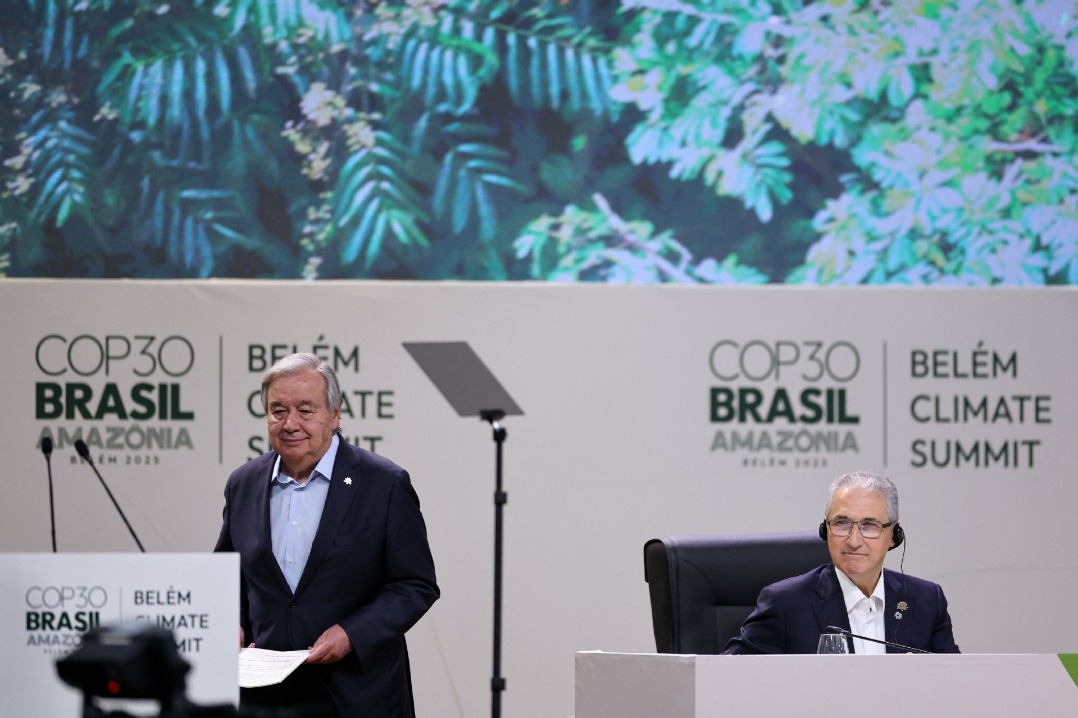
UN Secretary-General Antonio Guterres, who called China a pillar of the multilateral system, said trade wars are always bad for those involved and for the global economy.
The international framework that governs global trade is of extreme importance with the WTO at its center, he said on Friday. "Free trade is a very important contributor to global prosperity," he said.
Marie Kasperek, associate director in the global business and economics program at the Atlantic Council, said a trade war will be bad for corporate profits, pension funds, the stock market, the very idea of a rules-based multilateral order.
She said Trump coined the phrase "trade wars are easy to win", but eventually, everyone loses.
Kasperek also argued that Trump's focus on pure trade deficits is insufficient and a misguided way to evaluate the trade relationship between two countries.
"After all, a trade deficit simply describes a situation in which domestic investment is bigger than national savings," she said in an analysis. "Slapping tariffs on imports is not going to solve this problem. What it does, however, is hurt US exports."
Experts point out that 37 percent of US imports from China are intermediate products used by American firms to make themselves more competitive.
"Putting tariffs on intermediate products is shooting oneself in the foot," David Dollar, a senior fellow of John L. Thornton China Center at the Brookings Institution, and Wang Zhi, director of Research Center of Global value chains at the University of International Business and Economics, said in an analysis titled "Why a trade war with China would hurt the US and its allies, too".
While Kasperek said it was hard to predict how the situation would develop, the good news is nothing is set yet.
"Keeping in mind the US review process, these tariffs could hit in seven months - right around the time of the US midterm elections," she said. "This could potentially hurt Republican candidates in pro-Trump districts."
Contact the writer at huanxinzhao@chinadailyusa.com