Hovering danger
Microplastics in Jakarta's air, water pose risks to both environment and its inhabitants









Editor's note: In this weekly feature China Daily gives voice to Asia and its people. The stories presented come mainly from the Asia News Network (ANN), of which China Daily is among its 20 leading titles.
The Jakarta administration has pledged to improve plastic waste management and processing in response to a study indicating microplastic contamination in rainwater.
A 2022 study by researchers from the National Research and Innovation Agency, or BRIN, first published in open access journal Marine Pollution Bulletin and recently presented to the Jakarta Environment Agency, found microplastics in samples of rainwater collected in the city.
Defined as small plastic particles measuring between 1 nanometer and 5 millimeters, the microplastics were of various shapes and originated from both household and industrial use, pointing to microplastic contamination in the atmosphere.

They also discovered that the contaminants' deposition rate, or the amount of microplastics that settle onto a surface per unit of time, was relatively higher during the rainy season.
On receiving the study, the agency acknowledged the importance of cutting down on single-use plastics as well as boosting waste management in the capital.
"We consider the finding as an environmental warning that requires swift and collaborative responses," Jakarta Environment Agency head Asep Kuswanto said in a statement on Saturday.
"Plastic pollution is no longer isolated in seas or rivers. It has now reached the skies above Jakarta," he said, adding that officials had started expanding the city's monitoring system to trace microplastics in the air and rainwater.
Microplastics come from larger plastics, including manufactured products and industrial materials, which degrade over time into tiny, even microscopic pieces in shapes such as fiber, foam, beads and fragments. Due to their small size, they can easily travel long distances through the air and water and are deposited in the soil.
Researchers involved in the 2022 BRIN study observed small plastic particles floating in the air outdoors before they were carried away by rainfall, said study lead Muhammad Reza Cordova.
The team found microplastics 0.3 to 0.5 mm long, around the size of a grain of salt, in rainwater samples collected in Ancol, North Jakarta.
"I think our findings are still relevant. Microplastics continue to pollute Jakarta's air and rainwater," Reza told The Jakarta Post. "The current situation may be worse, with plastic usage continuing to rise."
The dry season might be the worst time, he said, as it was generally devoid of rainfall that would capture the airborne pollutants. Reza suggested that wearing a disposable surgical mask might be enough to prevent inhaling microplastics from the air.
But Reza believed there would be a presence of inhalable microplastics in Jakarta's air.
The BRIN study could only capture particles larger than 0.3 mm due to the type of equipment the research team used, unable to detect smaller microplastics that can be inhaled by people. The largest dust particles humans can inhale are typically around 0.01 mm, or about one-seventh the diameter of human hair.
Reza urged the government to establish a threshold for a safe level of microplastics in the air.
When microplastics enter the human body, such as through inhalation or ingestion, they enter the bloodstream and end up in internal organs like the lungs, where they are then deposited in the organ's weak parts.
Scientists have warned that prolonged exposure to microplastics, either by consuming contaminated marine animals and other food sources or by breathing them in from polluted air, may lead to inflammation, respiratory illness, cancers and other diseases.
A 2024 analysis on 109 countries by researchers at Cornell University suggested that Indonesians ingested the highest monthly amount of microplastics at around 15 grams, or the weight of an ATM card.
Coastal communities face greater risk of microplastics. More than half of the microplastics consumed reportedly came from aquatic sources like seafood. The research further suggests that rapid industrialization has prompted higher plastic demand, resulting in more waste being dumped into waterways and ending up in oceans.
Another study published in 2024 by researchers from Mexico revealed that the intake of microplastics through seafood consumption might disproportionately affect the health of fishermen and coastal communities as they rely heavily on fish as their main source of protein.
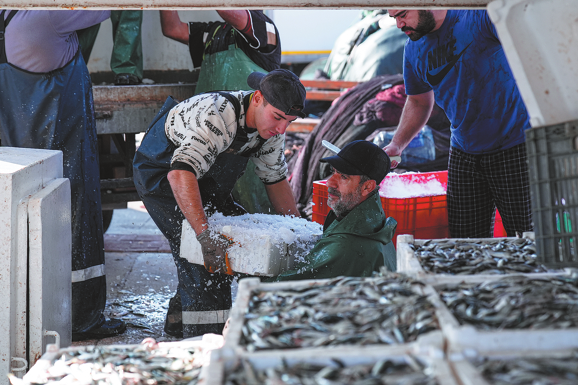
Despite this concern, many Indonesian fishermen are still unaware of the danger of consuming microplastics. Fishery products remain the most accessible and arguably most affordable protein source for them.
Among them is 63-year-old Danu Waluyo, a fisherman in Cilincing, North Jakarta, who always eats fish from his daily catch.
"Although as a fisherman, I catch fish every day, I never get bored of eating it," he said.
Chemical cocktail
Small and fine plastic particles also might become mixed with all kinds of pollutants as they disintegrate, creating a cocktail of chemicals that would be even more difficult to control and regulate, said Yuyun Ismawati, cochair of the International Pollutants Elimination Network, a global network of NGOs.
When plastic disintegrates, it releases chemical additives that were used to produce the polymers. Some of these chemicals, such as phthalates, can affect the hormonal system when they accumulate inside the human body.
Yuyun blames the high level of plastic pollution on the government, which is still opening doors for investment in the plastics industry despite the harm the polymers pose to human health.
While research on the long-term impacts is yet to be conclusive, some recent studies suggest that people who have microplastics identified in their bodies are more likely to experience heart attacks, strokes and death from any cause.
The government would "sacrifice children's lives … if they keep spreading toxic products and pollution to the young people just for profit", she said.
She called on the government to enforce monitoring of pollution from industrial activities and revise the country's waste import regulations to protect public health.
The Jakarta Post, Indonesia