The Kim-Trump summit: high risks, high stakes










The Kim-Trump summit: high risks, high stakes
It has been an eventful lead up to the Singapore meeting between the president of the United States and the leader of the Democratic People’s Republic of Korea. Some call it a rollercoaster ride. Others underline the complexity ahead – from denuclearization to a peace treaty and the issue of sanctions. A single meeting will not be sufficient. Reducing expectations seems prudent. Yet it is the buildup of positive expectations that has played a role in making this summit possible. From Kim Jong-un’s resuming of contacts with the Republic of Korea, the delaying of the US-ROK joint military exercises, and Donald Trump’s surprise acceptance of a meeting, to the détente between the two Koreas at Panmunjom, and DPRK’s show of destroying its northern nuclear test site, hope has risen against all odds from previous decades. This is nowhere as visible as in ROK, where the government of President Moon Jae-in enjoys massive support for promoting peace. We can only speculate on the impact inside DPRK of announcements regarding the first such meeting with the US in nearly 80 years, and the adoption of economic development as the country’s overriding goal. Both the US president and the DPRK leader will bear the weight of these expectations.
Yet expectations have always been frustrated by past developments on the Korean Peninsula. The DPRK’s single-minded pursuit of a nuclear and ballistic agenda has always derailed any agreement on these issues – from the 1992 declaration on denuclearization of the peninsula to the 2012 moratorium on nuclear and missile testing. For its part the DPRK has often suffered from changes in US domestic politics that diminished the benefits of implementing its commitments. In any conflict there are two sides for the same story, and what matters is the conclusion: agreements, whether with ROK or the US, fell apart after the very first steps – and in 2012, over a matter of weeks. Trust had disappeared, so much so that the main issue from which the Singapore summit will be judged is the actual sequencing of concessions by each side.
Frontloading, e.g., achieving the maximum number of immediate or early deliverables is the US approach. Phased and synchronized measures is the DPRK's request. Yet the Panmunjom North-South meeting has resulted in a pledge to achieve a peace treaty by the end of this year. A peace treaty is not merely an inter-Korean political development: it involves parties to the 1953 armistice, including China and the United Nations. It is hardly compatible with international sanctions – and the lifting of these is contingent on denuclearization. As much as the peace treaty is an essential part of achieving regime security for the DPRK, it requires large and rapid concessions on the issues of denuclearization.
At the same time, informal US statements do recognize that denuclearization, even laying aside relevant issues such as military deployments around the Korean Peninsula, stationing of troops and THAAD (Terminal High Altitude Area Defense), is not achievable quickly in a credible way on the side of the DPRK. Verification is a very difficult process, independently of the issue of trust. After South Africa admitted in 1993 to a past nuclear weapons program, it took years to verify actual dismantlement of its past and remaining capacities.
If the Singapore summit is to succeed, major concessions will have to be made by DPRK first. It is after all the party that had broken away from the Non-Proliferation Treaty and has been singled out by numerous resolutions of the UN. Yet immediate denuclearization is meaningless – and the US and other parties cannot delay their own concessions to the very end of the denuclearization process. What lies in between is the subject of the Singapore summit, inseparable from verification. A dispassionate assessment would seem to indicate the following order: dismantling missiles first, starting with long range and the development of solid fuel propellers, and later with other categories. The ROK’s current lack of insistence on dismantling short-range missiles has a draw-back for China, however: it makes less likely an early withdrawal of the THAAD anti-missile system from ROK. Resuming International Atomic Energy Agency control of the DPRK’s plutonium reactors comes next – it is a known process. Beyond these steps, dismantling uranium enrichment equipment or verifying its exclusively civilian use is a daunting task, given that DPRK has been singularly effective for years at hiding its entire set up. Making sure all nuclear warheads are accounted for is equally difficult. Accounting for, and checking, the scientific personnel that has made DPRK’s program possible is an even longer term process, likely requiring a major opening up and reform of the country. The above does not even take into account another feature of the DPRK’s past programs – cooperation with, and proliferation to other countries.
The US at the Singapore meeting will have to make their own commitments on its sanctions – and on inducements to the DPRK. They should later be joined by other parties to the additional sanction regimes – the European Union and Japan. But the immediate issue in front of the Singapore summit is coordination with China on the UN sanction issue. Both the US and China could defeat their own purposes by competing with each other. If the US refuses the early lifting of any sanctions, it removes incentives for the DPRK to make concessions. But the more China would ease up on its implementation of sanctions decided by the UN, the more it becomes possible for DPRK to turn away an agreement, or to renege on it.
The stability of the region, an end to the risks of conflict, and the future of 26 million people inside DPRK, should not be held hostage to balancing games, or to great power competition. A very important aspect of the Singapore summit is what will not be seen on its stage – the degree to which China and the US can cooperate in their approach to the DPRK.
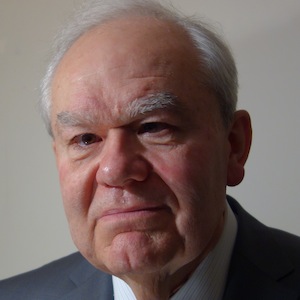
Fran?ois Godement is director of Asia program of the ECFR (European Council on Foreign Relations). He contributes this article exclusively to China Watch.
All rights reserved. Copying or sharing of any content for other than personal use is prohibited without prior written permission.