Charting an eco-future for Yangtze and China









The majestic Yangtze — the longest river in the world flowing through a single country — nurtures an area of more than 2 million square kilometers, or about one-fifth of China. It is also one of the busiest inland rivers on the planet and about 400 million people rely on it for their water needs.
The Yangtze and its fertile basin generate around 45 percent of China’s gross domestic product and have been key drivers of the economic growth that has lifted hundreds of millions of people out of poverty in recent decades. But that prosperity has taken a toll — increasingly in the form of poor agriculture and rural waste management practices, rather than the process of urbanization alone. In 2010, water used to irrigate fertilized fields became a greater source of pollution in Yangtze River than urban water pollution.
This heightened pollution in the main river has severely reduced the quality of drinking water, creating other health problems as well as reducing biodiversity. Smaller lakes and tributaries also suffer from high levels of pollution. Besides, dams, floods, and deforestation have made the riverbanks less stable and more prone to landslides. And climate change will likely worsen these effects over time.
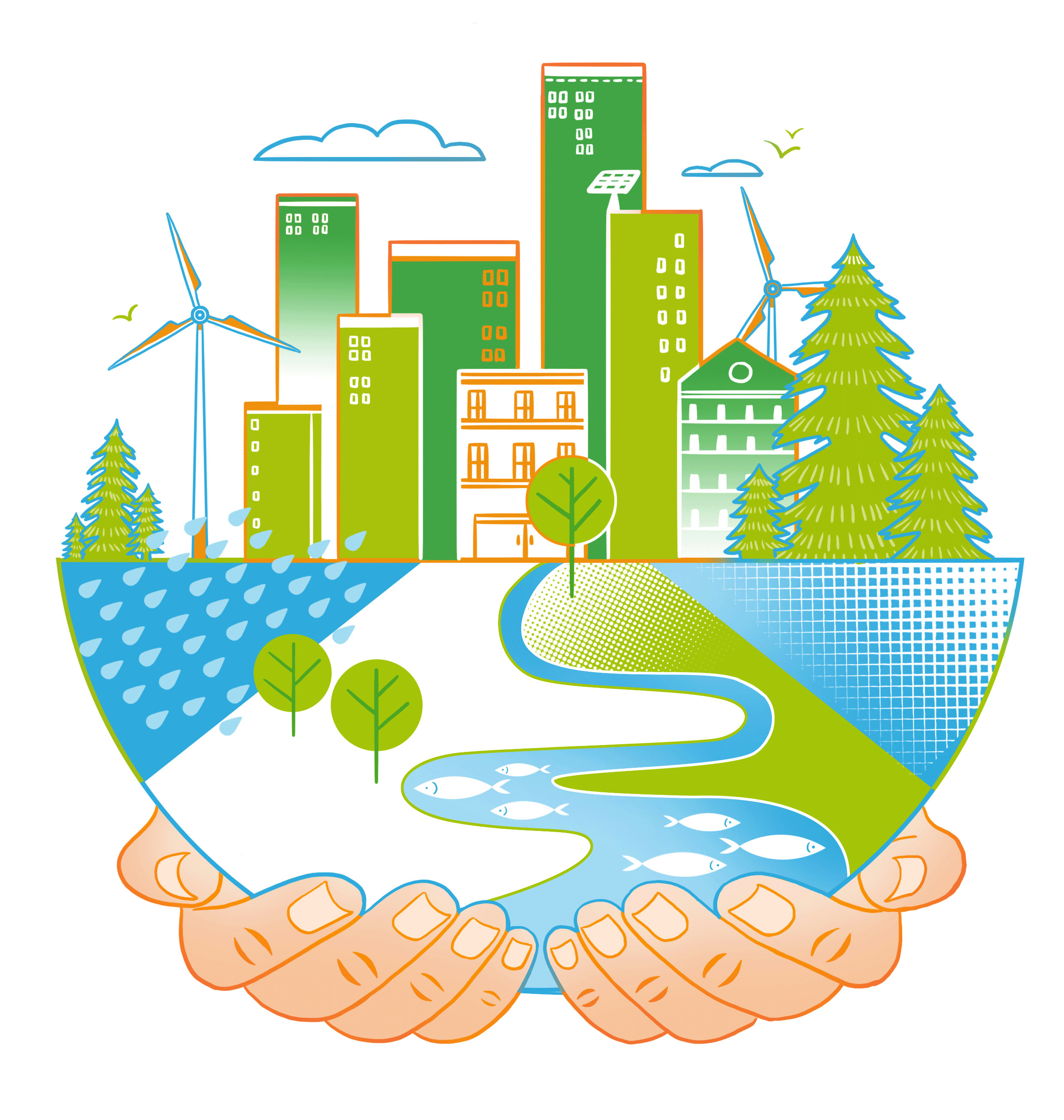
In referring to the Yangtze as the country’s “mother river” and calling for “a green development path which puts ecology first”, the Chinese government recognizes these threats and is implementing initiatives to address the issues. This is also consistent with the country’s “rural vitalization” strategy, a national initiative to protect the environment, modernize agriculture, and improve the lives of people living in the countryside by 2035.
Much of the work to improve the river and its surroundings is captured in the government’s Yangtze River Economic Belt Development Plan. The plan re-orients economic activities around the river toward green development, giving equal weight to economic growth and environmental protection. This ambitious program will support green development initiatives particularly in rural areas that are most in need of development.
The plan sets a target to significantly improve the environmental quality of the Yangtze, aiming for more than 75 percent of the region’s water meeting international standards and more than 40 percent of the area protected by forest coverage by 2030. This is to be done by promoting environmental protection, improving the management of water resources, promoting green industries, and improving transport in the region.
For China to achieve the ecological and environmental targets for the Yangtze and keep its vision of overall rural vitalization on track, it is important to strengthen the links between the Yangtze River Economic Belt program and the rural vitalization strategy in a “two-pronged” approach.
In keeping with this idea, the Asian Development Bank has programmed $2 billion in strategic investments in agricultural modernization and environmental improvement initiatives up to 2020. Rural vitalization also presents an excellent opportunity to integrate innovative technologies, such as the “internet plus agriculture” model, blockchain technologies, and new decentralized rural wastewater and sanitation treatment systems.
Cooperation and planning with and between provinces and across different sectors will also ensure a fully integrated approach to the many common problems suffered in the Yangtze River basin and in other rural areas. Establishing a conducive and coordinated mix of policies and regulations that clearly prescribe rights and responsibilities will ensure that the work has a lasting effect.
Moreover, it is essential that planning for rural and river recovery takes a holistic approach looking at all the interconnecting issues along the ecological value chain, from mountains to oceans, since only this will ensure there is a full, long-term transformation. Sharing information across institutions in China and with countries in the region can help with this.
The importance of the Yangtze to China cannot be overstated. The government has made it clear that the river’s rehabilitation is a high priority and has set an ambitious deadline for significant improvements. Coordinated, long-term planning and actions will revitalize the rural economy and help restore the Yangtze to its full, well-deserved glory.
The author is vice-president of East Asia, Southeast Asia and the Pacific, Asian Development Bank.