Thailand strives to connect Belt and Road Initiative with its Eastern Economic Corridor









CHONBURI, Thailand - As soon as 25-year-old Jin Xiang landed a job at a Chinese steel factory in Thailand's eastern Chonburi Province, he knew he would be part of the growing factor in propelling the Belt and Road Initiative and Thailand's Eastern Economic Corridor (EEC).
The Chinese young man said his parent company in central China's Hubei Province will be bringing state-of-the-art steel lathing and molding technology, using artificial intelligence in creating metal spare parts for heavy industries.
"When I arrived in Chonburi six months ago, I can say that Thailand's steel lathing industry was still lagging behind, compared to that of China," he said. "It was a right decision to move to Thailand."
According to the EEC Labor Administration, the fourth quarter of 2018 saw an extra 2,000 skilled Chinese workers flowing into the EEC region, covering Rayong, Chonburi and Chachoengsao provinces.
The Board of Investment (BOI) statistics indicate that more than 80 Chinese companies have set up manufacturing facilities, research centers, and operational hubs at the Thai-Chinese Industrial Zone in Rayong Province before the end of 2016, with total investment of 30 billion U.S. dollars.
With the increasing number of foreign workers filling up job vacancies in the EEC region, a one-stop service center at the EEC Labor Administration has been established to expedite the process of issuing work permit visas.
Pirote Chotikrasatien, inspector of the Department of Employment from the Ministry of Labor, told Xinhua that as long as a foreign worker can supply rightful documents including a guarantee letter from a BOI registered company and proper heath check documents, the applicant will be granted a work permit visa in less than three days.
"Since late 2016, there have been a growing number of skilled workers coming from China," said Pirote. "We did not have a one-stop service then to facilitate visa process. But today, if a foreign worker has all documents ready, it will not take more than three days."
"Not only that, the foreign worker can also apply for visas for family members to live in Thailand," he added.
The Thai government is also hoping to tap into China's technological support and experience in managing large infrastructure projects.
Currently, a Chinese high-speed railway under the Belt and Road Initiative is under construction. It will be the kingdom's first high-speed railway that will link Thailand with Laos and Kunming in China's southern Yunnan Province, while Thailand's second high-speed train will link Bangkok with the EEC, a project noted by Thai officials that would contribute to the integration of the EEC with the China-proposed Belt and Road Initiative.
Thai Prime Minister Prayut Chan-o-cha said the high-speed train is an example of connectivity that fits the Thailand 4.0 economic model.
The 4.0 strategy is aimed at pulling Thailand out of the middle-income trap and pushing the country into the high-income range by innovation and application of new technology in manufacturing.
The Thai government is also capitalizing on the Belt and Road Initiative to increase investments, hoping to rake in 43 billion U.S. dollars in the next five years to the EEC.
The Silk Road Economic Belt and the 21st Century Maritime Silk Road, known as the Belt and Road Initiative, were proposed in 2013 with the aim of building a trade and infrastructure network connecting Asia with Europe and Africa along the ancient trade routes.
Meanwhile, Kanit Sangsubhan, secretary-general of the EEC Office, said integrating with the Belt and Road Initiative will empower Asia through international cooperation especially between China and ASEAN.
"Strong economic foundation of Cambodia, Laos, Myanmar, Vietnam and Thailand (CLMVT) will lead to a stronger ASEAN, which is why the North-South Economic Corridor from Kunming through Laos to EEC, which connects with East-West Economic Corridor, will be beneficial to all countries," said Kanit.
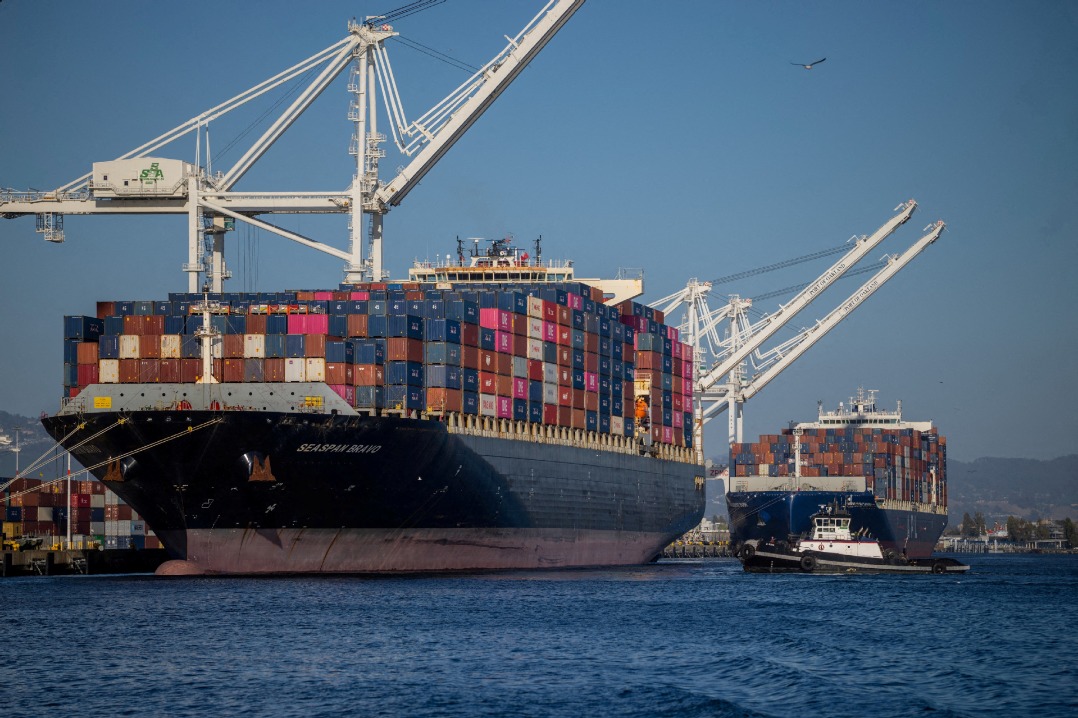
"For example, southern China is linked to EEC through the Gulf of Thailand, with Laos using it as a channel to the sea and Cambodia using Laem Chabang Port as the main port for export."
Thitinan Pongsudhirak, an academic at ASEAN affairs at Chulalongkorn University, said that connectivity defines long-term economic prospects.
"China is doing something that has never been done in the history of the world. A large country like China has expanded economic growth at a high level for decades," he said.