Upcoming polls will be turning point for Thailand









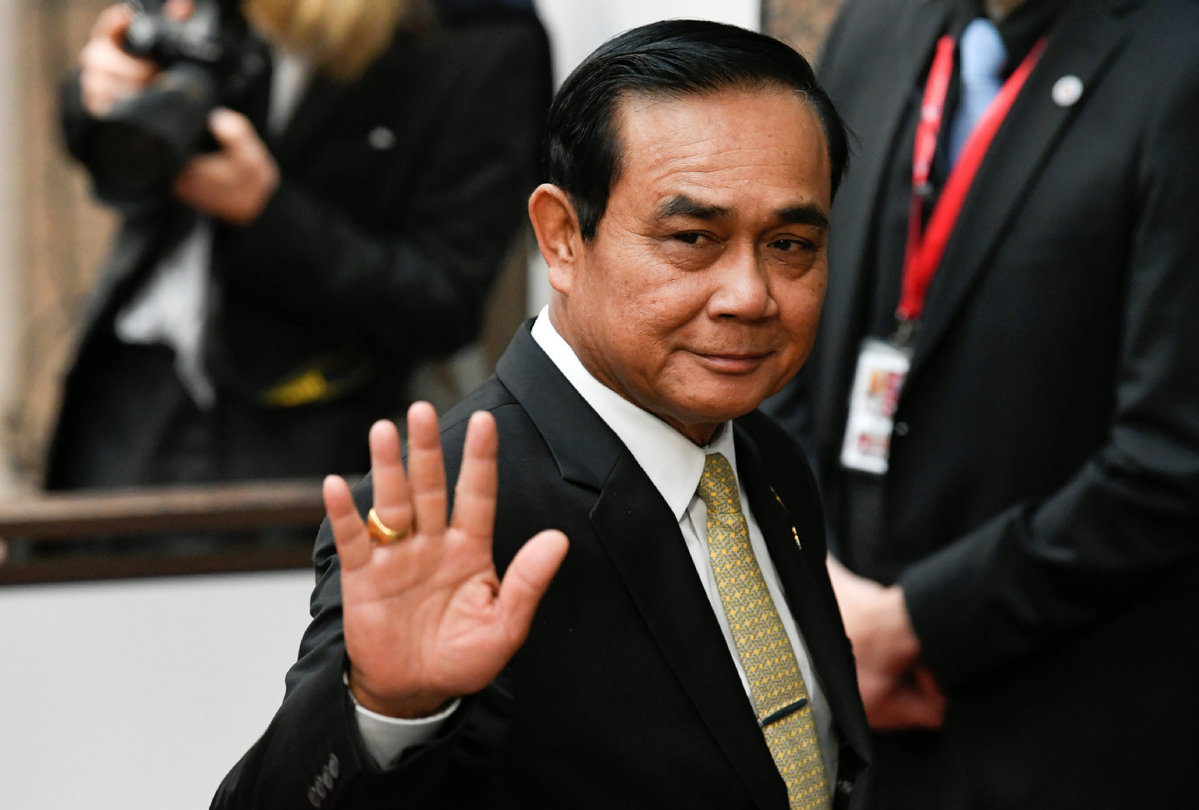
Thailand's general elections on March 24 will be the kingdom's most important event of the year and are likely to go smoothly, especially after the country took on the chairmanship of the Association of Southeast Asian Nations in November.
Considering the changes in recent years and the current trends, the main possibilities surrounding the upcoming polls are interesting.
First, under the latest Constitution, signed into law by King Maha Vajiralongkorn in April 2017, the newly formed government will enjoy the support of a majority of elected representatives from multiple parties.
In the past, the party that gained a majority in an election formed the government. However, the new Constitution declares that the appointment of the prime minister must be made by parliament, which includes 500 elected representatives as well as 250 senators appointed by the National Council for Peace and Order. Therefore, the new prime minister must have the support of at least 376 members.
Incumbent Prime Minister General Prayut Chan-o-cha has a good opportunity to be prime minister again, since he is likely to get the votes of the 250 appointed senators and political parties that support him (led by the Palang Pracharath Party, or PPRP). Therefore, he needs the support of only 126 others from the total of 500 elected representatives.
There seem to be many possible scenarios regarding the formation of the new government. Personally, I believe that the chance of having a coalition government that holds a majority of seats in the legislature is higher than that of having a minority government.
The PPRP is likely to gain the support of other parties that are willing to join any side, such as the Bhumjaithai Party, the Charthaipattana Party, the Chart Pattana Party and the Democrat Party. Together, these parties should have the support of about 150 to 200 representatives. Therefore, the PPRP and allied parties may have the support of more than 250 representatives.
Under the new system, the Pheu Thai Party, the main opposition, can get 200-plus representatives, but not necessarily up to 250.
Second, the coalition government will likely have moderate stability due to internal conflicts and social conflicts.
Overall, the government will run smoothly with the majority support of both the House of Representatives and the Senate.
As for social conflict, there will be political rallies or protests from those with opposing political ideas, and people might call for the investigation of election outcomes or express their dissatisfaction.
For the direction of new government policies, there are issues to take seriously.
The first issue to consider is that, for the overall picture, the new government will be forced to follow the 20-year National Strategy. Neglect of this strategy, enacted in October, would incur legal penalties.
Moreover, if General Prayut stays in power, the new government will maintain the direction and style of the public policies of the current government. Important policies that will continue are the policy of Thailand 4.0, which emphasizes technological development, creativity and innovation in order to upgrade the country from medium-income to high-income status.
Also, Eastern Economic Corridor projects and policies to solve the poverty problem will continue.
The second issue to consider is investment promotion.
In late 2018, the Cabinet approved five megaprojects (totaling about $20.7 billion) under the EEC projects and seven water management projects (totaling about $990 million). Many more projects have been submitted by various ministries to the Cabinet for approval.
Government investment in these projects could total $6.38 billion, with at least $14.35 billion coming from the private sector. So the model of investment used by the new government will be to promote public-private partnerships.
The government has prepared for these investments by amending the Private Investments in State Undertakings Act (2018) so that joint investment between the government and the private sector will materialize quickly and effectively.
The third issue is Thailand's ASEAN presidency.
In the past, the Thai government did not have a very influential role in the region. However, as Thailand currently holds the ASEAN presidency, the new government will be encouraged to be more proactive and try to play a more important role.
The fourth factor involves foreign policy.
Previously, Thailand maintained a policy of balancing power to ensure that no particular superpower influences the country to a degree that would lead to friction and strongly affect the country's international relationships.
The new government will likely continue this direction in foreign policy.
The upcoming general elections will be an important turning point for Thailand.
The author is a senior fellow at Harvard University and chairman of the Nation-Building Institute in Thailand. The views do not necessarily reflect those of China Daily.