Keynote Speech by H.E. Ambassador Liu Xiaoming at the KPMG Breakfast Meeting: The Chinese Economy: What has changed and what has not?









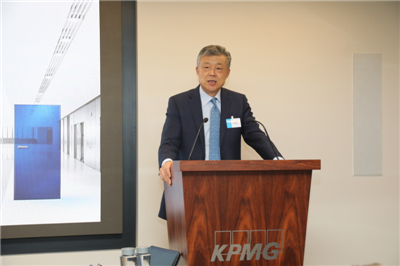
Vice Chairman David Sayer,
Ladies and Gentlemen,
Dear Friends:
Good morning!
Yesterday was the Lantern Festival. On this day, the Chinese families would all come out of their houses to mark the last day of the Chinese New Year celebration with lantern display and fun fair, and get ready for back-to-work day.
So, on the first day of work according to the Chinese lunar calendar, may I say it is such a delight to join you at the KPMG for this breakfast meeting to mark the beginning of a whole year’s work and to exchange views with you on the Chinese economy.
The Chinese economy has been a hot topic lately. David asked me to share my thoughts. So I did some homework and summarized what has changed, and what has not, in the Chinese economy.
First, China’s external economic environment has changed, but the long-term growth momentum of the Chinese economy has not.
In the world economy, the downward pressure is mounting, and uncertainties and instabilities are increasing. These are caused by
·weakening driving forces for international trade,
·increasing turbulence in the global financial market,
·accumulating risks, and
·looming protectionism and unilateralism.
China-US trade friction is also gradually taking its toll.
Despite the complex and severe external environment, China’s GDP reached $13.6 trillion in 2018 and the growth rate was 6.6%. Some people point to the slowdown of Chinese economy, but the fact is:
·This growth rate was higher than the 6.5% target;
·It is the highest of the five biggest economies in the world;
·And given the size of the Chinese economy, that is, nearly $14 trillion, this growth rate was indeed amazing.
In the long run, China has the confidence and capability to make sure its economy will grow within the anticipated range. After 70 years since the founding of New China, especially after more than 40 years of reform and opening up, the Chinese economy has built up a solid foundation, which will ensure the strong resilience and stability in its future growth.
Second, market entities and growth engines have changed, but the direction of economic restructuring and upgrading has not.
As China pursues innovation-driven development, new industries, new products and new business models have flourished.
·In 2018, the output of new energy vehicles grew by 40.1%, optical fiber by 23% and smart television by 18.7%.
·Newly-registered companies totaled 6.7 million last year. That was a 10.3% increase over the previous year, and it means that on average 18,400 companies were registered every day.
·New technologies, such as digital economy, e-commerce, modern supply chain and network financing, have achieved an integrated development.
·Platform economy, sharing economy and smart economy are flourishing.
At the same time, the Chinese economy is shifting from high-speed growth to high-quality growth, and the economic structure is optimising.
In 2018, final consumption expenditure contributed 76.2% of economic growth; tertiary industry contributed 59.7%; and the value-added of the high-tech manufacturing industries accounted for 13.9% of the total increase of the industrial enterprises above the designated size, which was 1.2 percentage points higher than that of the previous year.
China is also stepping up energy conservation and emission reduction. We are working on a green economy. In 2018, energy consumption per unit GDP decreased by 3.1%; and the share of clean energy in total energy consumption increased by 1.3%.
Moreover, China has steadied the macro-economic leverage ratio and kept the debt level under control. By the end of 2018, domestic assets of China’s banking sector had totaled 261.4 trillion RMB yuan, with the ratio of non-performing loans standing at only 1.89%.