Sea levels pose rising threat across Asia









Rising sea levels will be among the major challenges of the 21st century, with Asia at particular risk because so many of its people- and companies-are near water and prone to sea level rise, floods and storm surge.
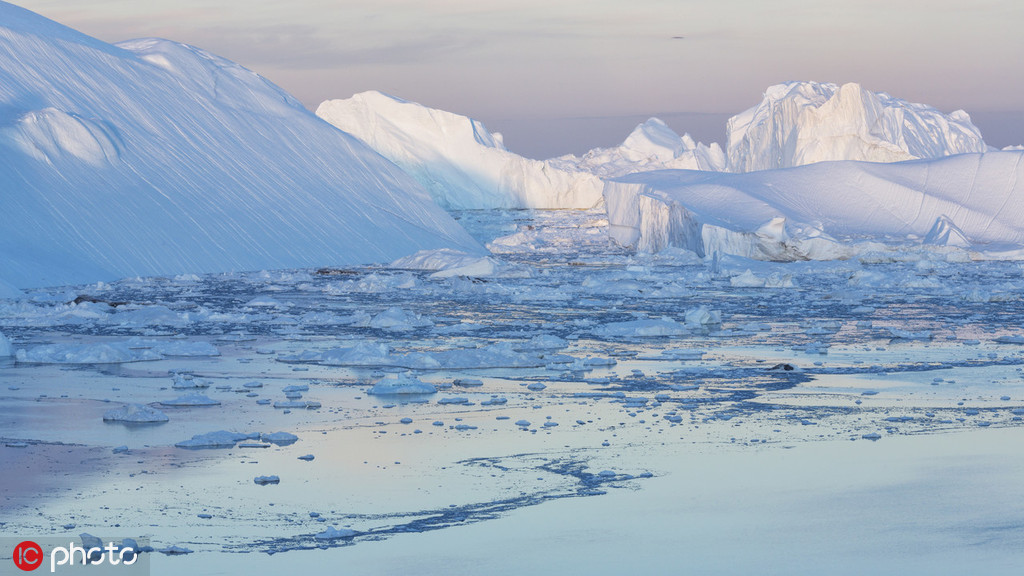
Two groundbreaking scientific studies show that Greenland's ice sheet, the second largest after the Antarctic's, is melting faster than ever in recent history. Glacial melt and the expansion of the seas as they warm are the biggest drivers of the rise in sea levels.
Luke Trusel of the Oceans and Climate Lab at the University of Colorado Boulder and his study co-authors concluded that "surface melting and melt-induced runoff in Greenland occur at magnitudes not previously experienced over at least the last several centuries, if not millennia".
The study found evidence in the ice core samples that melting is "nonlinear," meaning small amounts of warming can lead to much higher melt rates.
In a 2018 report, the United Nations' Intergovernmental Panel on Climate Change warned that the Earth could get warmer by 1.5 C by 2030. Even if all the goals of the Paris climate accord are met, the warming trend in such a scenario could be higher than 2 C.
In another recent peer-reviewed paper, Jeremie Mouginot of the Department of Earth System Science at the University of California, Irvine, and his coauthors found that Greenland's ice sheet is melting six times faster than in the 1980s. The paper said Greenland's runoff has raised the sea levels by 13.7 millimeters since 1972, with half of the rise having taken place in the past eight years.
To put this in perspective, sea levels are rising more than 3 mm each year. The UN's most recent report said sustained global warming (between 2 and 4 C) will likely trigger the irreversible melting of the Greenland ice sheet, causing a global mean sea level rise of about 7 meters.
Temperatures in the Northern Hemisphere are rising faster than on the planet as a whole. In the Arctic, the rise is twice as fast.
Thawing of methane beds in the now frozen tundra is another potential risk that could accelerate warming. Methane is a naturally occurring greenhouse gas that forms as carbon-based plant and animal life decay. Methane trapped in the soil is released as the permafrost thaws and decomposes.
"The ice sheets have tipping points. How quickly they impact our livelihoods through sea level rise depends on what we do now and in the very near future," Trusel of the University of Colorado Boulder was quoted by The Guardian as saying.
It is hard to estimate with certainty how quickly sea levels will rise. But we should not allow the long time frame of climate change to prevent us from building resilient infrastructure and decarbonizing our energy grid in the near term.
Experts agree that Asia is by far the most exposed region to storm surge, sea level rise and flooding. In its Global Risks Report 2019, the World Economic Forum identified Asia as the continent most vulnerable to rising sea levels.
The Asian Development Bank, in a report titled A Region at Risk, the Human Dimension of Climate Risk in Asia and the Pacific, predicts that losses from flooding will rise from roughly $6 billion per year in 2005 to $52 billion by 2050. Thirteen of the top 20 cities with the largest predicted increase in annual losses-including Guangzhou and Shenzhen in China's Pearl River Delta-are in Asia.
According to reinsurance company Swiss Re's Storm Surge indicator, the Pearl River Delta and Shanghai are on the list of top cities facing the risk of storm surge.
Countries like Singapore, with its advanced water capture and storage systems, are able to effectively redirect rainwater from populated areas and convert gray water into drinking water.
The Netherlands has built dams and dikes, some dating back centuries, constructed to reclaim large swaths of land from the sea and stabilize its coastlines and act as barriers against flooding.
China has implemented a plan to ensure its cities can withstand flooding and rising sea levels by creating more green spaces to absorb rain and floodwaters.
China has a long tradition of patient leadership and long-term planning when it comes to the environment. It has also made impressive strides on the renewable energy front.
But it needs to do more. China is the biggest emitter of greenhouse gases, accounting for 30 percent of the world's total.
The melting glaciers remind us of our changing Earth and the challenges we face. China's leadership and a greener Belt and Road Initiative could help to find a solution.
The author is an adjunct fellow at the Asia Business Council in Hong Kong and a research adviser to Terra Alpha Investments. The views do not necessarily reflect those of China Daily.