US attacks on China's system unfounded, unreasonable









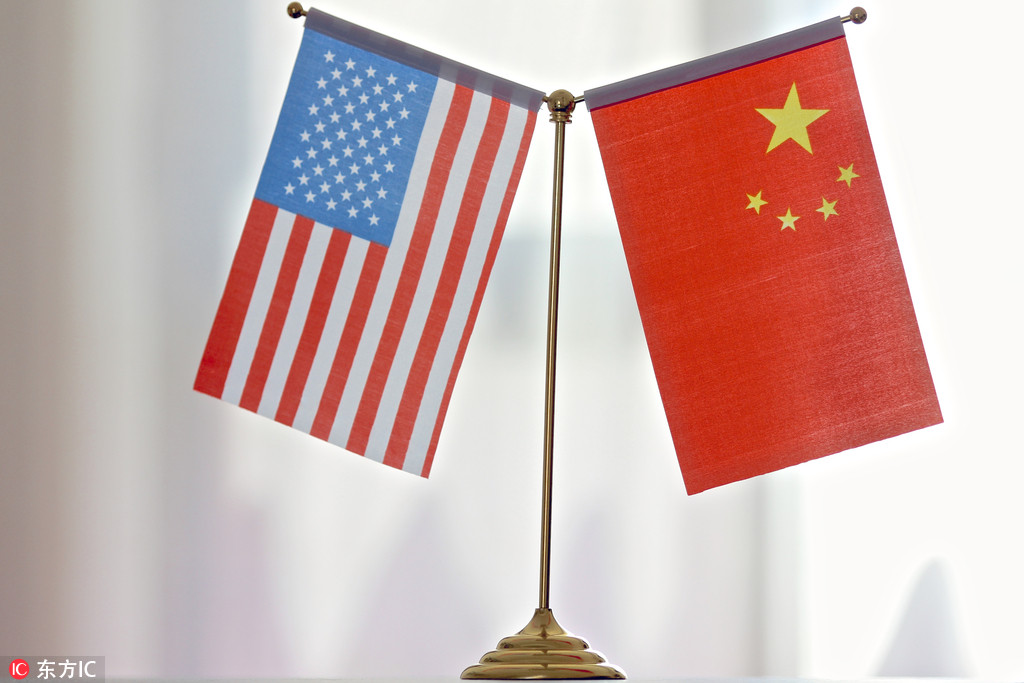
The US-China trade war appears to have taken a turn for the worse after the US government's decision to raise tariffs from 10 to 25 percent on $200 billion worth of imports from China, and is being made into a battle of economic ideologies rather than a dispute over technology transfers. This is unfortunate for consumers and producers in both the US and China, who are now locked into a confrontation that will cost billions of dollars every year.
Rather than taking the diplomatic route, the US is appealing to its hawkish administration and base — starting when it slapped tariffs on China back in June 2018. Forget the fact almost every American economist, liberal and conservative alike, decried the use of tariffs as an unnecessary punishment on importers and ultimately, households. The US showed it was willing to harm American interests — or more likely, didn't understand the mechanics of tariffs — in order to back Chinese officials into a corner. The US government didn't expect a strong Chinese stance that defended its own interests and refused to change its unique socialist market economy to make it easier for American firms to compete in the technology industry.
Interestingly, China proved its amiability in reducing its trade surplus with the US by purchasing more energy and agricultural products. The subject of China's trade surplus with the US was something the US government grossly misinterpreted as being harmful to the US — against the wisdom of basic economic theory —but China showed it was willing to make concessions. China's expanding domestic consumption would allow the country to narrow the gap between its own exports and imports.
This wasn't enough for the US government, which insisted China also end subsidies for its tech sector, eliminate "forced technology transfers" and end policies that require American firms that want to do business in China to set up joint ventures with Chinese firms. China has strived to crack down on forced technology transfers — in situations where they are actually forced and not voluntarily agreed to — but the policies to end subsidies for the forward-looking, growth-driving program that is Made in China 2025 run counter to China's interests. Even though American officials claimed they were close to a deal after 10 rounds of negotiations and China was willing to make gross concessions, this seemed highly unlikely to those who follow the Chinese economy.
While the details of the negotiations that fell through after the 10th round are unclear, the ongoing conflict appears to have come down to a clash of economic ideologies, with the US side demanding less state intervention in China's tech sector through reduced subsidies and China on the defensive. It should be noted the US routinely subsidizes its agricultural sector — a move that has been protested by developing nations for decades — so the US does not always play by the rules of a market economy.
Certainly, the practice of forced technology transfers is something that must be eliminated. Although foreign firms are not required to set up joint ventures with Chinese firms, navigating the Chinese business scene and winning contracts are challenging for foreign companies, so many choose this path. In a joint venture relationship, foreign firms require extra protections. China's new anti-forced tech transfer law seeks to address this issue, although enforcement will prove to be challenging as there is often a lack of documentation regarding the forced nature of technology sharing.
Fundamentally, the US government fails to understand the nature of the Chinese economy and appreciate the role it has played over the last several decades in buoying global growth. American firms have chosen to set up shop in or trade with China because it has been highly beneficial to them — and to the American consumer, whose standard of living rose exponentially as the price of manufactured goods declined. Now that China is poised to compete more directly with the US on a core front, the US administration is lashing out, threatening to erase the gains both countries have made in the course of promoting free trade. As a result, the US stands to create a formidable enemy of a country that has long been an important economic partner.
China's socialist market economy will continue to lead the nation down an alternative route of development, and will involve government support for key sectors. Technology is a fast-growing industry, particularly in the areas of new technology like artificial intelligence, 5G and cloud computing. Rather than confront China about its subsidies and preferential policies in this sector, the US should invest more of its own funds into becoming more competitive on this front. As long as China protects the intellectual property of foreign firms doing business in China, there is no reason to decry China’s development of its own technologies — and there are certainly no grounds for an ongoing, punitive trade war between the world's two biggest economies.
The author is an associate professor of economics at State University of New York in New Paltz.
The opinions expressed here are those of the writer and do not necessarily represent the views of China Daily and China Daily website.