US overconfidence led to the trade war









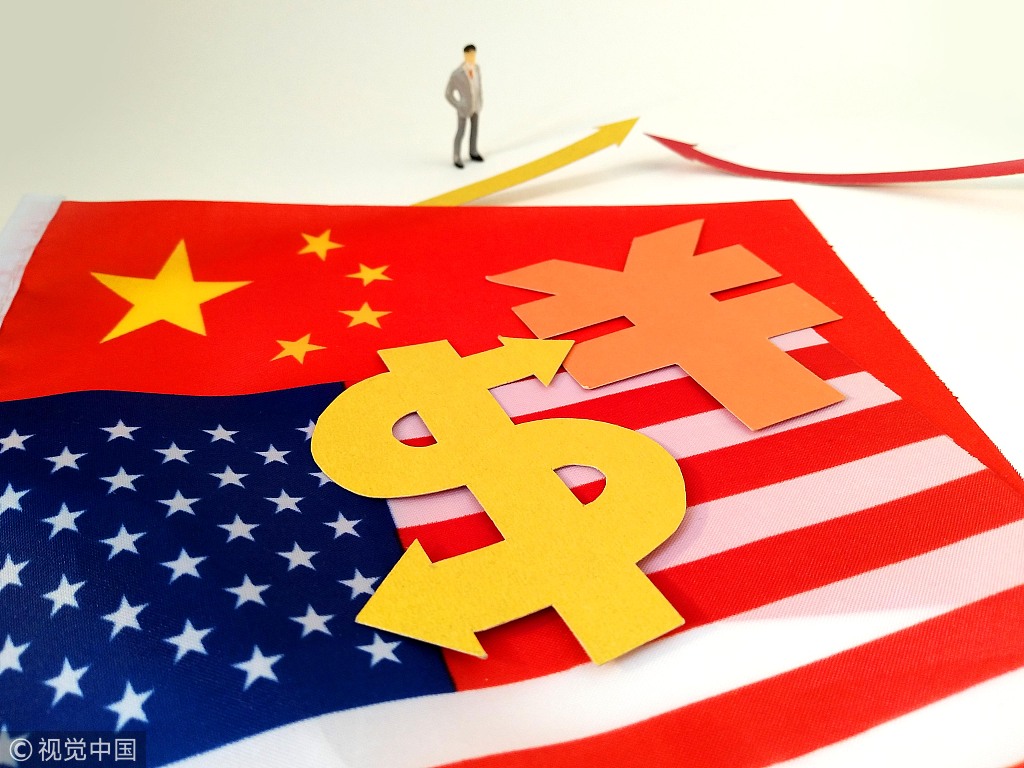
By increasing the tariffs on $200 billion of Chinese goods from 10 percent to 25 percent, the United States has launched a trade war against China. Worse, the US claims China provoked the trade war by insisting on a substantially rewritten draft agreement, which according to the US reneged on previously agreed terms, which is not true. Instead, no agreement could be reached between the two sides despite the many rounds of negotiations because of the hard stance the US had adopted.
In my view, the US failed to anticipate three outcomes of the trade frictions and the unsuccessful trade talks.
First, China's determination to defend its core interests has exceeded US expectations. While serving as a senior government official, I have participated in many bilateral and multilateral negotiations. And experience tells me that a good agreement is that which respects both sides' core interests and major concerns, and satisfies them to the greatest extent. It is difficult to implement an agreement that satisfies one party and disappoints the other.
Since the US has gone too far, directly infringing on China's core interests, China cannot sit idle. In the last round of trade talks, the Chinese delegation stuck to its bottom line, demanding a respectful and equal agreement. It is this determination that the US failed to anticipate.
Second, the US failed to appreciate China's ability to resist US pressure. When it comes to overall bilateral relations, China has dealt with the US with sincerity, hoping to resolve their disputes through negotiations. But the US mistook this as China's weakness and chose to exert "extreme pressure" in the negotiations, which China had to resist.
The US might have assumed that just like other countries, which could not withstand its "extreme pressure", China also would make concessions. But China has not only overcome the US pressure but also is prepared for any possible consequences of the trade war. The US did not expect this level of resilience from China.
And third, during the last round of trade talks, the US did not withdraw the tariffs it had imposed on Chinese goods earlier and, instead, increased them. The fact that US consumers, importers and trade lobbies-not to mention the global business community-have all criticized the US for hiking the tariffs was also beyond the expectation of US policymakers. They didn't expect the trade war to cause turbulence in the US stock market either. I believe that in the coming months, the opposition of US consumers and businesses to these tariffs will grow stronger, forcing the US administration to reconsider its position.
The root cause of the US' failure to understand China is its failure to evaluate China's achievements in the four decades of reform and opening-up. American policymakers still claim that it is the US that has fueled China's growth since the 1980s, as if its achievements are not the fruits of its people's labor but gifts from the US. Also, they wrongly believe that China cannot do without the US and therefore will welcome the punches it delivers without even thinking of hitting back.
China has not buckled under US pressure because its economic foundations are strong and economic growth is sustainable. China may suffer some losses in the short term, but in the medium and long term it will overcome the difficulties to achieve greater development.
The short-term improvement of the US economy and introduction of some new economic policies could have misled Washington into believing that the US is "winning" the trade war. In fact, the short-term improvement of the US economy is the immediate effect of the tax cut policy, whose impact will gradually disappear over time.
Yet we should look at the outcome of Sino-US negotiations rationally. The relationship between China and the US has not become one of full-scale confrontation, as some experts and scholars have suggested.
Although the US has shifted its policy from the earlier engagement and containment of China to an all-out suppression of China, no country can stop the global trend of development. The shift in economic power to the East will continue. And China's huge and consumer market will continue to grow. If the US chooses to exit such a market, no amount of tariffs can compensate for the losses it would suffer. Therefore, US companies will continue to operate in the Chinese market, and the trend of overall cooperation between China and the US will not change in the long run.
Cooperation is the only way Sino-US relations can improve. China does not want the trade war to continue nor do most Americans. So we must remain cool-headed and identify the general direction of win-win cooperation between China and the US. And Beijing and Washington should avoid confrontation, meet each other halfway, and handle trade and bilateral relations with mutual respect and equality.
The author is former vice-minister of commerce.
Source: chinausfocus.com
The views don't necessarily represent those of China Daily.