Several issues that need to be further clarified about Sino-US trade frictions









6. Can trade protection make the 'return of manufacturing industry' to the US possible?
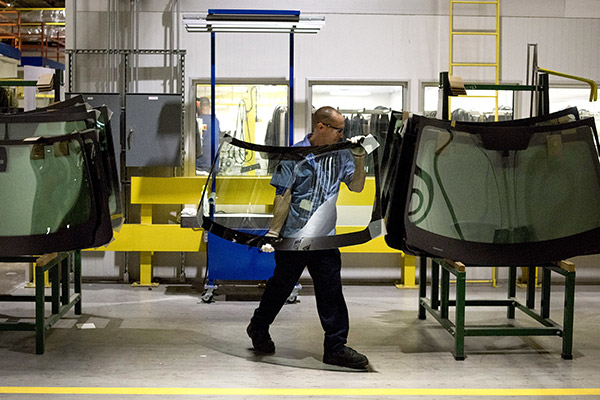
Since the Trump administration came to power, it has put forward the proposal of "buying American goods and hiring American workers", emphasizing the "return of manufacturing industry." Some people in the US offered preferential policies to enterprises that came back to the US to set up factories. For those enterprises that moved their factories abroad, they were threatened with tariffs, forcing enterprises to return to the US for production. Can these trade protectionist practices really enable the US to achieve a "return of the manufacturing industry"?
Whether the "return of the manufacturing industry" can be achieved depends first on the reasons behind the outflow of manufacturing in the US.
From the perspective of the US domestic economy, its manufacturing outflow is determined by how the American economy works. In the process of economic globalization, US multinational companies have transferred more and more industries to developing countries to achieve maximum profitability. Through industrial transfer, they reduce costs, expand markets, divert pollution, and increase the profitability of capital. At the same time, more and more capital has left the real economic sector with lower profit margins, and turned to the financial sector to engage in financial speculation, leading to the hollowing out and virtualization of the US economy.
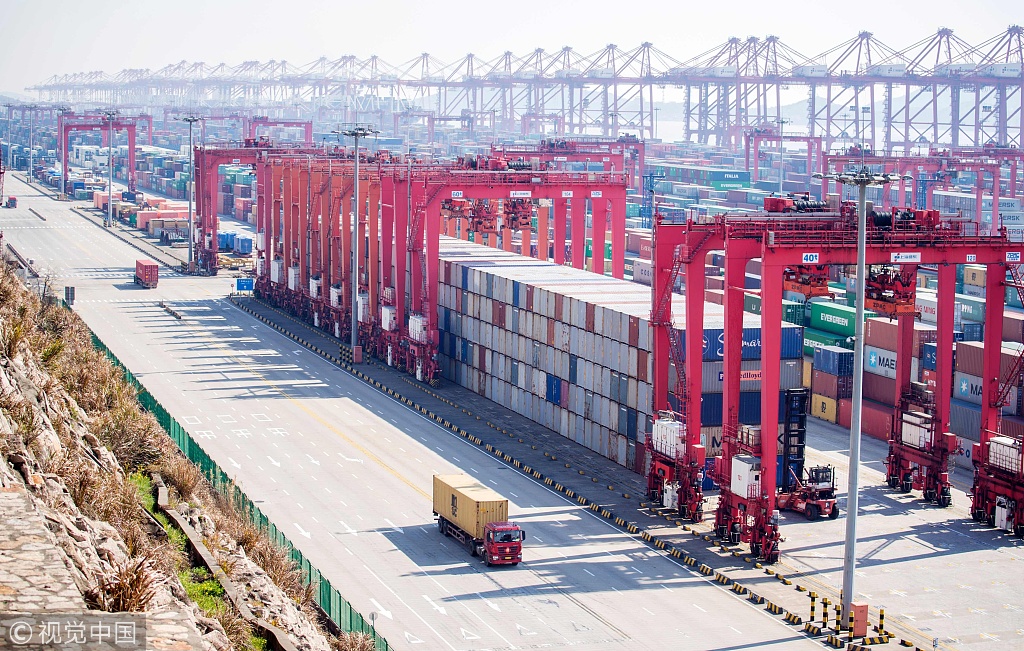
From the perspective of foreign economy, the manufacturing outflow of the US is determined by the rules of the international economy. In the existing international economic system, the US dollar belongs to the world currency and is in a hegemonic position. Based on this, the operating pattern of the world economy is formed. Its main features are: The US supplies the US dollar currency, and other countries, especially developing countries, including China, supply material products. A large number of imports have created a trade deficit in the US, and other countries have exported in large quantities, forming a trade surplus. This means that trying to reduce the trade deficit through the return of US manufacturing is likely to damage the hegemony of the US dollar. In fact, in 2018, the value added of manufacturing in the US accounted for only 11.4 percent of its GDP, while the proportion of financial insurance, real estate and leasing in GDP was 20.7 percent. The degree of de-industrialization and financialization was even higher than that in 2007, which is the year before the international financial crisis. It can be seen that it is not easy for the US to realize the return of the manufacturing industry.
The industrial production index, which reflects the output of industrial products in the US, shows that after the seasonal adjustment, the entire industrial sector and the manufacturing sector were basically in negative growth in the first four months of 2019, down by 1.3 percent and 1.6 percent, respectively, from the end of 2018. The capacity utilization rates of industrial and manufacturing industries reflecting the degree of prosperity of the US industrial industry were 77.9 percent and 75.7 percent in the first four months of 2019, respectively, which were lower than that of the average of 79.8 percent and 78.3 percent from 1972 to 2018. Therefore, the US manufacturing industry has not re-prospered in the trade protection policy on the whole.
The global division of labor in manufacturing is the extension of the socialization of production in the world, and it is the general trend of productivity development. Although this trend could be affected by the policies of some countries, it will never be reversed. The incumbent US government hopes to provoke economic and trade frictions by imposing tariffs and erecting high trade barriers. It requires US-funded multinational companies to return to the US, by using the tricks of labeling them as "traitors" and threatening tax increases. These practices will not help achieve the desired results. Instead of realizing the return of manufacturing industry, it will seriously undermine the global value chain, impact global resource allocation, generate widespread negative spillover effects, and reduce the efficiency of the global economy.