Beijing committed to building a better future for Hong Kong









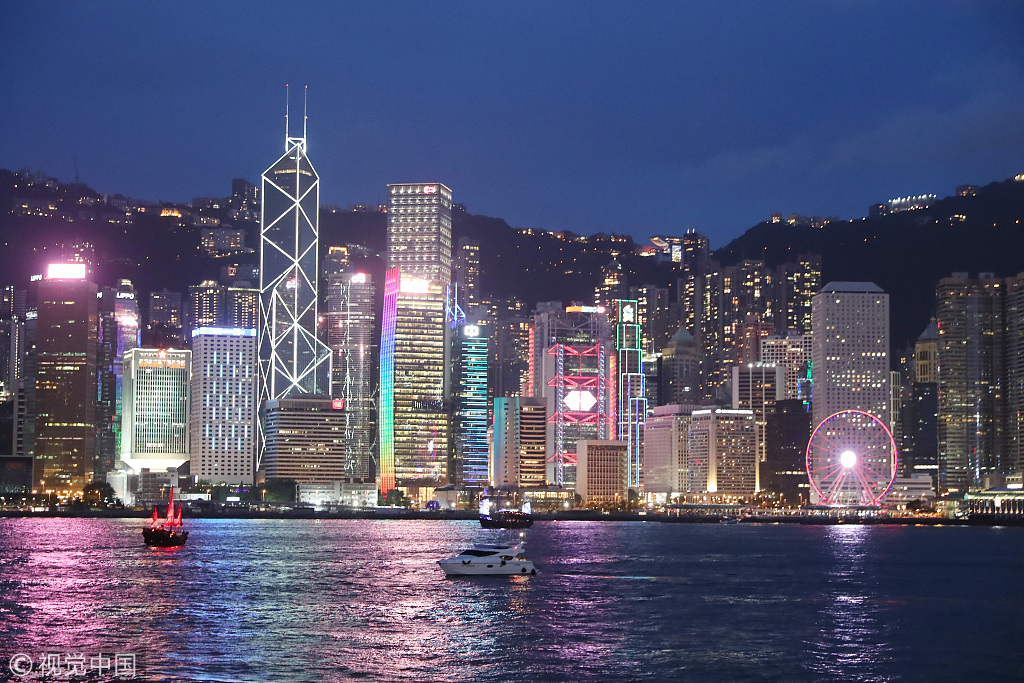
Since its reunification with the motherland in 1997, Hong Kong has institutionally secured the Chinese mainland as a great platform for its development. Which is a completely new phenomenon for Hong Kong.
Under British colonial rule, Chinese people living in Hong Kong were treated as second-class residents and enjoyed little or none of the democratic rights that United Kingdom citizens had.
After Hong Kong's return to China, the central government made it a special administrative region (SAR) under the "one country, two systems" framework. One country means the region has integrated into China, while "two systems" means the region can follow another economic system to help Hong Kong people maintain their lifestyle for 50 years, as long as the country's sovereignty and security is not questioned and the bottom line of one country is not challenged, let alone violated.
The central government has been firm in safeguarding the one-country principle by, among other things, establishing a People's Liberation Army garrison in Hong Kong. The PLA troops there are not mere symbols of Chinese sovereignty, but are ready to defend the interests of Hong Kong and the country. They could also help maintain social order in the region should any such contingency arise.
Conscious of the need to protect the "two systems" to see Hong Kong people sustain their way of life, the central government has taken measures to extend its resources to protect Hong Kong's interests to make sure the region can maintain economic stability, as it did during the 1997-98 Asian financial crisis.
Over the past two decades, the Chinese mainland and Hong Kong have strengthened their economic collaboration. On the one side, Hong Kong has made big investments on the mainland, especially in the Pearl River Delta region, and Shenzhen has benefited much from partnering with Hong Kong.
On the other, the mainland has injected many resources to sustain Hong Kong's economic growth. As a top tourism destination, year after year Hong Kong has drawn huge numbers of mainland visitors, who have also made great contributions to Hong Kong's retail and hospitality sectors.
Recently, the central government launched the Guangdong-Hong Kong-Macao Greater Bay Area development plan, integrating the entire region at a time when the country is transforming from a middle-income country to a high-income country. This would offer a brighter future for the SAR as well as build a closer economic partnership between the three regions.
Especially, the completion of the Hong Kong-Zhuhai-Macao Bridge has shortened the distance between the three regions, both geographically and economically. The world-class infrastructure has made the cross-bay link much more convenient. Two decades after Hong Kong's return to China, it is obvious that the central government is keen to keep the "Oriental Pearl" shining.
As the SAR's guardian of peace and prosperity, China has the special responsibility of ensuring for Hong Kong a better tomorrow. In fact, the SAR can easily benefit from the mainland's urbanization and modernization. Since the SAR's present per capita income is still four times more than that of the mainland, it has much experience to share with the mainland.
And since the mainland's aggregated economic scale is 38 times bigger than Hong Kong's, it can naturally reinforce Hong Kong's development and help it to build a better tomorrow.
It is China, rather than any other entity, that cares for the SAR. Beijing has everything to win if the SAR sustains its prosperity and peace. Beijing welcomes constructive ideas from other countries and regions to facilitate Hong Kong's further development, but it will be vigilant against disruptive elements and will never tolerate outside intervention in Hong Kong.
The author is a professor at and former executive dean at the Institute of International Studies, Fudan University. The views don't necessarily reflect those of China Daily.