Aim for shared prosperity in Hong Kong









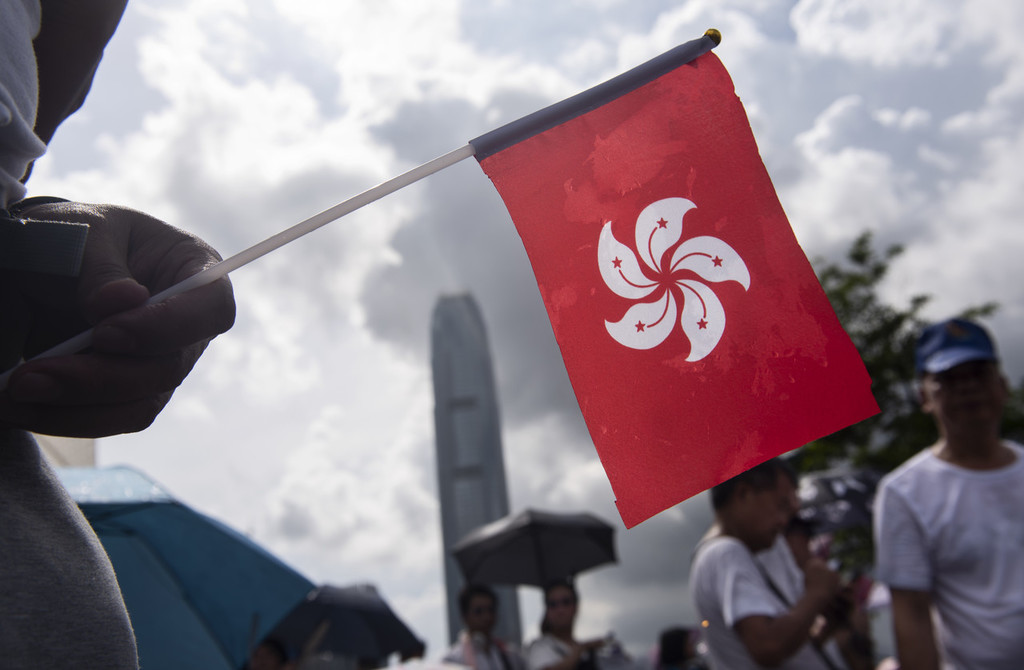
For over two months, the world’s media have been covering the evolution of the tensions affecting Hong Kong. In a highly developed Chinese city in which the fundamental rights of the 7.5 million residents are well protected, the immediate reaction of any responsible commentator should be the condemnation of violence, a rejection of extremism and a clear call for a return to normal life.
After the denunciation of the riotous behavior comes the time to understand the causes of the unrest, and the formulation of constructive policies to take the city into a more serene future.
Some of the activists wearing black T-shirts may be exclusively driven by political motives, but the use of “color revolution” as a general paradigm to interpret the Hong Kong situation is overly simplistic. Arguably, there are deeper economic and social factors explaining the discontent of large segments of the Hong Kong society.
The domestic social and economic issues stand as the main source of the situation.
Fundamentally, the political principle envisioned by Deng Xiaoping (1904-1997), “one country, two systems”, is a working reality. Hong Kong is an inalienable part of the People’s Republic of China and enjoys, as stated in the Basic Law, a high degree of effective autonomy.
Twenty-two years after the handover, Hong Kong’s GDP per capita is high — more than US$50,000. It is also marked by a high “Gini coefficient” — a measure of the extent to which a country’s wealth or income distribution deviates from equal distribution — an indicator of important inequalities.
Hong Kong is associated with its tycoons. With 67 billionaires, it has more ultrarich individuals than any other city in the world, but many of its young citizens are having difficulties in coping with the very high costs of living. The housing issue, in particular, is extremely problematic. Only 50 percent of Hong Kong households own their property.
Due to inequalities, the life of many in Hong Kong is made of accumulated frustrations. Anxiety has added to the frustration when a comparison is made with neighboring Shenzhen on the mainland.
In 2018, the GDP of Shenzhen surpassed Hong Kong’s economic output. Forty years ago, no one would have thought Shenzhen would evolve into such a powerful source of innovation and economic value.
The achievements that reform and opening-up brought on the mainland normalized the role of the Hong Kong Special Administrative Region. Hong Kong has become “not so special” anymore in the context of the advancement of Guangdong, Shanghai, Beijing, Chengdu or Tianjin.
Hong Kong is often presented as a financial center. It is the fifth-largest stock exchange in the world, but half of its listed companies are from the Chinese mainland.
If populism is to be defined by an anti-establishment sentiment, it is a form of populism that marched around Hong Kong’s skyscrapers. Many young people, dissatisfied with what they perceived as an unfair coalition between money and power, decided to protest against the elites, looking at Carrie Lam Cheng Yuet-ngor, the chief executive, as a symbol of the establishment.
An analogy can be drawn between the populist sentiment that led the United Kingdom on the path of Brexit and the belief of some Hong Kong’s localists who would like to exit the “one country, two systems” construction. In both cases, the incapacity to strike the right balance between the local and a larger political entity would lead to a rapid self-weakening.
In this context, what are the strategic actions that the Hong Kong government could decide on to break up what is perceived as an unfair social status quo and to reinfuse trust in society?
Since the July 1, 2003, march and in the months that followed the 2014 “umbrella movement”, too little has changed. This year’s protests have to trigger a real social transformation that could be called a Hong Kong “new deal” for the public good.
It is wise leadership that will take Hong Kong into a future of greater shared prosperity as a part of the larger renaissance of Chinese civilization.
The author is the founder of the Europe-China Forum and the New Silk Road Initiative. He also is the author of Limited Views on the Chinese Renaissance.
The views do not necessarily reflect those of China Daily.