'Color revolution' stands no chance of success in HK









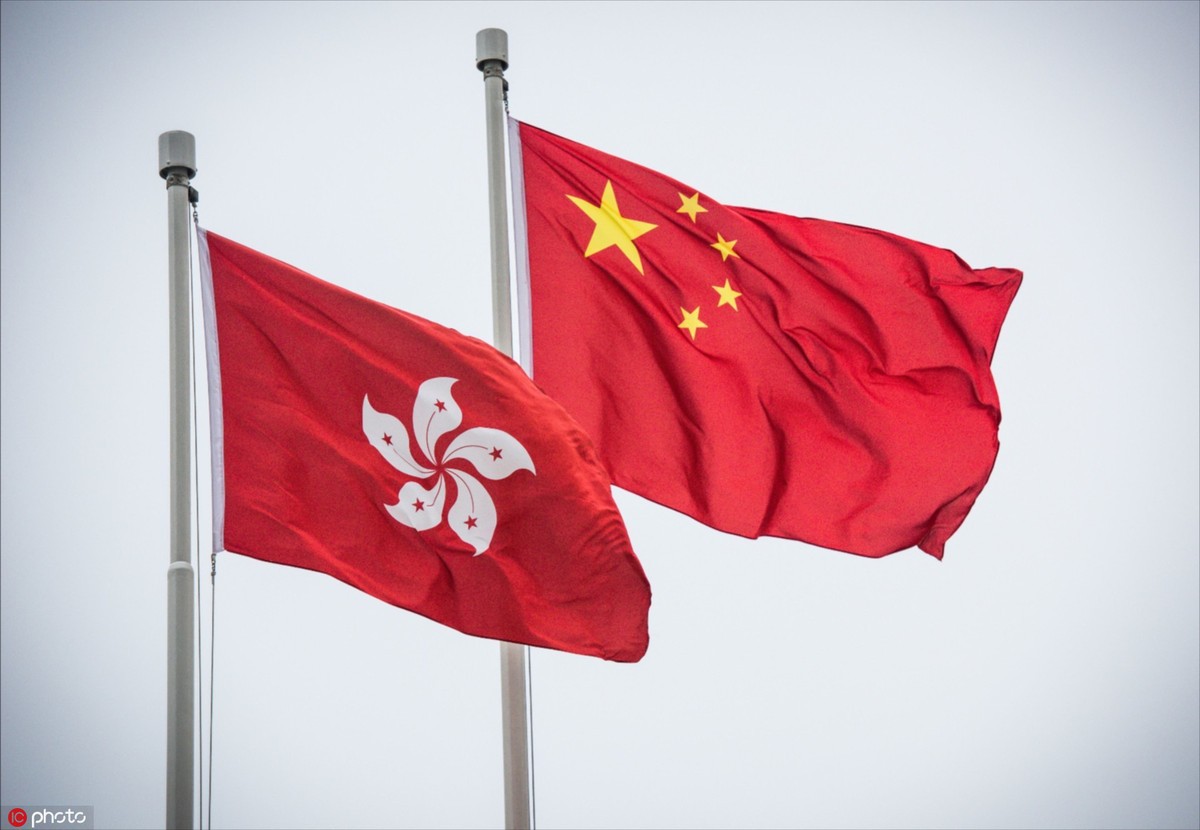
In the past two months or so, Hong Kong has witnessed intensifying violence on its busy streets by mindless rioters. They have broken into and ransacked the Legislative Council Complex, besieged the Liaison Office of the Central People's Government in the Hong Kong SAR, desecrated the national flag and national emblem, and attacked multiple police stations as well as the Hong Kong Police Force headquarters. Their illegal acts have seriously affected people's daily lives with frequent traffic jams and even actions designed to paralyze the operation of Hong Kong International Airport. By harassing tourists and subjecting a reporter from the mainland to illegal detention, unauthorized body searches and even a form of torture, they have also grossly violated the basic human rights of other people while damaging Hong Kong's image in addition to trampling on freedom of the press. These illegal acts indicate that not only has the anti-legislation campaign against the extradition-law amendments gotten out of control, but also has shown signs of terrorism and even a "color revolution".
Terrorism must be destroyed by force, and so should a "color revolution". In Western countries, such as the United States, the United Kingdom and France, whenever public protests turn violent, the government immediately condemns illegal acts while the police crack down on dissent without hesitation. Riot police are deployed as soon as protesters start attacking government buildings. Although they call their countries "the free world", they definitely do not recognize absolute freedom or anarchy in the name of democracy. As for violence, they show no restraint but respond in a harsh way to protect the safety and interests of the local community. This is a common principle in all nations around the world regardless of their faith or ideology.
It is high time the SAR government took effective measures to stop illegal acts. It needs to restore peace and order for the 7 million Hong Kong residents and also for visitors coming to the city. Otherwise, the success of the "one country, two systems" principle will be compromised by a "color revolution" instigated and conducted by Western powers led by the US. Looking back at similar political disasters that struck several governments in Eastern Europe, the Middle East and North Africa, it is not hard to see that Western powers are trying to launch a similar "color revolution" in Hong Kong, in order to undermine China's stability and prosperity. The reason why the US and UK governments are supporting illegal activities in Hong Kong with such reckless abandon is that they know it is absolutely impossible to subvert the central government directly.
Three weeks earlier, on Aug 2, US President Donald Trump called the protests in Hong Kong "riots" and said that it is China's business how it handles the "riots" and therefore there was no need for him to offer any advice. His comments were apparently unfiltered and based on his personal observations. However, on Aug 15, he inadvertently linked his decision to raise tariffs on more imports from China with the political crisis in Hong Kong. This proves that Hong Kong is being used as a bargaining chip against China in bilateral trade negotiations. Despite the declared economic objective, the real purpose of the trade war directed at China is purely political for Trump as well as both the Republican and Democratic parties in the US Congress. The goal is to impede China's peaceful development by interfering in Hong Kong affairs.
On June 19, the Speaker of US House of Representatives Nancy Pelosi, a longtime critic of China's human rights record, called the mass demonstrations in Hong Kong "a beautiful sight to behold", despite the fact that the "beautiful sight" soon turned into a freak show of extreme actions that rocked the global financial hub for the following two months. Then on Aug 6, the radical extremists stepped up their acts of violence in the streets and at Hong Kong International Airport. Consequently, Pelosi said the legislation of the bipartisan Hong Kong Human Rights and Democracy Act will be enhanced to "reaffirm the US commitment to democracy, human rights, and the rule of law" in Hong Kong. Foreign Ministry Spokesperson Hua Chunying condemned Pelosi's intentions, saying "the US on many occasions denied its involvement in the ongoing violent incidents in Hong Kong. However, the comments from those members of the US Congress have provided the world with new and powerful evidence of the country's involvement".
Yet more "powerful evidence" emerged just two days later on Aug 8, when radical protesters brought violence to multiple communities in the New Territories, where they clashed with police officers sent there to maintain public order. A senior diplomat at the US General Consulate went so far as to meet with Hong Kong's leading separatists. This was a clear example of interference in China's internal affairs.
That the US is meddling in Hong Kong matters is now a foregone conclusion. The question Washington needs to answer is how it can justify a police crackdown on violent protests at home while encouraging the same illegal behavior and condemning a crackdown by police in Hong Kong. In other words, how does Washington justify its double standards when it comes to street violence in the US and Hong Kong?
The UK government has always been poking its nose into Hong Kong affairs. On Aug 9, British Foreign Secretary Dominic Raab made a phone call to Chief Executive Carrie Lam Cheng Yuet-ngor to ask her to start an independent investigation into recent events here. The call was seen as a "mistake" because it "grossly intervened in China's internal affairs". Ironically, Hong Kong residents had no freedom to protest under British colonial rule, and the Legislative Council back then was strictly controlled by the colonial governor. Chris Patten, the last governor of Hong Kong, was the only one ever allowed to introduce limited democracy in the city. That was three years before the colonial rule ended in 1997. It was done in order to leave an army of loyalists among civil servants as well as the seeds of political unrest after Hong Kong was reunited with China.
With all that being said, the central government will give the HKSAR government all the support it needs to end the current political turmoil in Hong Kong. This means the US and the UK governments stand no chance of success in launching a "color revolution" in Hong Kong.
The author is a senior research fellow in the Charhar Institute and a guest research fellow in Chongyang Institute for Financial Studies, Renmin University of China. This is an excerpt translation of his Chinese article published earlier in Ta Kung Pao.