Trade in wild African elephant to be heavily regulated









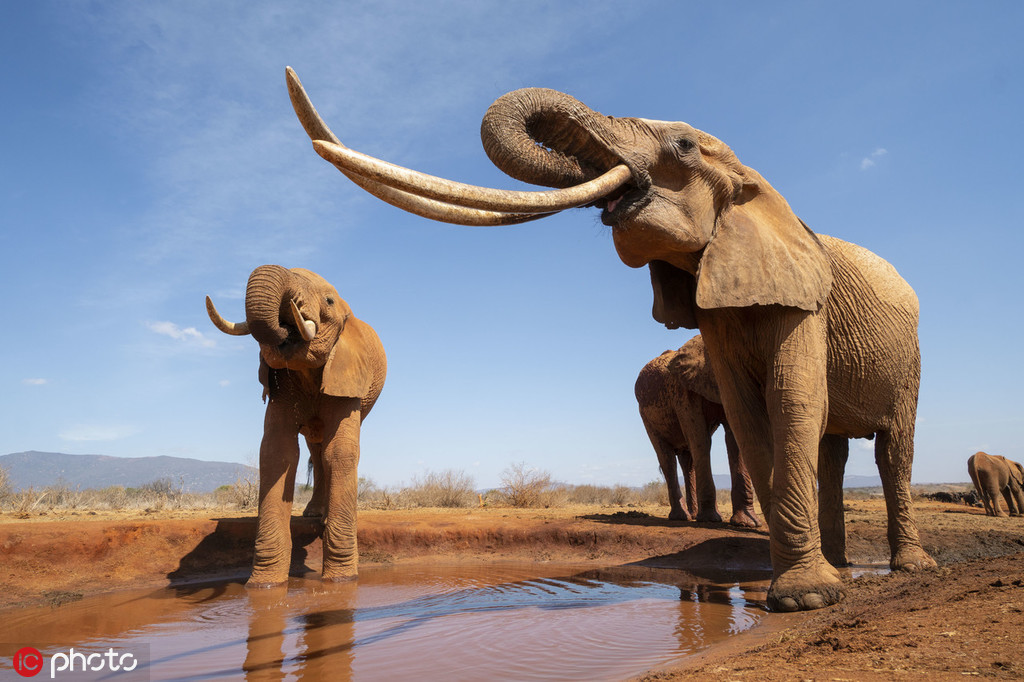
Trade in wild African elephant will now be heavily regulated and only allowed in "exceptional" circumstances across the globe.
This follows a vote to adopt the new regulation at the 18th Meeting of the State Parties to the Convention on International Trade in Endangered Species of Wild Fauna and Flora, also referred to as CITES, on August 17-28 in Geneva, Switzerland.
Representatives voted to adopt a proposal banning export of elephants by Botswana, Zimbabwe, Namibia and South Africa to overseas zoos and entertainment venues.
The vote obtained the required two-third majority after being approved by 87 votes in favor, 29 against and 25 abstentions.
Zimbabwe and Botswana, which have the largest elephant population, will only be allowed to export the wild animals in "exceptional circumstances", in consultation with relevant CITES and International Union for Conservation of Nature bodies, and only if they provide "conservation benefits."
Although animal welfare groups and conservation organizations lauded the decision, some southern African countries objected to the vote, while the United States and European zoo associations expressed reservations.
The Humane Society International, an animal protection charity, applauded the decision saying it will save countless elephants from being snatched from their families and natural environment.
Audrey Delsink, wildlife director at Humane Society International, said even though the decision is not an outright ban on trade in live elephants, it adds vital independent oversight and scrutiny.
"Speaking personally as an elephant field biologist, I am jubilant that we have secured this victory for all the elephants who will now be spared the ordeal of being ripped away from their families," Delsink said.
He said the capture of wild African elephants for export to zoos and other captive facilities is incredibly traumatizing for individual elephants as well as their social groups.
African elephants in Zimbabwe and Botswana are currently listed in the second appendix of CITES with an annotation that allows live elephants to be exported to "appropriate and acceptable" destinations.
Under the definition, Delsink said Zimbabwe has been capturing live baby African elephants in the wild and exporting them to zoos in other countries.
He said the practice has been highly controversial, drawing the condemnation of animal protection and conservation groups as well as elephant scientists who note that elephants are complex creatures who suffer both physically and psychologically as a result of captivity.
He said the definition of what is an appropriate destination is key, and independent oversight by elephant specialists is critical.
"We will remain vigilant as that discussion develops and fight against any attempts to justify or prolong trade in live baby elephants for captive purposes. We are extremely grateful to Kenya and the African Elephant Coalition for their efforts to protect wild African elephants," he said.
Dr Jane Goodall, founder of the Jane Goodall Institute, a global wildlife and conservation organization, said that the thought of capturing young elephants, taking them from their families, and sending them off to a future that will inevitably involve a great deal of trauma and suffering, is shocking.
She said the bonds between infant elephants and their mothers are as strong and enduring as those between human children and their mothers.
"To break that bond is cruel and inhumane. I cannot imagine any caring person agreeing to such an unethical proposal and I hope with all my heart that the EU will not vote against the provisional decision taken in CITES with a two-thirds majority," she said.
Ian Redmond, a tropical field biologist and conservationist who is renowned for his work with great apes and elephants, also expressed his opposition to the live elephant trade.
"Having studied elephants, I know how important an elephant's childhood is. Every elephant child learns how to thrive in their family's habitat and that habitat benefits from the elephants," he said.
He said to separate a young elephant from his or her family for a life of social and sensory deprivation in captivity is bad for the captive as well as the grieving family left behind.