Improving governance for a better future









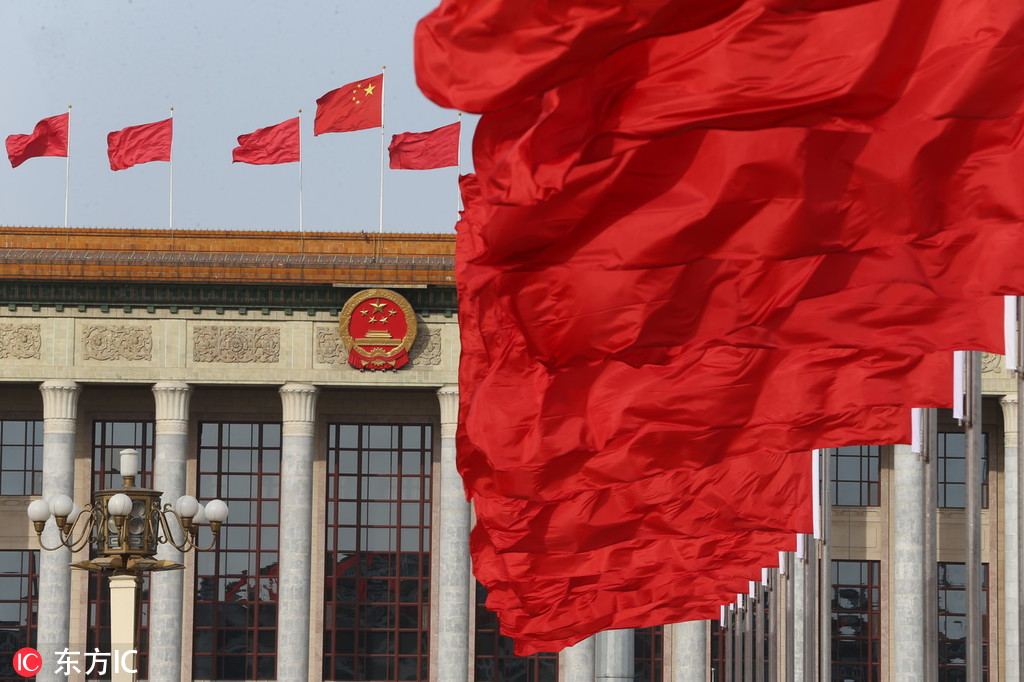
The upcoming Fourth Plenary Session of the 19th Communist Party of China Central Committee is expected to put forward a new strategic plan for modernizing the national governance system and governance capability, a process which began with the launch of institutional reform of the Party and government in March 2018.
First, this round of institutional reform of the Party and government is a systemic and in-depth reform based on comprehensively deepening reform since the Third Plenary Session of the 18th CPC Central Committee. Since the 18th National Congress of the CPC in 2012, the Party Central Committee has actively promoted reform in various fields. For instance, in 2012 the Political Bureau of the CPC Central Committee issued an eight-point regulation on improving Party and government conduct, which drastically changed Party members' working style and promoted healthy and honest political, cultural and social morality.
The Fourth Plenary Session of the 18th CPC Central Committee in 2014 raised the strategic layout of the "four comprehensives" to a higher level, while the government accelerated its own reform including streamlining and delegating power to the lower levels.
Second, as socialism with Chinese characteristics steps into a new era, the modernization of the national governance system and governance capability is very important for dealing with the new and complicated situations at home and abroad. The international environment has drastically changed over the past four decades since China launched reform and opening-up. And as the Party Central Committee and the State Council, China's Cabinet, have a clear understanding of the changes, they are committed to accelerating reform of the Party and government institutions, so as to promote a new type of major-country relationship between China and other world powers in the new era.
Third, reform is crucial for building a better future. And now that reform has stepped into the deep-water zone, we should focus on key areas to overcome the systemic and institutional difficulties. And the authorities have to deepen reform in order to achieve the goal of building a moderately prosperous society by 2020, and a great, modern, socialist country by 2050. Also, China's development requires further strengthening of social productivity, which in turn means continuous reform and opening-up.
The Party has led the entire process of the reform of the Party and government institutions. In fact, the revised Constitution of the country states that the leadership of the Communist Party of China is the most fundamental feature of socialism with Chinese characteristics. As such, the Party's unified leadership is required to enhance coordination and cooperation in all sectors and departments, so as to strengthen socialism with Chinese characteristics.
The Party's and government's institutional reform plan is unprecedented. For instance, the Social Security Fund, supervised by the Ministry of Finance, doesn't have specific administrative ranking any more, indicating that government administration is being withdrawn from social organizations.
Fourth, the aim of this round of institutional reform is to coordinate the functions and efforts of the Party and government in order to solve some prominent problems, including overlapping jurisdictions and functions of different government departments and their low efficiency rate.
In the next round of reform, therefore, the authorities should implement the strategic plan for modernizing the governance system and governance capability. For that, they have to explain and emphasize the significance of this round of reform to officials at all levels and the public through media outlets.
Yet policy implementation is a challenge. Implementation of any policy is the core of the entire decision-making process, and only through the joint efforts of the entire society can we achieve the reform's targeted goals.
Officials play a key role in achieving policy goals. So to carry out the strategic plan for the reform of the Party and government institutions, leading officials have to oppose bureaucratism and formalism, and play a socially responsible role.
Moreover, all the regions and departments should formulate their own methods, but in strict accordance with the strategic plan, to reform the Party and government institutions.
However, while doing so, the local authorities should focus on the overall development situation of the Party and government, and properly handle the relationship between the local governments and the central government in the short and long terms, as well as on individual and collective levels. This should also remind the local authorities at various levels to always adhere to the principle of serving the people and implementing the Party's strategic institutional reform plan.
The author is a professor at the National Academy of Governance.