Expo promotes high-quality development









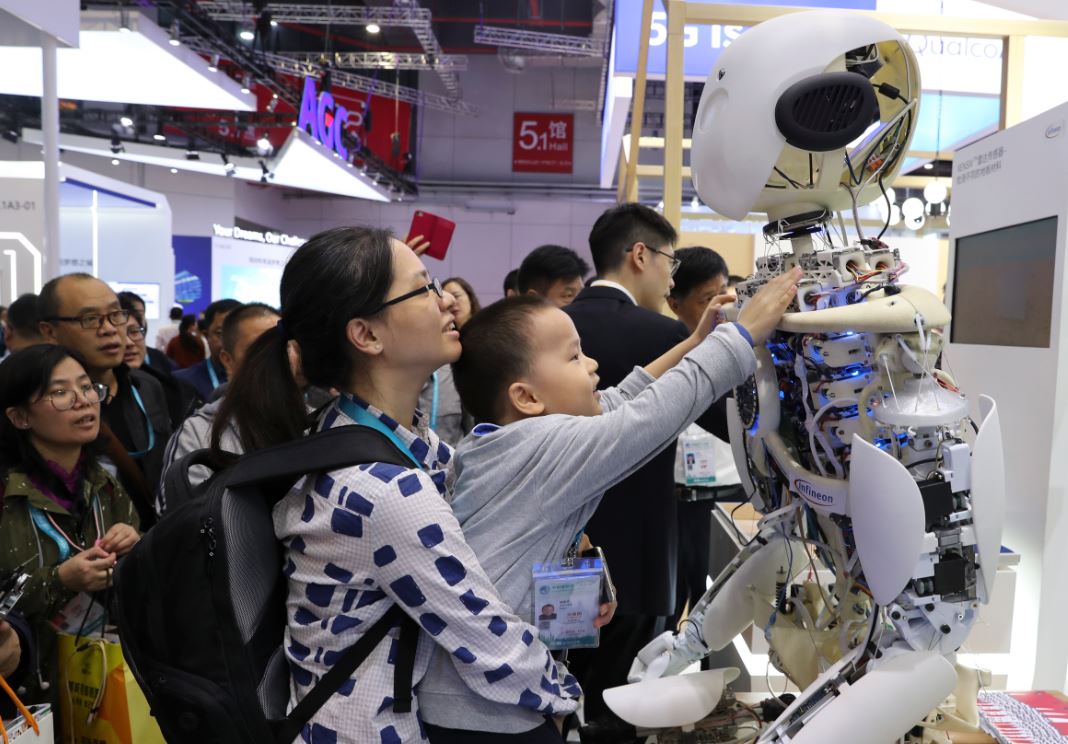
China will promote higher-level opening-up by continuing to expand access to its market, increase imports, foster a world-class business environment, deepen multilateral and bilateral cooperation and jointly build the Belt and Road Initiative. This is the promise President Xi Jinping made in his keynote speech at the second China International Import Expo in Shanghai on Tuesday.
The world economy faces new, unprecedented challenges even before it has fully recovered from the global financial crisis. The International Monetary Fund has forecast global economic growth for 2019 at 3.0 percent - the slowest pace since 2008-09. Global trade, too, is slowing down, with the World Trade Organization forecasting global trade growth at a record low of 1.2 percent.
Stimulating global economic growth therefore remains as daunting a task as ever.
For China, increasing imports is an important way of promoting higher-level opening-up, which in turn will propel higher-quality global growth. By expanding imports, especially of different kinds of higher-quality intermediary products, China expects to help other countries to get deeply involved in and move up the global value chain. Imports, a major channel for technology transfer, can also help developing countries avail of advanced technology and capitalize on the latecomer advantage.
China's imports have made important contributions to global trade and economic growth, accounting for 10.67 percent of the global goods imports last year. At the second CIIE, which concludes on Sunday, more than 150 countries, regions and international organizations from across five continents are showcasing their development results while more than 3,000 enterprises are holding talks with purchasing agents both inside and outside China. The CIIE is a platform for not only trading goods and services, but also exchanging ideas and discussing global trade issues.
At the expo, officials, entrepreneurs, experts and scholars can voice their opinions on such topics as opening-up, rules and business environment, artificial intelligence and innovative development, WTO reform and free trade agreement, and thus provide input for the improvement of international trade rules.
China has adopted the approach that "the government guides and the market leads" in order to increase imports, as the holding of the CIIE shows, because expanding imports is in accordance with the demands of China's economic development. According to the World Bank, global imports grew by 10.6 percent in 2018, with the imports of OECD countries, the European Union and the United States increasing by 9.7 percent, 11.2 percent and 8.6 percent, respectively. On the other hand, China's imports grew by 16.2 percent, at a much higher rate than most developed countries and the world average.
To expand imports, China has repeatedly lowered tariffs on imports, and extended the lower-tariff coverage on goods this year, with its average tariff rate dropping to 7.5 percent from 9.8 percent in 2018.
As China enters the phase of institutional opening-up, the government is deepening reform and innovation in pilot free trade zones, simplifying the clearance process and reducing the institutional cost of clearance, strengthening intellectual property rights protection, expediting the implementation of the new Foreign Investment Law, and further opening up the financial industry and the service sector.
Taking the initiative to expand imports, China is also promoting consumption upgrading on the demand side, facilitating better resource allocation, optimizing the industrial structure and climbing up the value chain on the supply side.
As for Shanghai, the host city, the expo could bring it more international recognition as a trade-led center of institutional innovation and information aggregation.
The China (Shanghai) Pilot Free Trade Zone, the bridgehead of the new round of opening-up, is home to 85,642 enterprises, among which 18,383 are foreign companies. And the CIIE is expected to further the construction of the Shanghai pilot free trade zone, which in turn will boost the development of the Yangtze River Delta region.
Dong Yan is a research fellow at the Institute of World Economics and Politics, the Chinese Academy of Social Sciences, and Wen Jun is a PhD candidate at the Graduate School of the Chinese Academy of Social Sciences. The views don't necessarily represent those of China Daily.