Why mainland will be the globe's largest consumer market










In recent years, despite elevating economic instability around the world, China's economic performance has remained buoyant, with the market enjoying continued steady growth.
Thanks to the government's introduction of a number of economic optimization initiatives, Chinese consumers are more confident than ever. Nielsen's China Consumer Trend Index posted a score of 114 in the third quarter, compared to 107 globally. Consumer confidence has translated to healthy consumption levels across the country.
While myriad factors are contributing to China's consumption market, four factors in particular stand out as being core to the sustainable growth of consumer spending - the Belt and Road Initiative or BRI, China's rising female middle-income population, urbanization, and technology-enabled consumption.
BRI boost
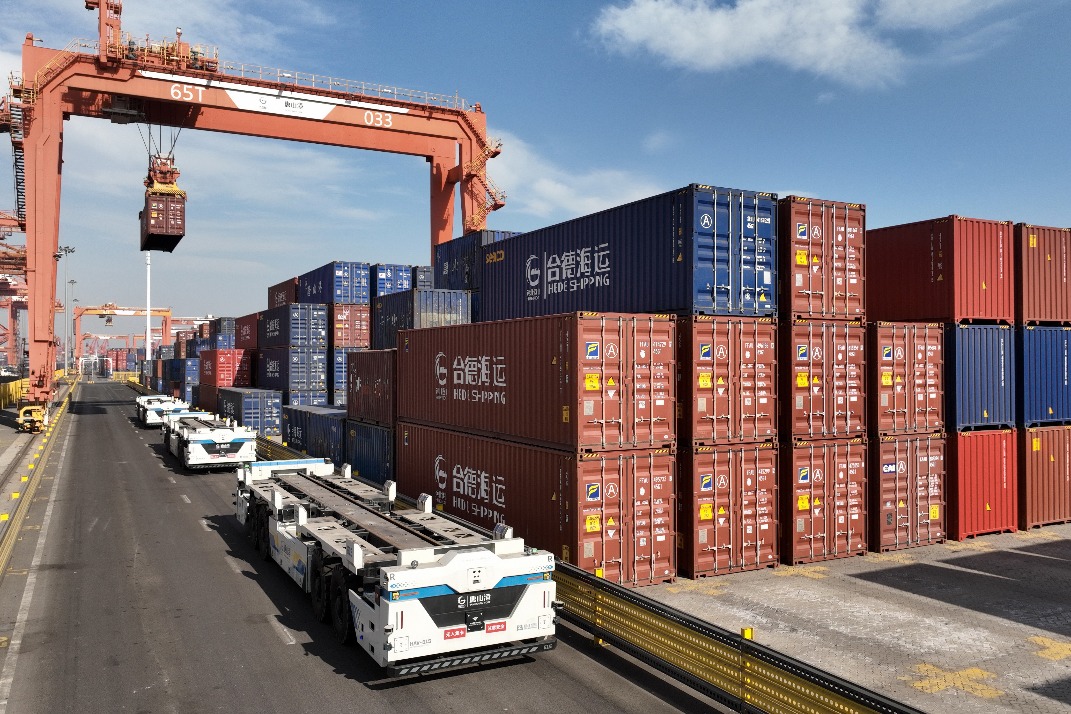
The advancement of the BRI has led to continuous integration and increased trade among participating countries and regions, thanks to improved infrastructure across everything - from ports, railways and highways to electricity, aviation and communications. This has increased availability of, and access to, commodity products.
At the same time, it has driven the rapid growth of a large number of small-and micro-sized enterprises, which has effectively helped optimize China's industrial, employment and product structures.
Meanwhile, it has also offered a better consumption environment and provided a wider range of commodities, which has ultimately improved willingness to spend and stimulated people's desire for products of higher quality.
The BRI has also helped buoy cross-border e-commerce, which has enabled Chinese consumers to "buy around the world" without leaving their homes, further unleashing consumer demand and promoting consumption upgrade.
Middle-income women
Cuts in taxes and administrative fees coupled with a strong economy, rising wages and a solid job market have helped increase incomes, which in turn has driven household consumption. According to the National Bureau of Statistics, the number of Chinese middle-income consumers exceeded 400 million in 2017, and that figure will continue to grow in the future.
Around 140 million households are earning between 100,000 yuan ($14,286) and 500,000 yuan each year, which is the household income "sweet spot" for purchasing cars and houses, and discretionary spending on leisure and traveling.
Today, China's middle-income group has relatively stronger spending power and willingness to consume, and the future consumption market has strong growth momentum.
The heightening demand and increasingly discerning tastes of middle-income consumers are undoubtedly contributing to the rise in consumption.
Nowhere is this more evident than among China's middle-income female consumers. With the continuous advancement of society, women have gradually become the main decision-makers for consumption, especially household consumption.
Notably, female consumers in China are far more optimistic about their future economic prospects than the national average - Nielsen's second-quarter Consumer Trend Index saw China's female consumers posting an index of 130 points compared to 115 points nationally.
Female consumers in China are also more optimistic than the national average about their future job prospects (81 percent versus 79 percent), willingness to spend (78 percent vs 61 percent) and personal finances (92 percent vs 70 percent).
As they gain broader access to trends from around the world, middle-income Chinese women have a stronger willingness to upgrade the quality of clothing, food, housing and transportation, and purchase items such as jewelry and furniture. They are also becoming more image-conscious, and as a result we have seen significant gains in categories such as health and beauty.
Rapid urbanization
The rate at which China's population is migrating to urban areas is remarkable. From 2008 to 2018, the percentage of the country's population residing in urban areas increased from 46 percent to nearly 60 percent.
NBS data showed that in 2018, urban areas created new jobs for more than 13 million people - a record 123.7 percent of the annual target and the sixth consecutive year of exceeding 13 million.
Reflecting the strengthening jobs market, Nielsen's China Consumer Trend survey found Chinese consumers' confidence in local job prospects jumped from 70 points to 77 points, from 2017 to 2019. Confidence in job prospects in third-and fourth-tier cities rose from 62 to 67, and from 65 to 71 in respectively.
Confidence in job prospects in the north and west remained high, delivering substantial growth - the indicator in the northern areas increased from 57 points in 2017 to 72 in 2019, while the west jumped to 72 from 68.
Urbanization not only means rural populations will migrate to urban areas. More importantly, urbanization reflects a huge consumption market with potential that has not yet been fully explored. It also indicates that greater consumption potential in the Chinese market will be unleashed.
21st-century tech
As the country's innovation-driven development strategy has been implemented, new technologies such as big data, artificial intelligence and the internet have flourished and been popularized.
The industry chain's upstream and downstream, as well as online and offline channels, have been integrated in a fast-paced way.
Hypermarkets, small supermarkets, convenience stores and other traditional channels, are now deeply integrated with online platforms.
New industries, business patterns and products are constantly emerging and forming at a fast pace. New industries and businesses such as New Retail and shared economies have emerged, injecting strong momentum into sustained economic development and further stimulating growth in China's consumption market.
Online channels have also been a significant driver of the growth of Chinese consumption and, coupled with the enormous scale of the offline channel, this is a powerful dual-engine for sustainable growth - Nielsen data shows overall growth for FMCG at 13 percent, of which online and offline sales channels account for 32 percent and 4.9 percent respectively.
Against this backdrop of steady consumption growth, China is set to become the world's largest consumer market, which will drive both local and global economic prosperity for many years to come.
Justin Sargent is Nielsen China President.