Mixed signals – Huawei and the US









Editor's note: Freddie Reidy is a freelance writer based in London. He studied history and history of art at the University of Kent, Canterbury, specializing in Russian history and international politics. The article reflects the author's opinions, and not necessarily the views of CGTN.
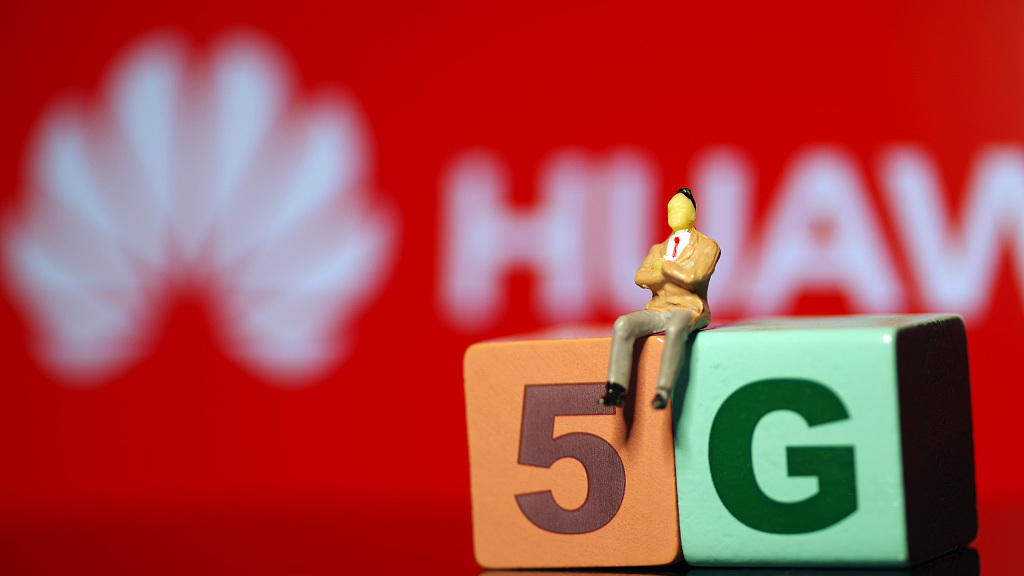
The US appears poised to install its third 90-day extension to the license offered to Huawei Technologies Co. Ltd. that allows US companies to continue to do business with Huawei. This is the latest development in a series of manoeuvres since President Trump added the Chinese technology giant to the Entity List in May this year, citing security concerns. Adding Huawei to the Entity List has meant an effective ban on products and services unless specifically authorized by the White House.
The initial 90-day license and the extensions reflect both the protracted nature of the issue and the importance of a resolution with seemingly limited alternatives and benefits to either party. The apparent reason for granting an extension appears to be the need for 3G and 4G support which Huawei currently offers the US's most remote rural areas who are dependent on cellular connectivity.
In many ways Huawei has become talismanic for President Trump's wider policies toward the People's Republic of China. The President is keen to be seen as not merely defending American jobs from foreign competitors but also defending US strategic interests. The White House sees China's Huawei as a threat to national security. However, there is little evidence thus far of any security threats that current Huawei infrastructure poses, though the political capital from these reforms is strong even if the facts don't support it.
In practice, Huawei offers the most economically competitive solution for telecommunications infrastructure and thus it is hard to exclude the company from the list of bidders for major contracts.
Initially the Trump administration had also attempted to apply considerable pressure to US allies who may be contemplating appointing Huawei for future 5G contracts.
Australia subsequently removed Huawei from its bidding process. The United Kingdom also came under considerable pressure with questions being raised over UK membership of the Five Eyes intelligence alliance between Australia, Canada, New Zealand and the United States.
Then Prime Minister Theresa May resisted this pressure however, citing assurances from UK security services MI5 and GCHQ that any attempted threat could be countered and the decision has been postponed. NATO ally Germany also declared they would not block a Huawei bid, so the Trump position has become a little more isolated among allies that the US would be sharing intelligence with.
Aside from infrastructure projects, Huawei in the second quarter of this year accounted for 17.7 percent of global smartphone market share, behind South Korea's Samsung with 22.9 percent and ahead of US rival Apple inc. with 10.2 percent.
After Huawei's appearance on the Entity List, Google also announced that Huawei would be blocked from their Android mobile operating system's "core" functionality thus offering a more basic version of the open source system.
In response, Huawei launched HongmengOS or, as it is known in anglophone markets, HarmonyOS. The operating system isn't simply limited to smartphones but also has the ability to serve as a platform for other devices such as smart speakers, printers and domestic appliances in what is referred to as the Internet of Things; namely a network of devices connected to the internet which can be controlled remotely by the user.
To Google, the loss of market share in the world's second largest manufacturer of smartphones as well as the market position of China is surely a blow, and emblematic of similar losses other companies will have as a consequence of the trade war.
The impact of this loss is far greater than just China though. As Chinese firms continue to expand into emerging markets the prevalence of Chinese devices is also increasing and so in a crowded field the US presence abroad has become thwarted by domestic policy.
There is no question that the US-Sino trade war is putting a significant burden on the ambitions of many American and Chinese firms. The initial 90-day license awarded to Huawei was an early indication of the need for the firm's services and highlights the international interconnectivity of which many nations are a part. Protectionist policies in technology are only proving to limit the potential of the industry and thwart a more universal experience which for so long had been an issue.
To that end, Microsoft President Brad Smith cautioned against the potential mistake of "(drawing) some new digital iron curtain down the Pacific Ocean — I think that would hold back the United States and would hold back the democracies of the world."