COVID-19 won't have long-term impact on BRI
Projects with horizons spanning years may not suffer from short-term hitches, experts say









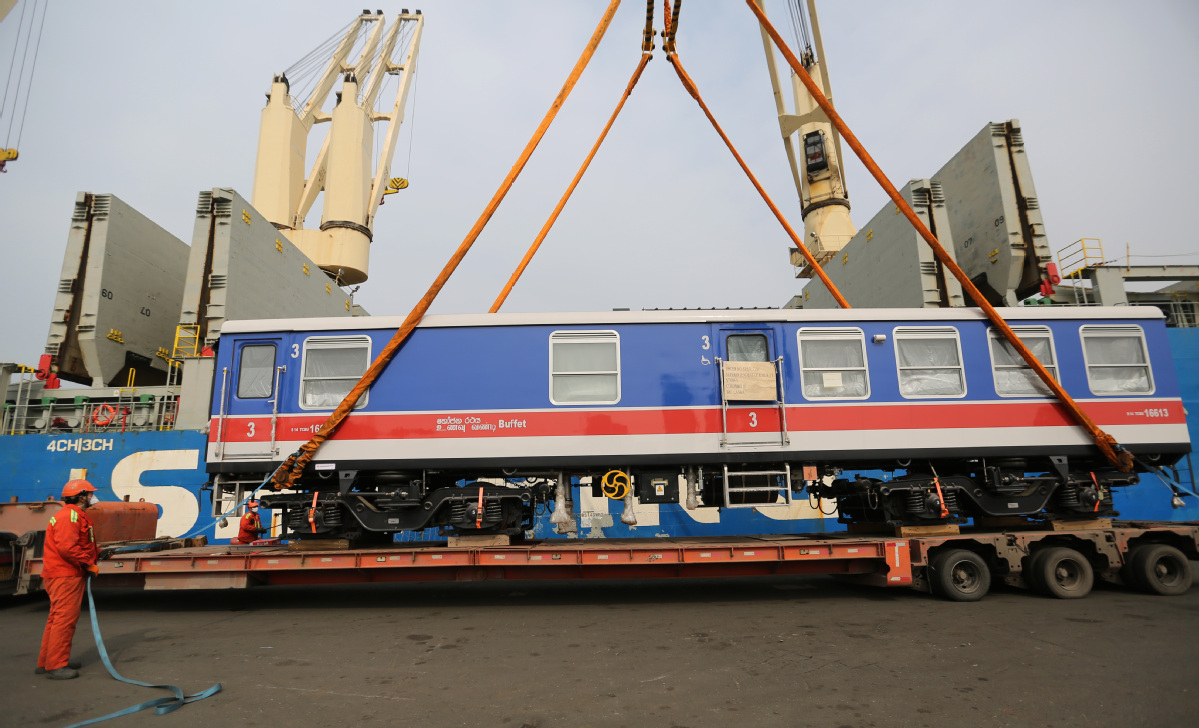
The Belt and Road Initiative may experience short-term delays from the COVID-19 pandemic, but its long-term momentum will be sustained and even strengthened with multibillion-dollar projects from Latin America to South Asia underway.
The impact of COVID-19 in countries around the world is very visible at the moment. Similarly, projects along the BRI have been slowed by lockdowns and travel restrictions. However, these short-term setbacks are unlikely to derail projects with horizons spanning years.
"We expect infrastructure projects to be delayed due to weaker financial sentiment and supply chain disruptions, but strong demand and a pipeline of projects continue to point to a post-crisis rebound," Jangping Thia, manager of the economics unit at the Asian Infrastructure Investment Bank, said.
The big cause of any setbacks in BRI projects are travel restrictions and border control.
For example, work on Sri Lanka's Port City Colombo project has been slowed by travel restrictions as Chinese workers have not been able to return to work.
Workers on the Jakarta-Bandung High-Speed Railway project are also unable to return to Indonesia after the Lunar New Year holiday.
As much as 14 percent of workers on the project are Chinese nationals, according to PT Kereta Cepat Indonesia China, the railway consortium that will operate high-speed rail systems in Indonesia.
"The progress of a handful of infrastructure projects undertaken by Chinese contractors outside of China will face continued delays due to the ongoing COVID-19 outbreak. Some of these projects are part of China-led BRI," Jason Yek, Asia country risk analyst for Fitch Solutions, said.
Out of all the projects currently under construction, the value of all projects involving Chinese contractors is estimated to be in excess of $300 billion, said Yek.
"Most projects involving Chinese contractors are located in Asian markets such as Indonesia, Pakistan and Laos, and projects that utilize a higher proportion of Chinese labor face elevated risks of delays."
As more countries in Asia and South America adopt stricter border control measures, exchanges and trade could be on the uphill.
Some of these BRI projects could experience some delays in the first half of 2020.
Nicholas Ho, deputy managing director of Ho& Partners Architects Engineers & Development Consultants Ltd, has seen how stricter border controls have affected construction in Hong Kong.
"The limit on lorries and vans going across the border have affected the supply chain side of the industry, such as the modules used in modulated integrated construction," Ho said.
Since the outbreak and lockdowns started in late January, supply chains have been disrupted as has industrial production in China, which is now bidding to resume normal operations.
High-frequency indicators suggest that production in the Chinese mainland as a whole fell sharply in February, Abdul Abiad, director of the macroeconomics research division for the Asian Development Bank, said.
"There have been substantial production disruptions as a result of forced business closures and the inability of workers to get to work, as well as disruptions to trade and business as a result of border closures, travel bans, and other restrictions on the movement of goods, people, and capital."
But Abdul said production levels in the mainland are now beginning to normalize.
"Readiness to deal with epidemics is correlated to quality of infrastructure. Developing economies need to invest in public health infrastructure as a key part of epidemic preparedness," said Thia of AIIB.
But he says public health infrastructure needs parallel investment in information and communications technology as it improves efficiency in healthcare delivery and epidemic control.
"We continue to hold a positive long-term view for the BRI to play a central role in the development of infrastructure and industries for a large number of BRI countries, although short-term pushbacks are expected as well," said Yek of Fitch Solutions.
And new kinds of projects might emerge.
"Once China has recovered from the situation, it might be able to offer a different sort of diplomacy by offering its medical expertise and supplies to countries that need it," said Ho of HPA, whose firm has projects in BRI countries.
For example, the pandemic might create a demand for more healthcare facilities along the BRI.
In the end, said Ho, projects might be delayed but will ultimately continue and he is confident that business appetite will rebound: "In the long run, a few months' delay is not going to stop an initiative like the Belt and Road."