Poverty will be eradicated despite outbreak









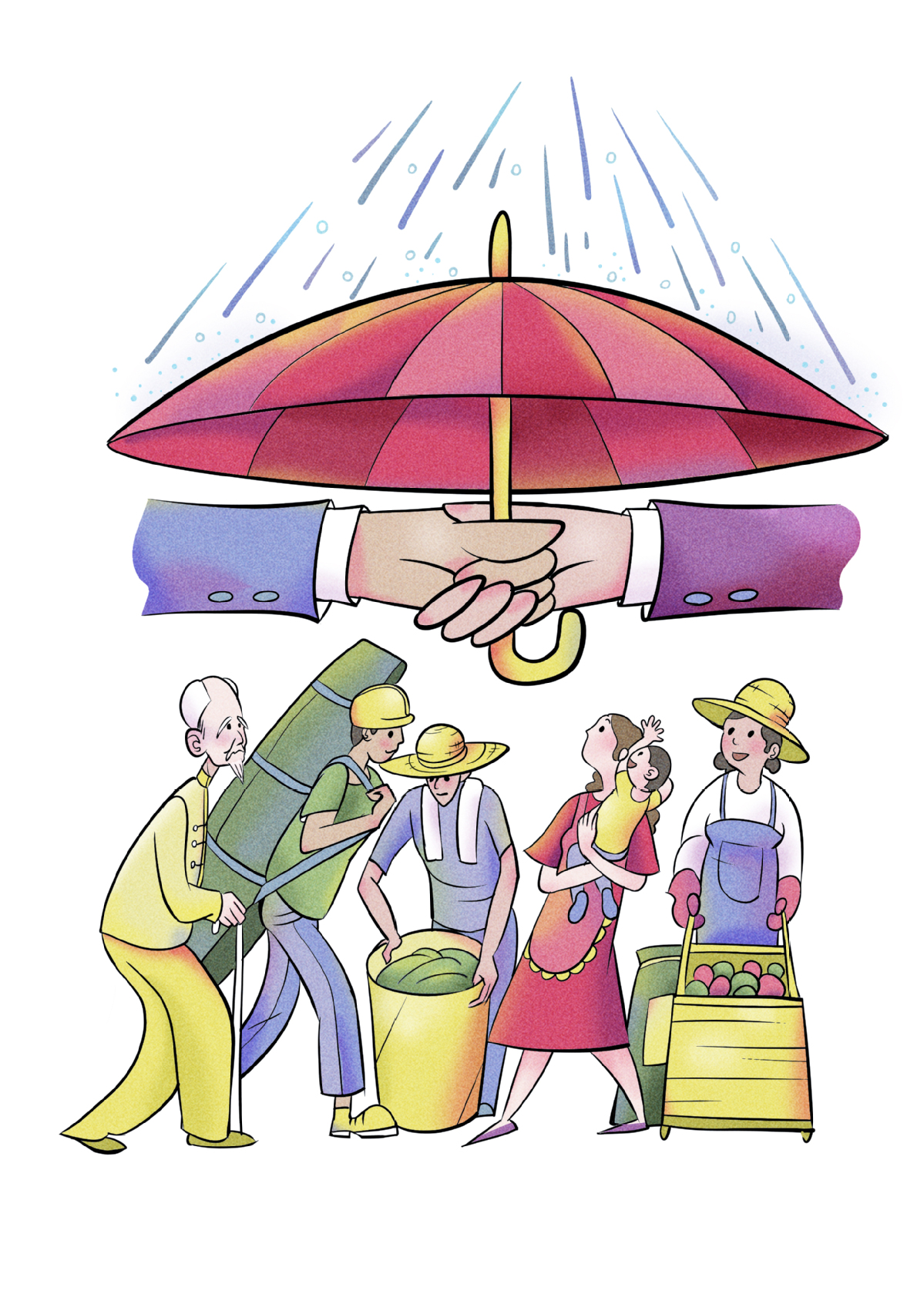
In the Government Work Report he submitted to the 13th National People's Congress during its annual session last month, Premier Li Keqiang reiterated that the government remains committed to eradicating extreme poverty by the end of 2020.
Before that, President Xi Jinping had once again made it clear that China will achieve the poverty-eradication goal on schedule.
Yet the economic slowdown due to the novel coronavirus outbreak raises questions on whether China's goal of eradicating poverty by the end of the year is still realistic and achievable. One emerging lesson from the coronavirus pandemic, for China as well as the rest of the world, is that the epidemic will have a much bigger impact on the poor and the already vulnerable, making it more difficult for them to emerge out of poverty (or easier to slip into poverty).
So, will the pandemic undermine China's goal of eradicating absolute poverty by the end of this year?
First, possibly 100 million people in China may be vulnerable to shocks, and most of them live in rural areas. We may assume that about 90 million rural people lifted out of poverty over the past seven years are no longer enduring privation, but many of them could still be in dire straits. These people have limited capacity to cope with the impact of unexpected shocks, such as the COVID-19 outbreak-they have limited access to social services, medical and social protection, and are less capable of coping with the economic consequences of an epidemic.
Second, the COVID-19 outbreak has reduced vulnerable people's incomes-mainly because restrictions on movement prevented them from returning to work, or disrupted supply chains which has had a negative impact on agricultural production and sales. According to Chinese Academy of the Agricultural Sciences' estimates, farmers' incomes could decline by 10-40 percent-with 80 percent of those covered by a CAAS survey saying their incomes could reduce by more than 20 percent.
And third, reduction in their incomes has led to a drop in their expenditure, threatening vulnerable households' food and nutrition security. And, as a Rural Education Action Program survey shows, as a consequence of reduced incomes, their expenditure on food consumption has fallen, especially in terms of the "quality" of the food purchased-from more nutritious but more expensive food to low-cost staples. The immediate implication is that, despite food availability and overall food prices remaining stable, the reduced purchasing capacity is threatening the food and nutrition security of vulnerable households.
While the effects of the pandemic prevention and control measures have been far reaching, they have had a disproportionate and bigger impact on the poor and the impoverished. We can thus argue that the COVID-19 outbreak could influence China's poverty reduction trajectory.
In the absence of a comprehensive assessment of the pandemic's impact on China's poverty eradication goal, we can hypothesize two possible scenarios. One, fewer people may escape poverty than would otherwise have if the epidemic hadn't broken out. And two, more people are susceptible to falling into poverty due to loss of or reduction of income.
In such circumstances, the right, rather key, question is not how or whether China can still achieve the poverty eradication goal. Why? Because with the gradual recovery of the economy and a "return to normality", China can absorb, if not totally offset, the "short-term impacts" of the pandemic and will achieve the goal of eradicating abject poverty-in the worst case scenario, it could be slightly delayed. And none would doubt that lifting 100 million people out of poverty in eight years (800 million people in 40 years) is not an astonishing achievement-even if the goal is realized a few months after December 2020.
The key point, and the main challenge for China in the near future, is to ensure that those who have been rendered more vulnerable by the outbreak-due to loss of income and possible distress selling of their assets or erosion of their savings-do not fall (or slip back) into poverty. However, the government is aware that one of its main challenges in the years after 2020 will be to prevent people falling (or falling back) into poverty.
Building on more than 40 years of strategic partnership with China to promote rural development and reduce poverty, the International Fund for Agricultural Development will continue to support China in making vulnerable people resilient to shocks and preventing them from sliding into poverty-in other words, ensuring the long-term sustainability of the poverty-reduction achievements.
The author is country director and International Fund for Agricultural Development representative for China, the DPRK and the ROK.
The views don't necessarily reflect those of China Daily.