Pandemic uncovers potential for innovation across Africa









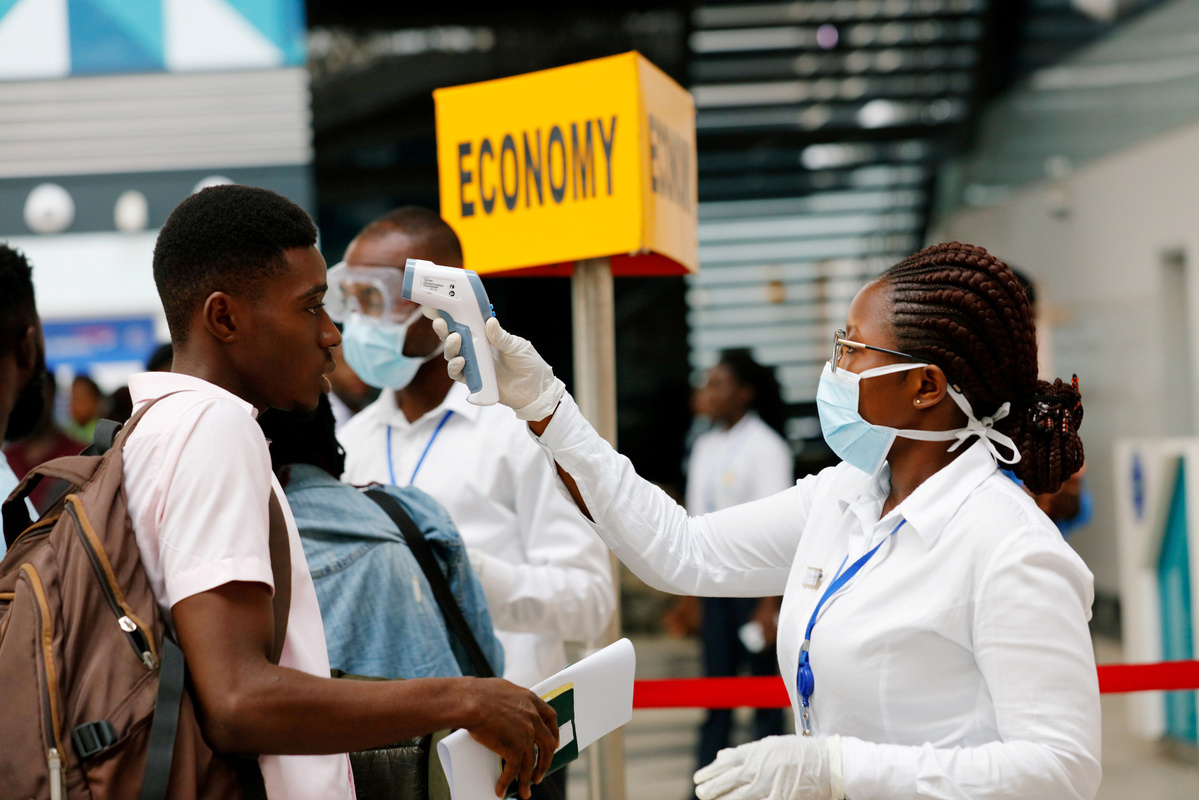
The COVID-19 crisis has not only exposed Africa's weak healthcare system, but also has uncovered the significant potential of an emerging team of young innovators.
This phenomenon has demystified the connotation of Africa's over-dependence on the Western world, particularly the United States, over the sustenance and management of its healthcare systems.
Despite pessimism from leading voices from Western development agencies, Africa has demonstrated unprecedented preparedness in the containment of COVID-19.
The crisis has seen the scaling up of molecular testing across the continent as well as the integration of molecular diagnostics of diseases such as tuberculosis and HIV with that of COVID-19.
When the global supply chain was interrupted and the demand for personal protective equipment reached a record high, countries such as Kenya became highly innovative by developing and enhancing their capacity to produce such equipment locally. This has been expanded to the design of medical ventilators and improved nasal swabs.
Other countries such as Ghana have pioneered the process of pooled testing of COVID-19 samples after the global market became inaccessible, thus speeding up the processing time and increasing the number of people tested daily.
External influence in the medical sector, especially from the Western powers, is gradually being replaced by partnerships with African nations in finding solutions to diseases and epidemics.
For instance, the Institut Pasteur in Dakar, Senegal, and the UK-based laboratory Mologic entered into a partnership to develop a prototype for a diagnostic test for COVID-19.
Judging from their experience in managing HIV and tuberculosis, the rest of the world has a lot to learn, and crucial lessons can be adapted for SARS-CoV-2 testing.
Today, more than ever before, there is increasing social and political consciousness among Africans and their governments. Any intention, policy or action concerning Africa that is founded on prejudice by the Western countries is often met with resistance and rebuttal.
No wonder that recent insinuations that Africa would be a testing ground for vaccines against COVID-19 elicited a strong reaction from the continent and the globe as a whole.
It is, therefore, crucial for external actors to note that any medical trials of such nature must be informed by concrete justifications and guided by international regulations and protocols while upholding ethical principles and standards.
It is obvious that Africa may not be in a position to produce everything that will satisfy its medical needs, and neither is any country in the world. Every member of the international community has fewer options than to seek international cooperation.
Despite the sweeping wave of isolationism by the US and other major Western economies, Africa has defined itself with relevant innovation and resilience in the face of the COVID-19 crisis.
Another big challenge we have, as a continent, is the financial loss due to a brain drain. African nations invest heavily in training health workers but lose a sizeable number to the rich countries.
According to a team of Canadian doctors led by Edward Mills, whose report was published by the University of Ottawa in 2011, it is estimated that African nations spend between $21,000 and $59,000 to train each doctor.
In the end, more than $42.7 billion has been lost to the United Kingdom, $846 million to the US, $621 million to Australia and $384 million to Canada. Simply put, Africa's loss is a gain for the rich economies.
In order to regulate and counter this trend, there is a need for African nations to collaborate and design policy measures that will ensure that rich countries provide financial and logistical support to health institutions in Africa. Thus, medical recruitment of African professionals should be regulated by law.
The author is a senior associate with the Kenya-based Africa Policy Institute and a lecturer on public policy at Kenyatta University.