US should tell the truth about why it's blacklisting China









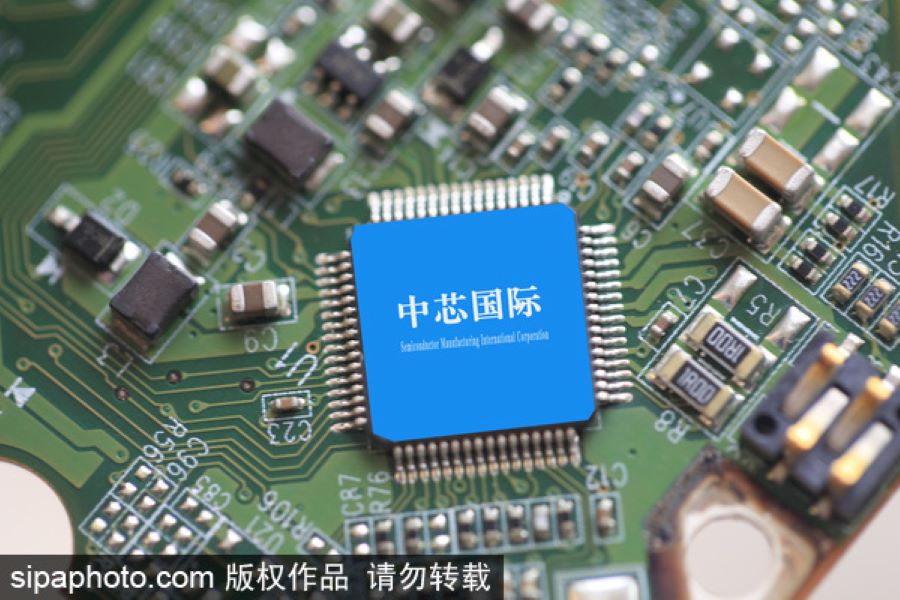
Reuters reported early on November 30 that four more Chinese companies – including the Semiconductor Manufacturing International Corporation (SMIC) – will be added to the US blacklist, which makes it practically impossible for Americans to invest in them.
The official reason is that they're allegedly owned or controlled by the Chinese military, something that these companies and Beijing both vehemently deny. The real reason, however, is that the US companies can't compete with them, and Washington should come clean about this.
Blacklisting Chinese companies under false pretexts is politically convenient for the US to do. America wants to fearmonger about what it officially regards as its chief strategic competitor by making it seem like the People's Liberation Army (PLA) is secretly running the country's economy.
The false impression that this is intended to cultivate among the targeted information warfare audience is that those who cooperate with these companies are indirectly supporting the PLA.
The US hopes that it can then pressure them to invest in other companies instead, preferably its own or its allies'. In other words, this information warfare narrative is nothing more than a means to advance US President Donald Trump's envisioned "decoupling" of the US and Chinese economies, and on a grander scale, get the rest of the world to curtail their economic cooperation with China too.
His government obviously isn't confident in American companies' capabilities to compete with their Chinese counterparts on a level playing field.
That's why he's sought to unilaterally change the rules of the game by meddling in the same free market economy that the US hypocritically says that it supports. Awareness of this reality leads to several insightful conclusions.
The first is that information warfare is an important component of the US foreign policy toolkit. It's relied upon in order to concoct false pretexts for justifying aggressive policies such as this one and many others. The truth is too "politically inconvenient" for America, hence it must manipulate it instead.
The resultant false reality is then amplified by the American mainstream media and that of the country's allies, all with the intent of further misleading the world. Those that are lied to are wrongly made to believe that China is untrustworthy when it's actually the US that cannot be trusted.
Confidence plays a large part in economic relations, and if the world knew that the US isn't confident in its own companies' capabilities to compete with China, then this might lead to the eventual decoupling of the global economy from the US
This harsh truth must be obscured at all costs out of fear of that dire scenario transpiring, hence the US hypocritically portrays China as the untrustworthy one instead in the hope that the rest of the world will decouple from it and not from America.
It's delusional to imagine this scheme ever succeeding, but the very fact that it's being pushed speaks to both the arrogance and insecurity of the American political and economic elite. They need a global bad guy to scare the world, which is what they're misportraying the PLA to be.
China's partners know better than to fall for this ruse. Dozens of countries have seen their living conditions drastically improve over the past decade after strengthening cooperation with China, especially through its Belt and Road Initiative.
Chinese companies have proven themselves superior to many American ones, especially in the sphere of information-communication technology. The US, as the leading capitalist superpower, wants its companies to monopolize the global economy.
They can't, however, compete with the Chinese, who offer high-quality but low-cost goods and services that are a better deal for the rest of the world. That's why the US is blacklisting them on false pretexts out of desperation to chip into their growing market share while misleading the world.
Andrew Korybko is a Moscow-based American political analyst.