China's poverty reduction offers lessons for Africa









Last month, China declared victory over extreme poverty following painstaking implementation of carefully designed, decades-long poverty reduction programs. China now holds the record as the country with the most consequential feat against penury, having lifted more than 800 million people out of poverty.
This success has not only earned Beijing admiration from around the world, but is also a powerful example of what is possible when government and people work together on a specific vision.
In many ways, China is an inspiration to the African continent as far as poverty reduction is concerned. Africa is home to the largest number of developing economies, while China is now the largest developing economy, aiming for moderately prosperous status.
With more than 30 percent of Africans still living in extreme poverty-constituting over 70 percent of the world's poor-it is not hard to understand why China's enviable milestones in poverty reduction continue to resonate with governments and citizens in Africa.
For instance, much work on eliminating poverty from the face of the Earth should be actualized in Africa to realize the United Nations Sustainable Development Goals. If nothing is done differently, the World Bank estimates that up to 90 percent of global poverty will be on the continent by 2030. This is worrisome, because the year 2030 is also the UN's deadline for eliminating poverty in all forms.
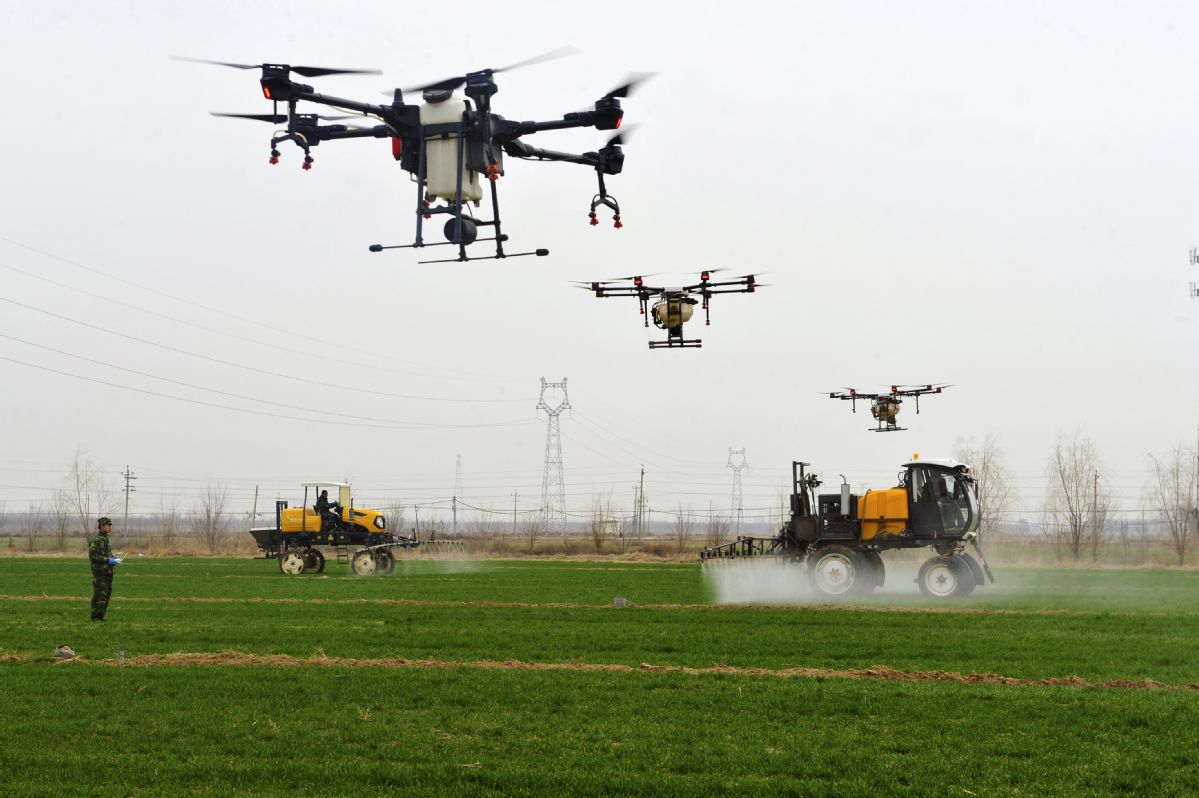
China's poverty reduction in rural areas, anchored on agriculture modernization, offers good insights for Africa's socioeconomic transformation. Since the founding of the People's Republic of China, the nation's agriculture has undergone a series of improvements spanning land reforms, agricultural cooperatives and marketization. Hoisted by modern farming methods, targeted institutions as well as progressive policies, the shift from subsistence to comprehensive agricultural production economically empowered China's rural majority and formed a key component of poverty reduction.
To feed its rapidly growing population of 1.2 billion people, Africa must move beyond traditional, one-dimensional agriculture into a multifaceted enterprise driven by science and technology. In this way, the continent can realize higher inputs, low consumption, high quality and efficiency in its agricultural value chains.
The African Union has set the task of ending hunger on the continent by 2025-a task made more challenging by the COVID-19 global pandemic, which is pushing millions more African households into extreme poverty.
Given that the majority of Africa's population live in rural areas, effective poverty reduction programs should target that group, and agriculture remains the strongest vehicle to deliver economic sustainability and food security.
Africa can also learn from China about the use of information technologies in marketing agricultural produce. The Taobao village model has, for example, enabled millions of farmers to reach far-away clients, thanks to the power and reach of the internet. This has not only led to more inclusive growth, but also has benefited multiplier industries, such as logistics, that are crucial to ensuring that products reach buyers.
In the wake of climate change, Africa's agriculture should also be anchored on sustainable ecological conservation practices. Despite being the least greenhouse gas emitter, the continent has borne the brunt of global warming with floods, droughts and erratic rainfall, further compounding its agricultural prospects.
Finally, there is no doubt that infrastructure connectivity and market integration are strong factors in hoisting modern agricultural production.
Africa is currently implementing the African Continental Free Trade Area, an ambitious project that aims at integrating African economies, currently valued at $3.4 trillion. China and the African Union have both initiated policy dialogue to fuse the aspirations of the AfCFTA and the Belt and Road Initiative. A successful AfCFTA would mean greater potential for Africa's agriculture, and China is proving to be a dependable partner to deliver on the promise.
The author is a scholar of international relations with a focus on China-Africa relations. The views do not necessarily reflect those of China Daily.