Reaching for stars will rely on teamwork









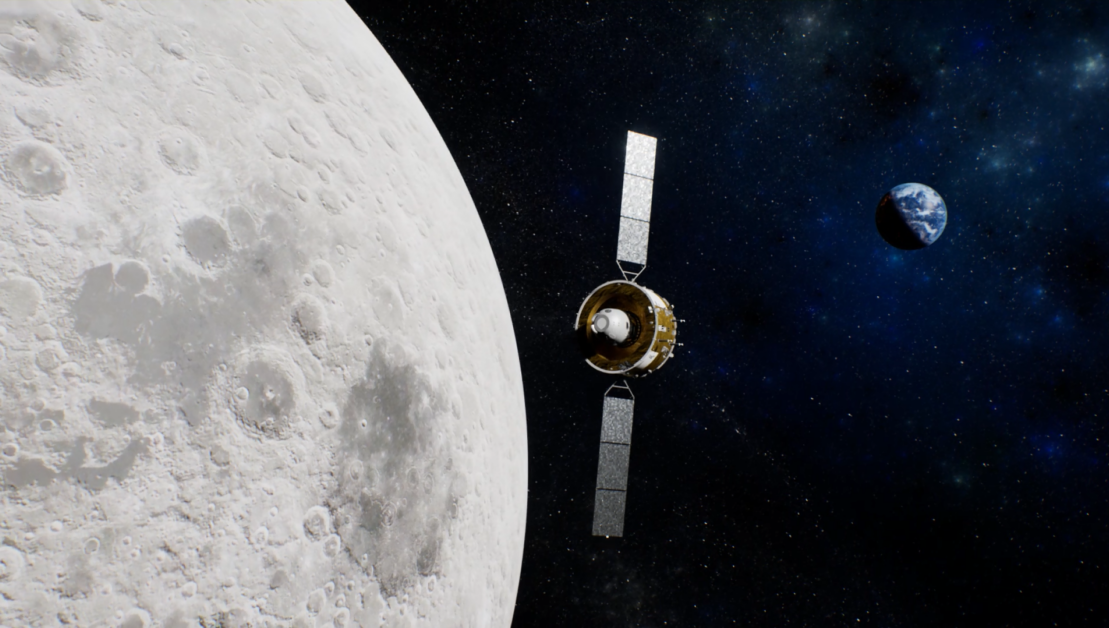
One lesson from six decades of humanity's space exploration is that competition is good, and cooperation is better.
Next month is the 60th anniversary of Soviet Union astronaut Yuri Gagarin becoming the first person to journey into outer space, completing an orbit of Earth aboard his Vostok 1 capsule.
The success of his mission was founded on the successful launch four years earlier of Sputnik 1, the first Earth-orbiting satellite in history.
In an era of intense superpower rivalry between the former Soviet Union and the United States, the Gagarin mission marked the beginning of the so-called space race that saw the US put men on the moon by the close of the decade.
Then-US president John Kennedy announced that goal a month after the completion of the Gagarin mission in a message couched in competitive Cold War terms.
Justifying his decision to reach the moon, Kennedy said that "while we cannot guarantee that we shall one day be first, we can guarantee that any failure to make this effort will make us last."
Thankfully, the space pioneers concluded early on that their rivalry should not involve exporting their earthly quarrels beyond the stratosphere.
Starting in the mid-1960s, a body of international law began to be established, setting out the principle that the moon and other celestial bodies would be used exclusively for peaceful purposes and that space exploration must be for the benefit of all.
It could be argued that without the spur of superpower rivalry, humanity might never have achieved the breakthroughs in space exploration that the world has seen in the past half-century.
But it is equally the case that without international cooperation, such progress might have stalled.
The International Space Station, a manned project that has been in operation for 20 years, would have been impossible without the participation of a range of countries, founded on unprecedented cooperation between the US and Russia. More than 240 people from a score of countries have traveled to and from the space station since its inception. In the intervening years, other countries have pushed forward the exploration of space, notably China, Japan, India and European states, but also new participants such as the United Arab Emirates. The UAE's Hope spacecraft beamed back its first photographs this month from an orbit of Mars.
US Congressman Frank Lucas, who sits on the House Committee on Science, Space and Technology, commented that the success of the UAE mission highlighted the importance of international cooperation in space.
"When we step into the far planets of the solar system or begin talking about the exploration of other solar systems, the magnitude of the resources and timeline required will take a global commitment," Lucas said during a media seminar.
But the congressman also talked about the virtues of space rivalry, saying intense competition between national programs such as those of the US and China also played an important role in encouraging innovation.
The competition-versus-cooperation debate has resurfaced in the context of the Artemis Accords, a US-backed set of guidelines for future human settlement and exploitation of the moon. The program foresees a manned lunar base being established by 2030.
However, only eight countries have signed up for the accords so far. Russia complained that the related Lunar Gateway project for a manned space station circling the moon was too "US-centric".
"The most important thing would be to base this program on the principles of international cooperation that were used in order to fly the ISS program," said Dmitry Rogozin, head of Russia's space agency.
Amid suspicions that the US is attempting to dominate the space agenda, Russia has been in talks with China about potential cooperation on establishing a lunar research station.
China's Global Times said the initiative was regarded by Chinese observers as hardly surprising. It quoted Chinese space analysts as saying both Russia and China had encountered a range of difficulties in working with the US as it pushed its space agenda, such as the Artemis Accords, with an aggressive and obsolete Cold War mentality.
A potential China-Russia understanding signals a new stage in the trend toward greater cooperation.
As Xu Hongliang, spokesman for the China National Space Administration, said, "We also welcome other countries around the world that are carrying out international moon base construction programs to join us, and make contributions to the cause of enhancing human well-being with space solutions."
The author is a senior media consultant for China Daily UK. The views do not necessarily reflect those of China Daily.