Instead of panicking, fight climate change with innovation









Across the world, politicians are going out of their way to promise fantastically expensive climate policies. US President Joe Biden has promised to spend $500 billion each year on climate policies-about 13 percent of the entire federal revenue. And the European Union has vowed to spend 25 percent of its budget to combat climate change.
Most rich countries now promise to go carbon neutral by the middle of this century. Shockingly, only one country has made a serious, independent estimate of the cost: New Zealand found it would optimistically cost 16 percent of its GDP by then, equivalent to the entire current budget of the country.
The equivalent cost for the EU and the US would be more than $5 trillion. Each and every year. That is more than the entire United States' federal budget, or more than the governments of EU member states spend across all budgets for education, recreation, housing, environment, economic affairs, police, courts, defense and health.
We are incessantly being told that renewables are ever cheaper and that a transition to green energy will make us richer. Yet this facile argument is belied by reality. Solar panels in some places make cheaper electricity at noon, but at night the cost is infinite. That is why across Europe, the higher the share of wind and solar, the higher the household cost of electricity.
German consumers had to pay €31 billion ($36.92 billion) last year to support supposedly cheaper green energy. The UN Intergovernmental Panel on Climate Change found that of the 128 analyzed climate policies, all made us poorer.
Tellingly, European Commission Vice-President Frans Timmermans recently admitted that climate policies would be so costly that it would be a "matter of survival for our industry" without huge, protective border taxes.
Climate change is a real, man-made problem. But its impacts are much lower than breathless climate reporting would suggest. The IPCC has found that if we do nothing, the total impact of climate change in the 2070s will be equivalent to reducing incomes by 0.2-2 percent. Given that by then each person is expected to be 363 percent as rich as today, climate change means we will "only" be 356 percent as rich. A problem, yes, but hardly the end of the world.
Climate policies could end up hurting much more by dramatically cutting growth. Comprehensive studies show that for rich countries, lower growth means higher risks of protests and political breakdown. This isn't surprising. If you live in a burgeoning economy, you know that you and your children will be much better off in the coming years.
Therefore, you are more forgiving of the present. If growth is almost absent, the world turns into a zero-sum experience. Better conditions for others likely mean worse conditions for you, resulting in a loss of social cohesion and trust in a worthwhile future. The yellow-vest protests against eco-taxes that have rankled France since 2018 could become a permanent feature of many or most rich societies.
Yet politicians focus on ever stronger climate policies that would lower and potentially eradicate growth over the coming decades. This would delight a few job-secure academics that from comfortable ivory towers advocate degrowth for climate, but it would lead to tragic outcomes of stagnation, strife and discord for ordinary people.
Most voters are not willing to pay for these extravagant climate policies. While Biden proposes spending the equivalent of $1,500 per American per year, a recent survey by The Washington Post showed that more than half the population was unwilling to pay even $24.
Moreover, these policies have little impact. If all Organization for Economic Co-operation and Development countries were to cut their carbon emissions to zero tomorrow and for the rest of the century, the lack of energy would devastate societies. Yet run on the standard UN climate model, the effort would make an almost unnoticeable reduction in temperatures of 0.4 C by 2100.
This is because more than three-fourths of the global emissions in the rest of this century will come from Asia, Africa and Latin America. The countries in these regions are determined to lift their populations out of poverty and ensure broad development using plentiful energy, mostly from cheap fossil fuels.
The last 30 years of climate policy have delivered high costs and rising emissions. The only reliable ways of cutting emissions have been recessions and the COVID-19 lockdowns, both of which are unpalatable. Expecting countries to stop using cheap energy won't succeed. We need innovation.
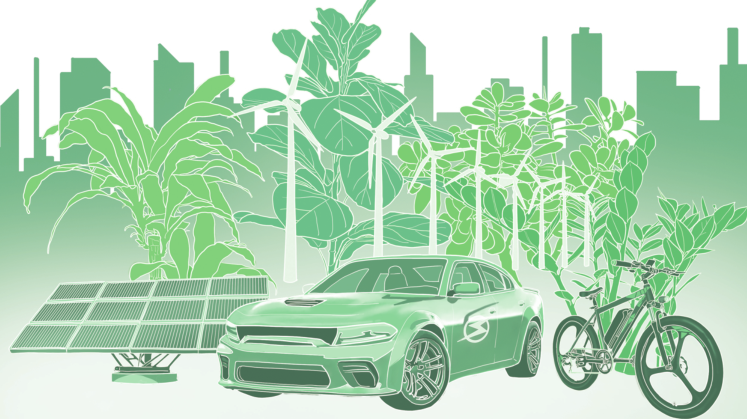
Take the terrible air pollution in Los Angeles in the 1950s. It wasn't fixed by na?vely asking people to stop driving cars. Instead, it was fixed through innovation-the catalytic converter allowed people to drive further yet pollute less. We need to invest in research and development to make green energy much cheaper-from better solar, wind and batteries, to cheaper fission, fusion and carbon capture.
Spending trillions of dollars on enormous and premature emission reductions is an unsustainable and ineffective Western world approach. Instead, we should spend tens of billions of dollars to innovate the price of green energy below fossil fuels. That is much more effective, realistic and will make everyone switch.
The views don't necessarily reflect those of China Daily.
The author is president of the Copenhagen Consensus and visiting fellow at the Hoover Institution, Stanford University.
If you have a specific expertise and would like to contribute to China Daily, please contact us at opinion@chinadaily.com.cn, and comment@chinadaily.com.cn.