100 years of achievements









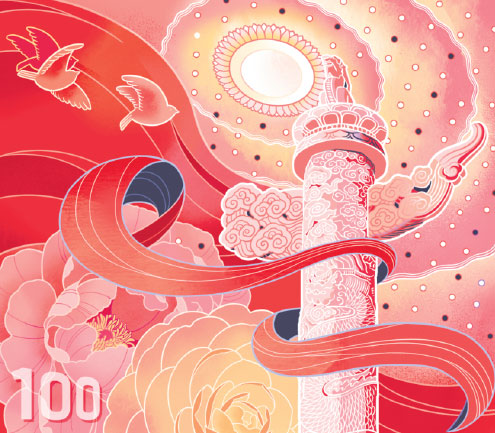
Since its founding a century ago, the Communist Party of China has steadfastly led the Chinese people toward the dream of national rejuvenation
Few countries in the world have a past associated with one of the great civilizations of history, but only the Chinese civilization can boast of having more than 4,000 years of continuity.
Few countries in Asia and Africa that were under the domination of European imperialism managed to regain their status as a great power as in the past. Among these few is China.
Few countries have managed to overcome scientific and technological backwardness and match the world's greatest powers. In 1949, after 100 years of humiliation, only 20 percent of the population in China was literate and it had only a few thousand scientists. Today, China is the country with the most people training in engineering, mathematics, science and information technology. This achievement has enabled the country to become the second-largest economy and the largest exporter and importer in the world.
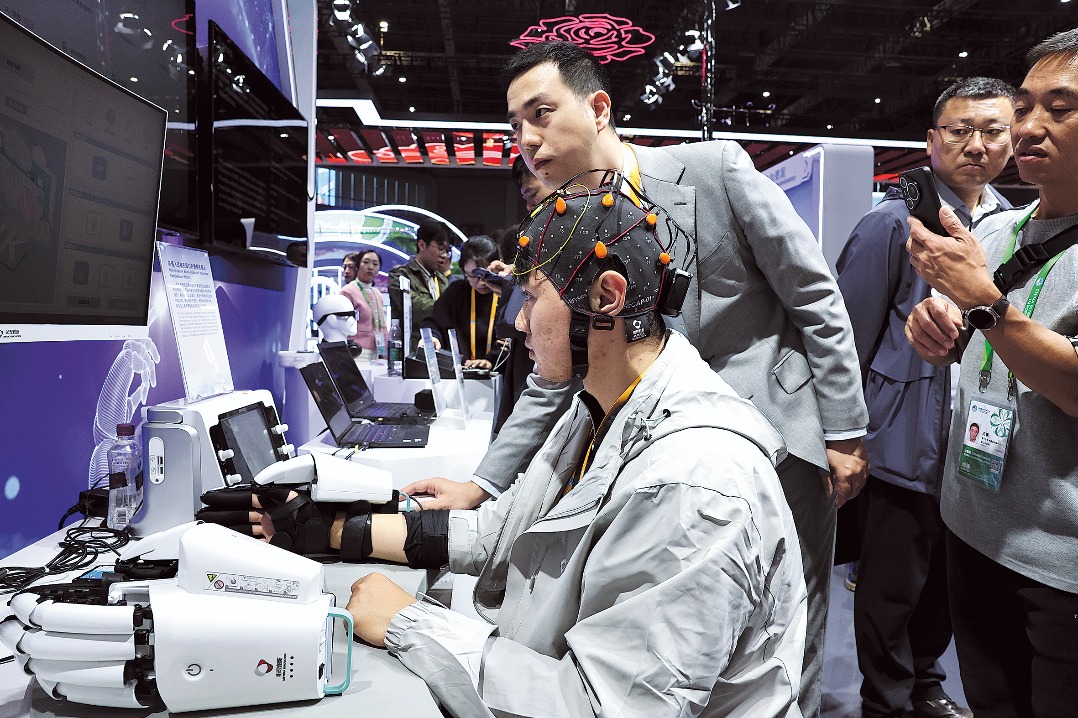
Few developing countries, by their own efforts, have managed to build a sophisticated defense system and an aerospace program. China, in 2020, was the first country to land a probe on the far side of the moon. It has developed the leading 5G technology and holds the patents in artificial intelligence. China also leads the high-speed train sector, building in 10 years a network that exceeds the sum of all other countries' lines.
Few countries that have suffered from imperialism and colonialism have managed to organize strategies to eliminate extreme poverty. Hunger is an open wound in most developing countries in Asia, Africa and Latin America. But in 2020, China managed to eradicate hunger and extreme poverty after 40 years of reform and opening-up, one of the most outstanding achievements in human history.
Worldwide, millions of people have died of COVID-19. Many developed countries have suffered a sharp drop in their GDP because of the pandemic and still face lockdowns that continue to hamper the economy. China, the first country to be hit hard by the virus, has managed to largely contain the cases of infection, has a shallow death rate per million and has reorganized its economy, being the only G20 country to grow last year. It has developed vaccines that are helping dozens of countries in the world to overcome the pandemic, mainly Brazil, where out of every 10 vaccines applied, nine are from China. While national selfishness is on the rise worldwide, China has become the primary supplier of inputs and vaccines to contain the coronavirus.
When looking for the reasons for China's success, two answers can be found: the determination and resilience of the Chinese people and the organizational capacity of the Communist Party of China.
The CPC is heir to the indignation of the Chinese youth that manifested in May 1919, when they denounced the Treaty of Versailles, which granted former German protectorates in the country to the Japanese. Revolutionary consciousness advanced with the creation of the CPC in July 1921, when Marxist ideas and the Russian Revolution's success excited the struggle against imperialism, factionalism and corruption that had weakened the country. But the CPC did not only have an anti-imperialist action. It presented a socialist program that promised a better life for the urban working class and the large mass of farmers.
The great victory obtained on Oct 1, 1949, was achieved after much struggle and perseverance, not only against reactionary nationalists but against Japanese militarist imperialism. The consolidation of the People's Republic of China and the country's stabilization were achieved with great difficulty, including a costly war in the Korean Peninsula between 1950 and 1953. Also, due to an ongoing search for a Chinese way to socialism, which differed from that of the Soviet Union, the leadership of the CPC incurred mistakes, such as the "great leap forward" (1958-60) and the "cultural revolution" (1966-76), but which served as a beneficial experience for the later phase, in 1978, when the reform and opening-up period began.
Western analysts often divide China's history by separating the legacy and experiences that occurred during the leadership of Chairman Mao Zedong from the period led by Deng Xiaoping. It is a mistake, because without Mao's estate, Deng era's accelerated development could never have occurred. The CPC, under the leadership of Mao, withstood international pressure, divided the rural land among villagers, contributed to women's autonomy, organized a campaign for mass education, created a heavy industrial sector and built a strong defense capacity. In other words, it guaranteed the means for national sovereignty and the next steps.
Under Deng's leadership, the country shifted its focus as the "fundamental contradiction" was no longer the class struggle but the fight against backwardness and poverty. This new approach contributed strongly to the stability of the country and the CPC, despite some setbacks. The Deng era enabled China's reintegration into the world economy, reintroduced the market economy, and outlined "socialism with Chinese characteristics". The following generation of leaders, Jiang Zemin and Hu Jintao, persevered on Deng's path, strengthening the economy and laying the foundations for the continuous improvement of the Chinese people's well-being.
The successes resulting from China's rapid growth have brought new contradictions, which are currently being addressed by President Xi Jinping's leadership. Since 2013, new challenges have arisen such as promoting a new-type of urbanization, the improvement of living standards in rural areas; the widening of income disparities; the negative impacts of industrialization on the environment; the limitations of the middle-income trap; the crisis of multilateralism; the emergence of nationalism at the global level; the pressures from Taiwan separatists; the trade war initiated by the United States; and, more recently, the COVID-19 pandemic. All these issues are complex topics, but with the experience acquired by the millions of officials and leaders of the CPC and the strong support of all Chinese people, all these problems can be overcome and China will achieve its goal of being a socialist and fully developed nation in 2049.
As in life, the CPC has made mistakes and enjoyed successes, but the balance has always tipped heavily in favor of the latter.
The author is a professor at the Sao Paulo State University (UNESP) in Brazil. The author contributed this article to China Watch, a think tank powered by China Daily. The views do not necessarily reflect those of China Daily.