Tibetan Buddhism based on principle of 'invariability'









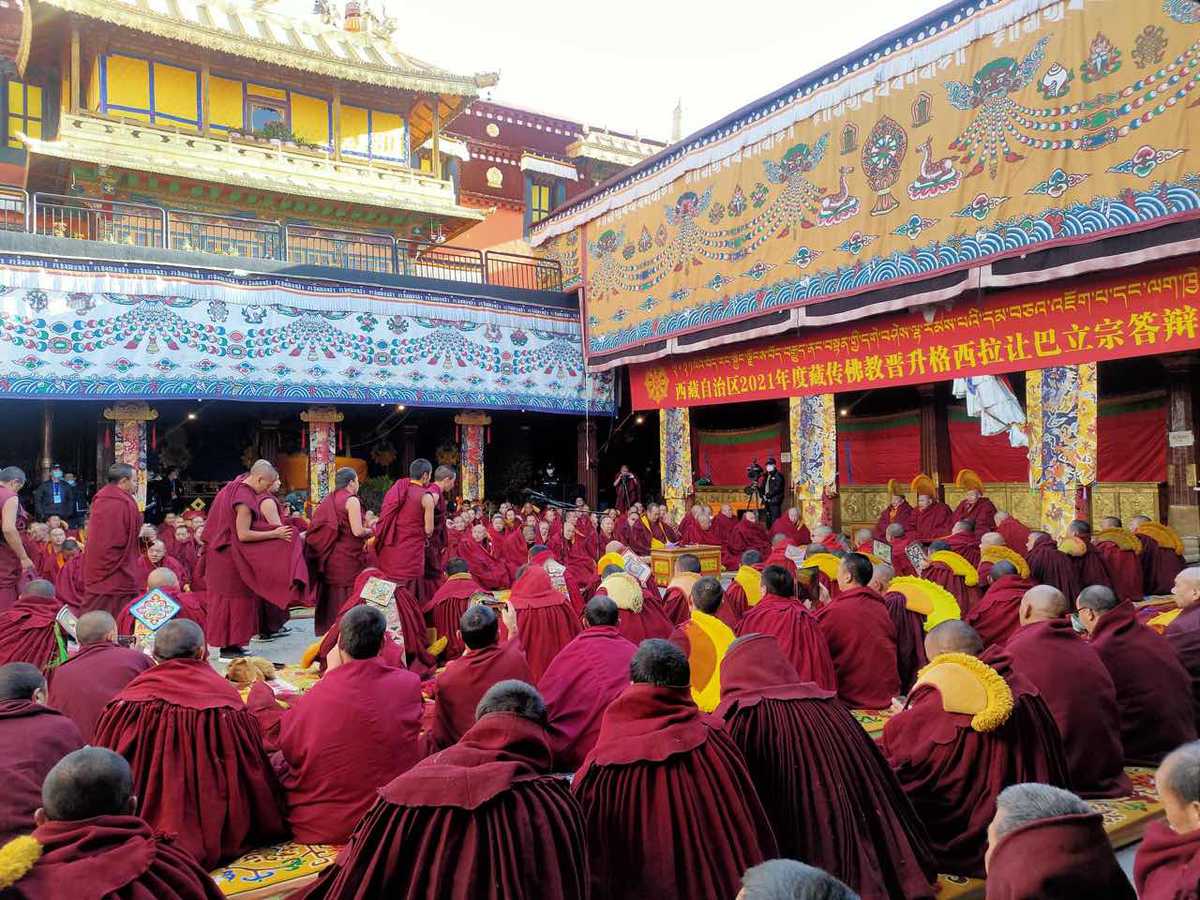
Buddhism was introduced to Tibet from India and China's hinterland in the middle of the 7th century. That was also the time when the localization and Sinicization of Buddhism began on the Qinghai-Tibet Plateau.
In its more than 1,300 years of development in Tibet, Buddhism has undergone many a twist and turn, including initial dissemination, setbacks and revival to become what today is known as Tibetan Buddhism. Not to mention it has been enriched by Chinese cultural elements.
Given that the Qinghai-Tibet Plateau is the "roof of the world" with extremely cold and dry weather, many practices of Indian Buddhism could not be replicated in Tibet. So Tibetan Buddhism has adapted to the geographical environment, and developed based on the Tibetan way of life.
Buddhism is an integral part of Tibetan culture and folklore. It has evolved with the local culture. Research shows that Buddhism's dissemination in Tibet is not separable from the Tibetan humanistic folk elements, which have played a key role in the development of Tibetan culture. Buddhism also underwent several rounds of reform in Tibet, which facilitated exchanges among different ethnic groups in a secular manner.
Indeed, the development of Tibetan Buddhism is a significant part of the history of cultural exchanges among different ethnic groups and religious practices.
Since the founding of the People's Republic in 1949, the central government has adopted a series of policies to create conditions for the healthy development of Tibetan Buddhism-in line with the overall social development.
In its early years, New China launched democratic reforms, by among other things abolishing theocracy in Tibet. Theocracy and feudalism had been hampering the healthy development of Tibetan Buddhism.
In the early days of reform and opening-up, in response to the Dalai Lama group and anti-China forces using religion to promote separatist activities in and outside China, the Party and the central government introduced patriotic education in Tibet, which facilitated the healthy development of Tibetan Buddhism.
Since 2011, the Tibetan Buddhist temples have been improving their management. And, to better adapt to the development of modern China, Tibetan Buddhists have issued interpretations of Buddhist doctrines in line with the requirements of the times.
In the hundreds of years since being introduced to Tibet, not only Buddhism but also Buddhist monasticism and practices have undergone changes, proving the eternal law that everything in this world is in motion.
But religion has some invariable aspects. For thousands of years, people have believed in some core religious doctrines and followed some core religious practices. As for Tibetan Buddhists, they have carried forward the "invariability" principle of Buddhism.
Buddhism explains the nature of the world and life, while dealing with cause and effect, compassion, wisdom, and the core doctrines of samsara. These ideas and doctrines are the basis of Buddhism, and Tibetan Buddhism has inherited them without any change.
Buddhism gradually formed a relatively complete system of sutras and treatises, which later generations assembled into three collections of books that make up the Buddhist canon of scriptures called the Tripitaka, which has been translated into Tibetan and is followed by all Tibetan Buddhists.
Although different versions of the Tripitaka have been found and a large number of explanatory works written, the original contents of these classic texts have not undergone any fundamental change. Which shows the immutability of Tibetan Buddhism.
The views don't necessarily reflect those of China Daily.
The author is deputy director of Institute of Religion Studies, China Tibetology Research Center.
If you have a specific expertise and would like to contribute to China Daily, please contact us at opinion@chinadaily.com.cn, and comment@chinadaily.com.cn.