Five forms of competition









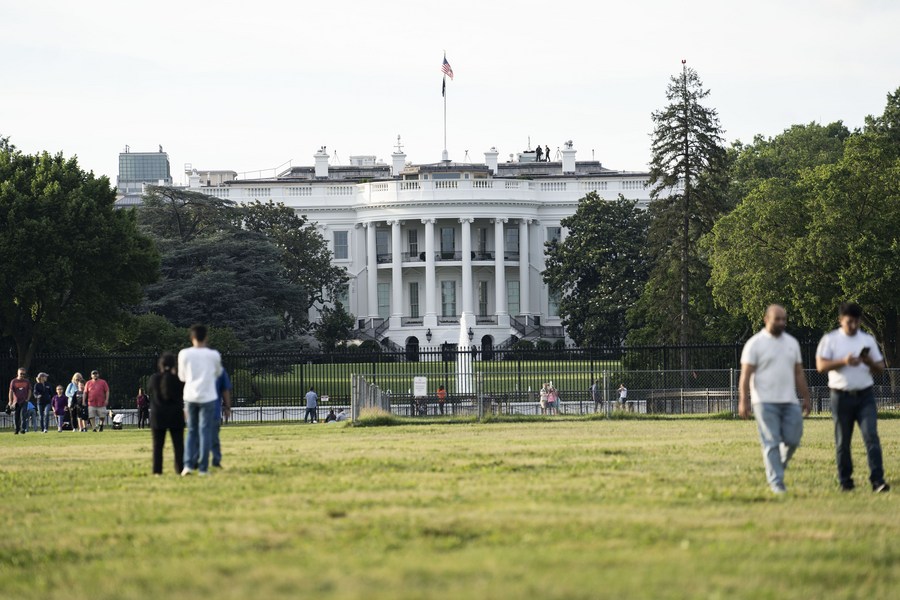
The Biden and Trump administrations share the same nature in their China strategy: It is to continue to suppress and contain China's development. But there will be some changes in the Biden approach. Since Trump, there have been five new kinds of wars: trade war, technology war, public opinion war, cyberwar and financial war. Of these, the trade, technological and public opinion wars have already started, and the remaining two await in the wings.
Biden's China strategy is based on the medium to long term, and on reducing costs and risks. So what will it do? Obviously, it will focus more on smokeless battlefields. A professor from National Defense University in the United States once said after the outbreak of the trade war between China and the US that there would not be a real war between the two countries. A trade war is a war during peacetime and will continue.
I believe the Biden administration, on one hand, will use the advantage of US institutional hegemony to suppress China, and on the other to conduct a series of competitive repressions against China in some key areas. To put it bluntly, the Biden administration will "murder with an invisible knife," which can still be deadly.
The trade war has been going on for some time, and the US government is evaluating its effectiveness. US Trade Representative Katherine Tai has indicated that negotiations with China are possible. The Biden administration's overall China strategy is to walk, chew gum and play checkers at the same time — a multi-pronged approach, as the trade war is lose-lose.
The US will compete with China while continuing to cooperate with it in some fields. For example, the cooperation between the two countries in agricultural products may continue. When American scholars put forward the concept of a trade war, they did not really want a trade war but to exert enormous pressure on China for the benefit of the US They believed that China could not withstand the blow of a trade war. However, they have found now that China will not give ground on issues of principle, and as a result the United States is likely to negotiate with China on trade issues.
Thus, the outcome of the trade war will be partial decoupling rather than total decoupling. Tariff cuts are necessary in areas where there is a complete lose-lose situation. In fact, a pause in the trade war is likely to be tied to the US demand that China change its economic development model, such as requiring its state-owned enterprises to restructure —a totally unreasonable demand that is unacceptable to China. So the trade negotiations will be very difficult. Douglas Paal, an American scholar, said that China should be the first to make concessions and take the initiative to cut tariffs. But this is hard for China to accept.
The second war is one of technology. This is the most acute area of competition between China and the US at present, and it will be for some time to come. The United States will show no mercy in this area, nor should China have any illusions. The current technology war between the two countries is ostensibly centered on the fight over 5G, but in fact it is a duel over the nation's core competitiveness. Technology means disruptive change and huge market opportunities. The United States will not compromise, and China must be ready for that.
The third war is one of public opinion. The United States has a historical tradition and experience in fighting such a war. The US government and nongovernment organizations have formed close cooperation in shaping public opinion. For the Biden administration, public opinion war is one of the main theaters of war against China. The Democratic Party emphasizes ideology and will not give up its ideological slanders and smears against China. When its own domestic system is in trouble, the US is less likely to allow institutional competition to drive it to the disadvantage.
The United States is more anxious than ever, and the longer internal instability lasts, the more worried and fearful it will become about the development of other countries. Failure to see America's institutional strengths will make the country less likely to attract talent from abroad. It is believed that the US public opinion war against China will continue and may further intensify.
The fourth war is cyberwar. The digital network is the nuclear button of the new era. Cyberwar is already happening, and the US has fought it against both Iran and North Korea. Network technology brings the rapid development of the internet. The network, like a cobweb, is deeply rooted in every aspect of society. Domestic society and the international community have been inseparably joined with the network society, which has become an integral feature of social structures. The transnational, permeable, instantaneous and synchronous nature of the network has greatly changed the form of power. The network, as a new frontier in the national security game, if attacked, it can be as destructive as a nuclear weapon.
Last is financial war. This is also an area where competition between China and the United States is likely to be especially fierce. In today's world, the dollar is still the main currency of settlement for trade. The international financial system is dominated by the US The United States also controls the SWIFT system, a trade settlement mechanism. This provides sufficient means for the US to wage financial war. There is a saying that it is enough for the world to produce goods and for the United States to produce dollars. That is to say, when the US economy is in trouble, it often uses the dollar settlement of international trade to shift the crisis.
Ian Bremmer, an American scholar, once described what he called the weaponization of finance. With the internationalization of the Chinese yuan, new forms of conflict will emerge in this area, and China and the US may face fiercer competition in the digital economy and digital currency. Therefore, if there is a new cold war between China and the United States, it will not be a reappearance of the one between the US and the Soviet Union. It will involve entirely new forms of competition. The new cold war will be more visible on invisible battlefields.
Wang Fan is Vice President of China Foreign Affairs University.