Digital economy sees robust growth amid COVID-19 woes










Digitalization in various sectors with manufacturing a major contributor
The market size of China's digital economy surged 9.6 percent year-on-year last year, the fastest worldwide, as the country bets big on the digital economy to drive its economic growth amid the COVID-19 pandemic, industry experts and officials said on Tuesday.
According to a white paper by the China Academy of Information and Communications Technology, a government think tank, the market size of the digital economy for 47 countries and regions reached $32.6 trillion in 2020, with a year-on-year growth of 3 percent.
China's digital economy hit $5.4 trillion last year in terms of market size, which ranked second worldwide behind the United States. Germany, Japan and the United Kingdom rounded out the top five.
Despite the fragile global economic recovery, the digital economy has played an important role in driving the economic recovery and sustainable economic development for economies around the world, the report said.
For the 47 economies surveyed, the digital economy accounted for 43.7 percent of the gross domestic product on average. Developed countries have a higher proportion, accounting for 54.3 percent of GDP on average.
The report is part of the findings of the 2021 Global Digital Economy Conference, which wrapped up in Beijing on Tuesday.
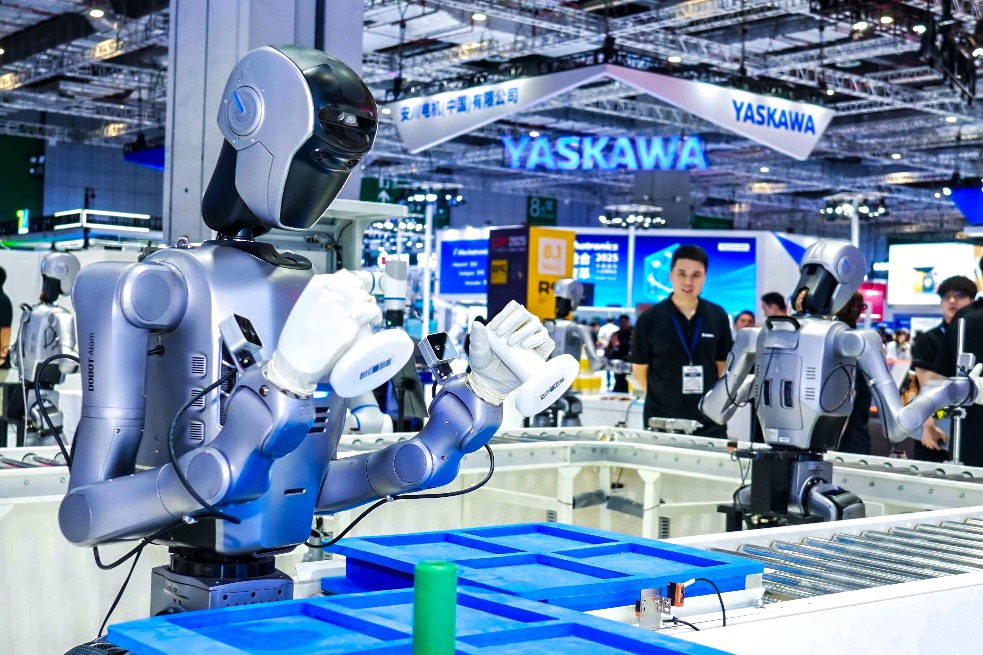
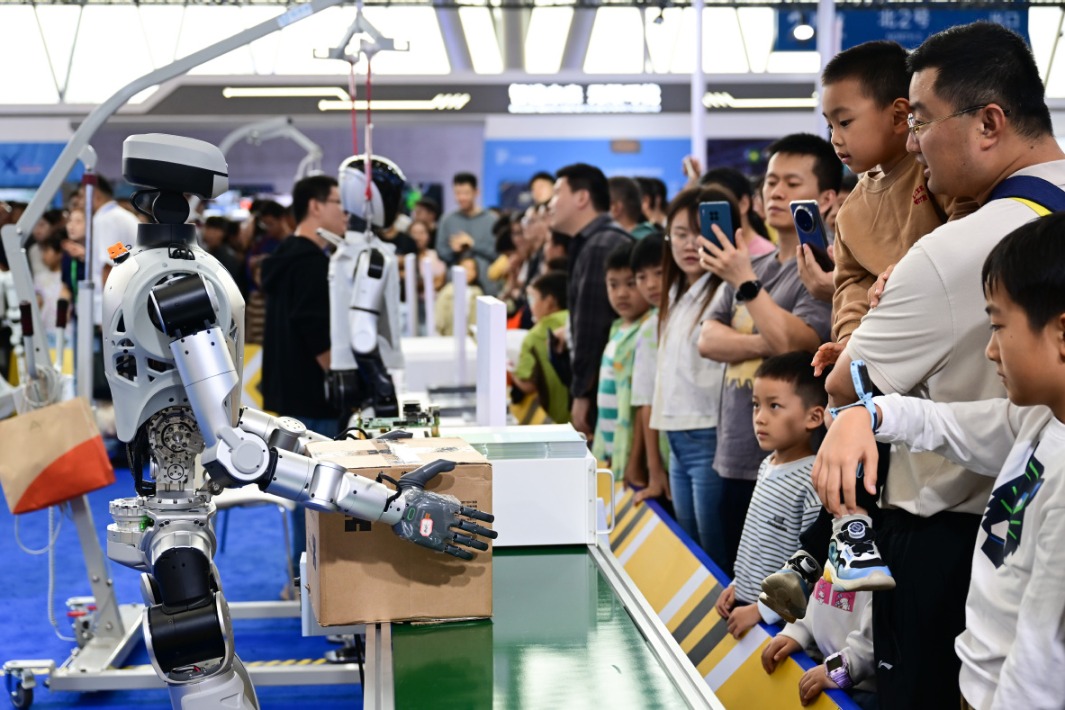
According to Hu Jianbo, chief engineer of CAICT, up to 80 percent of the country's digital economy development involves the digitalization of various industries with manufacturing being a main sector.
However, Hu said that more efforts are needed for China to first build a new type of digital infrastructure, like electricity, water and transportation managements that the country previously built up during its industrial era.
"The new type of digital infrastructure includes network facilities like data centers and intelligent computing power facilities, as well as assessing and maximizing the value of data from artificial intelligence facilities," he added.
To develop the digital economy, Huang Wei, an academician at the Chinese Academy of Sciences, said at the conference that developing independent bottleneck technologies like flexible electronics should be a priority.
Last week, China set out key economic policy directions for the second half, highlighting that the resilience of scientific and technological innovation-as well as industry and supply chains-must be further harnessed, and fundamental research should be strengthened.
"Flexible electronics represent a core technology in the intelligent era. In this sector, the country has gained some momentum in key basic technologies and has good potential to gain the lead globally," Huang said.
Liu Yulin, deputy head of information and communications technology development at the Ministry of Industry and Information Technology, said that superfast 5G technology will be another new engine of the digital economy over the next few years.
As of the end of June, more than 961,000 5G base stations had been built in China, covering all prefecture-level and above cities. The number of 5G mobile terminal connections has reached 365 million units, accounting for more than 80 percent of connections globally, Liu said.
China highlighted the digital economy as a focus of the 14th Five-Year Plan period (2021-25).
"In this increasingly digital era of globalization, countries led by the US are striving to seize the high ground in digital trade," said Liu Yingkui, head of international trade at the Academy of China Council for the Promotion of International Trade.
According to a report published by global consultancy firm McKinsey & Co, large gaps exist between a handful of leading countries and the rest of the world. The report ranked 139 countries on the basis of inflows and outflows of goods, services, finance, people and data. Singapore led the rankings, followed by the Netherlands, the US and Germany.
China has grown more connected, reaching seventh place globally, but advanced economies in general remain more connected than developing countries.
Liu said China has accumulated a huge amount of data and data streams in a group of areas, including cross-border e-commerce and superfast 5G development. These are valuable foundations for the development of the digital economy.
"Once more companies join, the platform can leverage data and artificial intelligence to optimize industrial software and fill the gaps in industrial development with developed countries," Liu said.