As China's rise affects the globe, country must find its place in new world order










With a century of unmatched economic growth, improvements to societal well-being and scientific and cultural transformation, the Communist Party of China is leading the nation into a future of greater global responsibility and leadership than ever before, in an era of novel and significant challenges.
China's rise has without doubt impacted the entire world, and the different lenses applied to its ascendance dictate how those impacts are felt and interpreted. So, it needs to be very aware that other countries look to China with questions, mainly in three areas.
This first is its role as a leader in building a new world order. Global trends, including responses to the pandemic, point toward the emergence of a new world order in which China has perhaps the most important role to play of any country.
China's rise has allowed other countries to believe that they, too, can create a prosperous future not reliant on subservience to current Western orthodoxies. However, this will not be easy.
Even though China has done an unparalleled job in achieving positive change inside its borders, the greater challenge is how to ensure that the world (particularly the West) embraces China in its position as a global leader, fit to guide the future framework in the international arena.
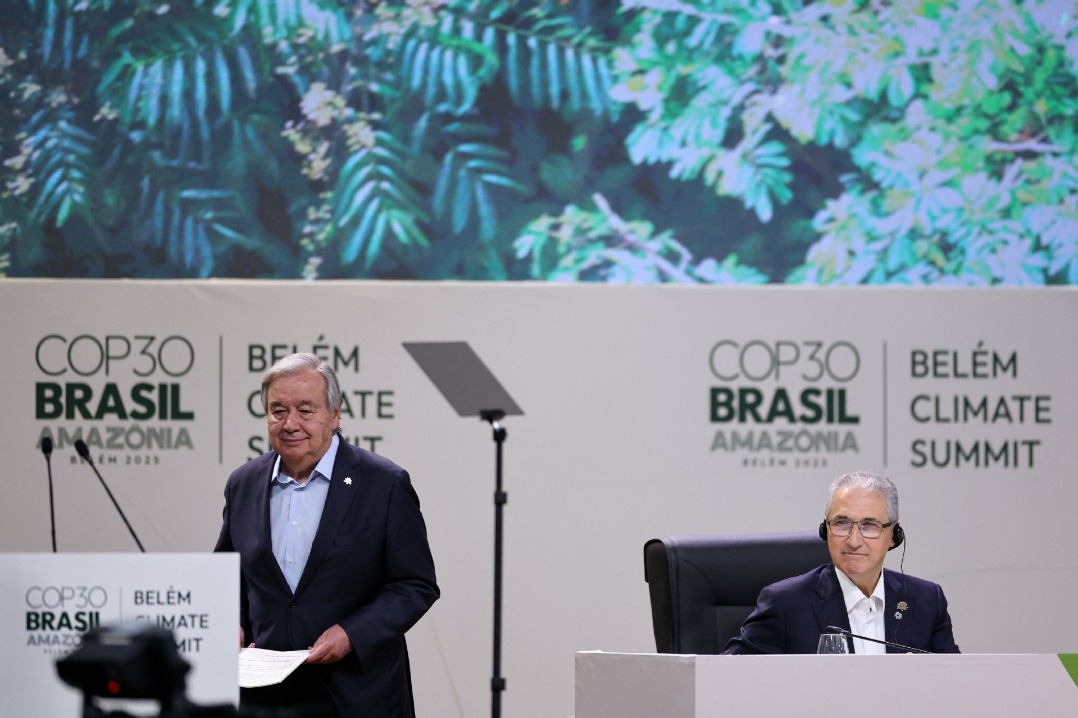
The second area China needs to focus on for the future is becoming a champion to face existential threats, namely the combined dangers of climate change, resource constraints, over-pollution, inequities, serious demographic issues and even future global health shocks.
China has taken the greatest strides of any nation in working toward a more sustainable society. It needs to go even further. The G7 may criticize China for its contribution toward climate change, but it has a low carbon dioxide emission per capita, at 7.05 metric tons, which is significantly below that of the United States at 16.56 tons. Furthermore, China now has the world's largest carbon trading market and is the world leader in producing solar energy, among other pioneering renewable energy strategies.
Thus, China will need to play a leading role in tackling climate change by creating policies, technologies and systems that can be adopted around the world and rooted in the realities of each country's context. In fact, it needs to do so in partnership with other countries-and integrate this into its Belt and Road Initiative.
Another key existential issue is the competition for natural resources. Because China's population and economy are both so large, it needs to show the world that it is a responsible steward of resources within its own borders and, more importantly, within the borders of other nations, especially as its economy and global relationships expand.
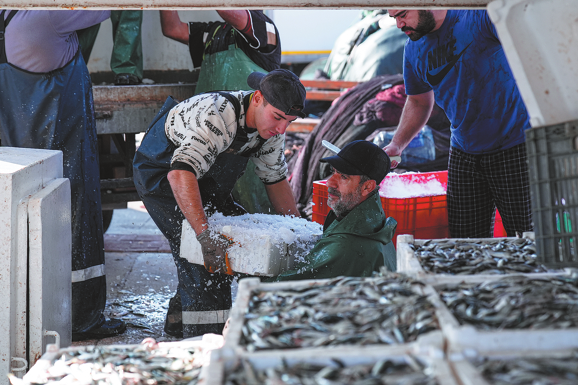
A good example of this behavior can be found in a historic policy enacted on Jan 1, 2020: a 10-year commercial fishing ban in China's largest river, the Yangtze. Putting the well-being of the environment and community before commercial interest is no mean feat.
This leads to the final point: China can actualize a vision of shared prosperity among many nations through the BRI. It is the prime opportunity for China to put its money where its mouth is, to demonstrate it interacts with countries in Asia and Africa in a manner befitting of a leader of the post-Western world, one that practices sustainable development in win-win arrangements with local partners.
In fact, China can turn the challenge of mutual sustainable development into an opportunity. Handled with diplomatic finesse, the BRI can potentially uplift economies and alleviate poverty in partner countries in mutually beneficial ways. This also serves as a statement to the world that multinational development and growth does not need to rely on Western modes of top-down development, as with World Bank foreign direct investment deals in many African nations. This is why many nations prefer partnering with China, rather than with the West.
China can also introduce a policy- and culture-based mindset shift, so that private companies that go abroad are conscious of behavior and redlines.
It is a big challenge for China to rise to be the world's largest economy and, at the same time, guide smaller nations onto a path of prosperity that is sustainable in our constrained 21st century.
Indeed, the next 100 years could see China become the leading global power, and it has an opportunity to differentiate itself from the West's notions of progress by prioritizing sustainable development and equitable partnership with the rest of the world.
The author is the Founder and CEO of Global Institute for Tomorrow and a member of the Executive Committee of the Club of Rome. The views do not necessarily reflect those of China Daily.