China a defender of global trade rules, not manipulator









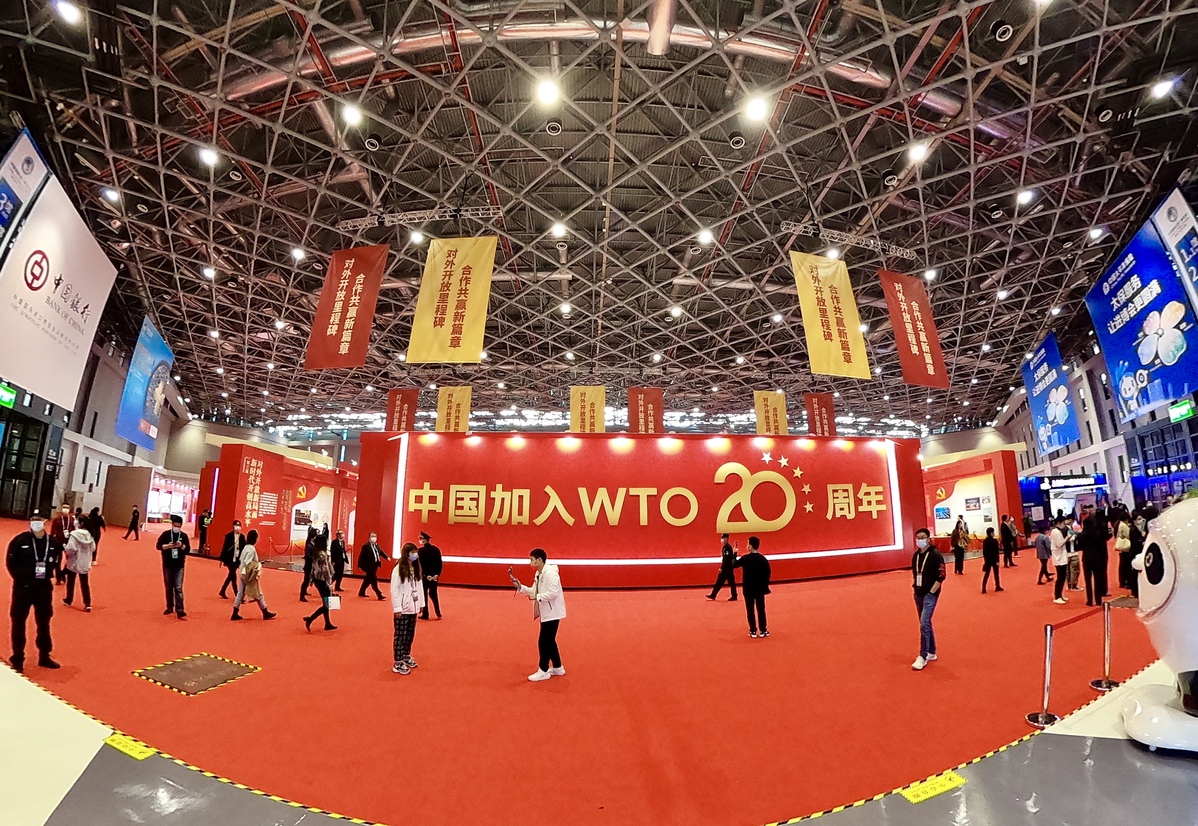
Two decades ago, a rap of gavel at the Doha conference of the World Trade Organization (WTO) declared China's accession to the global trade body.
While China's WTO membership patched a missing link in the world's multilateral trading system, some rumor-mongers in the West, particularly those in the United States, have hardly stopped their finger-pointing over the years. One of their persistent unfounded claims is that Beijing has undermined their so-called rules of world trade.
For the records, China as promised has over the past two decades faithfully followed the global trading rules set by the WTO framework. It is a defender of those rules rather than a manipulator.
The tricky part of those Westerners' accusations is that the rules they are talking about are in fact another set of rules, the kind of rules Washington can dictate and seeks to impose on the world.
Take America's trade war against China back in 2018 as an example. Then U.S. administration under Donald Trump claimed that China "ripped off" the United States in trade, and bluntly waged multi-billion-dollar tariff offensives on Chinese goods. Later in 2020, the WTO identified Washington's unilateral punitive levies as moves that breached global trade rules. The WTO's ruling drew anger from Washington who later called the organization inadequate to stop China's practices.
It is all the more clear that the United States' approach to world trade is simply my-way-or-the-high-way. This self-centric mindset can well explain why those Western demagogues always try to find fault with China: to dominate world trade and maximize their self-interests. And their so-called rules-based global trading system is in fact hegemony-based.
Another myth concocted by those Beijing-bashers is that China has taken advantage of its status as a developing country in the WTO. The truth is that there is no official definitions for either "developed" or "developing" countries, and it is up for members to decide for themselves. Also, China got hardly any of the special treatment that would normally be accorded to a developing country.
For example, China cut the average tariff rate of agricultural products from 23.2 to 15.2 percent, far lower than those imposed by the WTO's developing members (56 percent) and developed members (39 percent).
Under WTO's Trade Facilitation Agreement (TPA), China has forgone important benefits that accrue to developing countries such as by not invoking its right to receive technical assistance.
Over the years, China has been actively advocating global free trade, preserved WTO trade rules, and championed multilateralism against the headwinds of unilateralism and protectionism.
First, China has faithfully implemented WTO rules, reformed its laws and regulations according to market economy principles, and built up a legal system in line with multilateral trade rules.
After its accession, China reviewed and revised relevant laws and regulations, involving 2,300 laws, regulations and departmental rules at central government level, and 190,000 policies and regulations at sub-central government levels, covering trade, investment and intellectual property rights protection. In 2016, China set up a legality review mechanism to examine normative documents, enhancing the transparency of and public participation in policy development.
Second, it has been supportive of an effective dispute settlement mechanism of the WTO. By lodging complaints in the WTO, China redressed other members' violation of obligations under the covered agreements, and defended its own trade interests as well as the authority of WTO rules. China also actively defended the cases filed against it, respected the WTO rulings, and made adjustments to its measures according to WTO rules. So far, none of the complainants has requested for retaliation against China.
However, in settling trade disputes, Washington's way is to pull the trigger on a trade war, and render the Appellate Body paralyzed.
Third, China has always supported multilateral and regional mechanisms to play a bigger role and have a bigger say for developing countries.
In 2015, China became the 16th WTO member to ratify the Trade Facilitation Agreement. During its G20 presidency in 2016, China encouraged a number of countries to complete their domestic ratification procedures of the agreement, prompting its entry into effect at an early date.
In the Asia-Pacific region, the world's largest free trade agreement, the Regional Comprehensive Economic Partnership (RCEP) agreement with China as a member, will take effect on Jan. 1, 2022.
China also helped six least-developed countries (LDCs) accede to the WTO with The LDCs and Accessions Program established by China in 2011. Since 2017, the country has strengthened cooperation with the WTO and other international organizations under the South-South Cooperation Assistance Fund, and carried out cooperative projects in "Aid for Trade" to help other developing members benefit from global value chains.
The multilateral trading regime with the WTO at its core has been the cornerstone of international trade since its advent, and will continue to be in the future.
As the world economy is sailing through a cornucopia of economic uncertainties, China will continue to follow the WTO rules, and shoulder due responsibilities as a major economy in the world. The United States and other Western powers should do the same.