Celebrations change but festivals remain










Editor's note: As Valentine's Day is being celebrated on Monday and Lantern Festival will be celebrated on Tuesday, three scholars share their views on the festivals with China Daily.
Do you prefer to celebrate Valentine's Day, which falls on Monday, or Lantern Festival which falls on Tuesday?
Many young people may ask, "Why not both"?
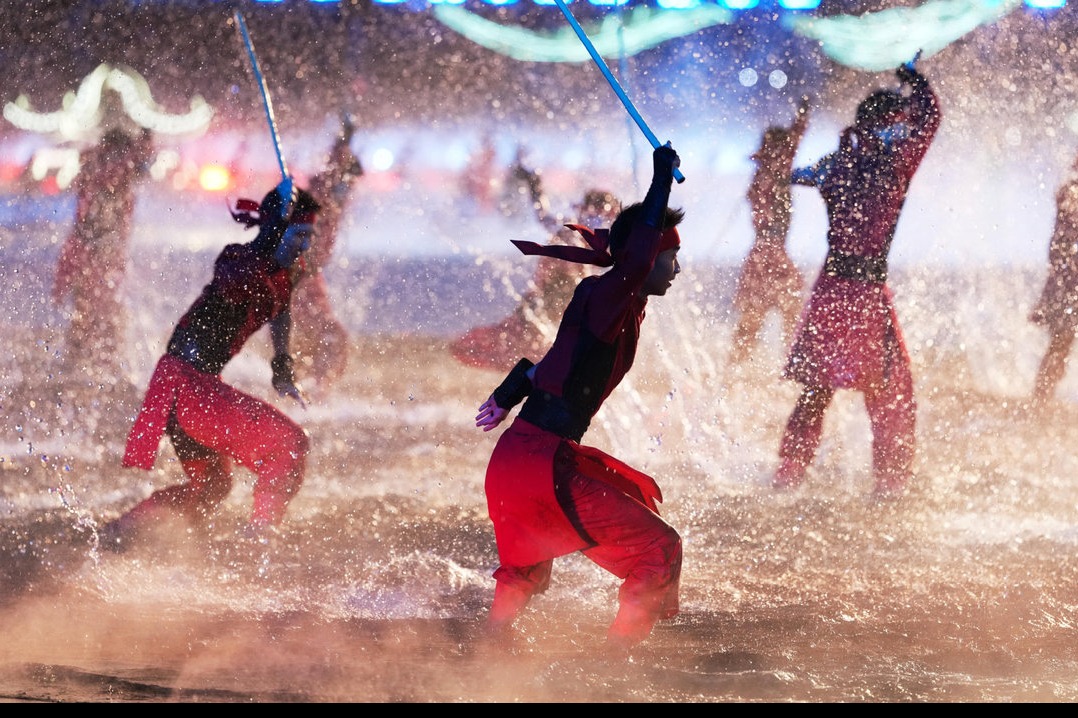
Festivals are social events people have enjoyed since ancient times, when people around the world held ritual activities in groups to worship their ancestors, pray for good fortune or celebrate the harvest. In olden days, festivals were events celebrated by a community.
Festivals arise from our ancestors' marking of seasonal changes and astronomical phenomena associated with religious beliefs. In earlier times festival activities would always be regarded as having great significance. Later, festivals often became characterized by carnivals in which some of the original significance was lost as people gathered together to enjoy a good time.
Since industrialization ushered much of the world into the modern era, festivals have gradually served to fulfill more secular, social and recreational purposes, and are less closely linked with the forces that our ancestors believed shaped people's daily lives and fortunes.
Nowadays, among the festivals celebrated in China are specific days that honor particular social groups or professions, such as the National Day, Teachers' Day and Women's Day, and the time-honored festivals, such as Spring Festival, Dragon Boat Festival and Mid-Autumn Festival, whose origins can be traced back thousands of years ago and which are now celebrated as national holidays.
There are other festivals that people celebrate to varying degrees such as Qixi, which is the Chinese Valentine's Day, and the Chongyang or Double Ninth Festival, the longevity festival, as well as many regional ethnic group festivals.
All these festivals break up the daily routine and inject vitality into people's lives.
In modern times, some Western festivals, such as Christmas, Valentine's Day, Halloween, Mother's Day and Father's Day, although not public holidays, are enjoyed by young people and have become "new celebrations" in Chinese society.
Actually, Christmas in China is more of a day for fun, friendship and fondness than a religious celebration. Shopping malls and entertainment facilities in the big cities are filled with Christmas elements, such as fir trees, Santa Claus and carols, while Halloween is celebrated by youthful party-goers who like to wear fancy costumes for the occasion.
But in general, Valentine's Day, Mother's Day and Father's Day are the most popular Western festivals in China.
Valentine's Day, which is closely linked with fashion and consumerism, is widely celebrated by young people in urban areas. They have adopted the traditional Western ways of celebrating the day, with couples enjoying a romantic dinner and exchanging gifts, such as flowers, chocolates and jewelry. Valentine's Day always gives a boost to such consumption.
Besides, Mother's Day and Father's Day are accepted by the whole society because of China's culture of filial piety. Many Chinese people take this opportunity to show their gratitude to their parents by sending gifts or having a meal together.
The cultural exchanges between China and the rest of the world help many Chinese accept foreign festivals, which in turn enrich their daily lives. Meanwhile, the introduction and acceptance of foreign festivals reveal the inclusiveness and vitality of Chinese civilization.
However, while recognizing the positive contributions these adopted foreign festivals make to cultural exchanges between China and other countries, it should be recognized that the values of these foreign festivals may be different from those embodied in traditional Chinese culture.
Against this backdrop, the authorities can play a role by strengthening the preservation and promotion of China's traditional festivals and preventing the commercial opportunities presented by Western festivals from giving them undue importance.
Chinese traditional festivals are reflections of the traditional culture and values in the modern era. The country should not let young people forget the traditional values they celebrate.
Compared with foreign festivals, Chinese festivals focus more on the family and are characterized by the different generations of a family celebrating them together.
Take Spring Festival, the most important festival in China, which fell on Feb 1 this year. The festival is associated with several customs. During the seven-day holiday, people gather for an annual family reunion dinner, thoroughly clean their houses, and decorate windows and doors with red paper-cuts and couplets that display the charm of traditional culture.
According to official data, more than 90 million passenger trips were made on China's railways from Jan 17 to Feb 2, the first 17 days of the Spring Festival travel rush this year. Actually, the festival led to billions of passenger journeys every year before the outbreak of the COVID-19 pandemic in 2020.
Traditional culture is a key element that can help finally realize the Chinese Dream of national rejuvenation. It is quite important for the country to boost its traditional festivals and culture, enhance international cultural communication and improve cultural attractiveness.
The views don't necessarily represent those of China Daily.
The author is a researcher at the China National Center for Cultural Studies, Chinese Academy of Social Sciences.