Russia's de-dollarization drive more than symbolic









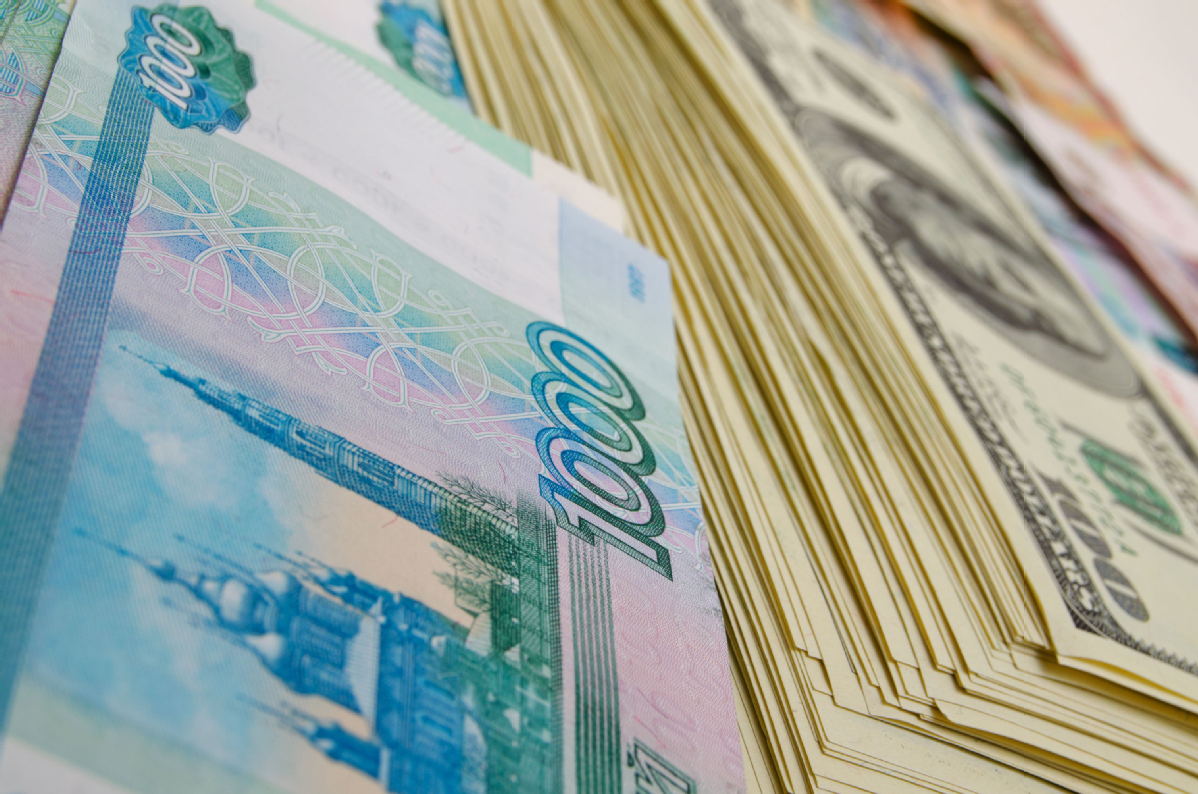
The Ukraine crisis is showing little sign of being resolved. The United States and the European Union have imposed a new tranche of sanctions on Russia, especially in financial field, aimed at increasing Russia's financing costs and weakening its economy.
Russia started "de-dollarizing" its economy years ago, to minimize the impact of the financial sanctions the United States and the European Union had been threatening to impose on the country. Unhappy with the US dollar's domination of the global economy despite the declining US economy, Russia has implemented de-dollarization policies to safeguard its monetary sovereignty, offset the impact of the financial sanctions by the US and the EU, and make the international financial order more dynamic.
Global debates on the possible collapse of the US dollar have been going on for nearly 50 years. In recent years, the debates have become increasingly fierce. Yet the dollar's hegemony continues, to a large extent.
How de-dollarization policies will play out
According to International Monetary Fund data, the share of the US dollar in global foreign exchange reserves was 59 percent in 1995, increasing to 59.02 percent in 2020. So it will be very difficult for Russia to end the dollar's domination of the global financial order. Besides, there is a huge gap in the economic strengths of Russia and the US, with the former's GDP being $1.71 trillion and the latter's nearly $23 trillion in 2021.
Given these facts, what are the prospects and significance of Russia's de-dollarization policy?
Russia and some other countries have introduced de-dollarization policies because the US uses the dollar as a weapon to impose sanctions on the countries, and the foremost anti-sanction measure is de-dollarization.
With the US imposing sanctions on other countries at the drop of a hat, in order to demand its pound of flesh, more and more countries are coming together to issue joint de-dollarization policies. Since about 10 percent of the countries and one quarter of the global population are suffering because of US sanctions, the de-dollarization trend is intensifying across the world.
After the 2008 global financial crisis, the US economy continued to hollow out, although the Federal Reserve kept resorting to quantitative easing. After the outbreak of the COVID-19 pandemic in 2020, the over-issuing of US dollars greatly increased in scale, leading to the dollar bond losing credit. This has resulted in the decline in the status and influence of the dollar in the global economic system, prompting Russia and some other countries to gradually clear the dollar bonds by increasing the share of the euro or other currencies in their foreign exchange reserves.
In the global currency competition, the dollar and the euro are generally balanced. The countermeasures against the "dollar trap" may lead to a multi-polar currency pattern. Just as the British pound gradually declined along with the British Empire, the dominant role of the dollar as the global currency too can be undermined sooner or later.
However, it is difficult for countries to take concerted de-dollarization measures since their interests differ. And the US uses the differences in interests to take them on one by one.
As such, the rivalry between the US, which is taking measures to maintain the dollar's hegemony, and countries such as Russia, which have launched de-dollarization policies, will create profound political and economic uncertainties. Also, Russia-US relations will become even more confrontational, especially in the fields of economy and finance, leading to more uncertainties in the international economic and financial order.
Yet the international payment system could undergo many changes. In the future, the international payment structure could be a combination of many options, including SWIFT(Society of Worldwide Interbank Financial Telecommunication) and the payment systems followed by the EU, China, Russia and other economies.
In fact, the interconnection between the payment systems of the EU, China and Russia could be the focus of economic and financial work of all countries to avoid the dollar hegemony in the future.
Dollar's hegemony lasts, but perhaps not forever
But Russia's ruble cannot replace the US dollar as an international currency in the near future. It is realistic to believe that Russia would take the lead in the construction of a new global financial order. Russia still lags behind the US and developed European countries when it comes to efficient allocation of market resources, which is a reflection of their financial strength, capital market perception, size of economy, infrastructure and the abundance of financial products. So Russia still has a long way to go to catch up with the advanced Western economies.
The wide gap between Russia and those economies in these areas will be an important factor affecting Russia's de-dollarization policy.
However, gold and digital currency will be important tools in Russia's de-dollarization drive. Many countries regard gold as an important tool for "de-dollarization", and Russia and some other countries have hoarded huge amounts of gold to secure their economies.
Also, digital currency, as a product of blockchain and digital technology, is a distinct virtual product of the digital age and sets the direction for future development. And the digital currencies issued by central banks will contribute to the de-dollarization drive.
Russia has made some key achievements in the field of digital currency, with the Russian digital financial assets law coming into effect in 2021 and Moscow carrying out the legislative work on the "digital ruble" in the second half of 2021. These developments will help Russia gain some advantages in digital currency and further promote its de-dollarization drive.
The significance of Russia's de-dollarization drive is that it is the most radical of de-dollarization measures taken by countries using other currencies. Russia has not only implemented de-dollarization measures domestically, but is also taking some tough measures in financial information exchange and international energy settlement currency. Because of Russia's resolute de-dollarizing measures and its vigorous efforts to deepen international cooperation, more and more countries are following in its footsteps to de-dollarize their economies or assisting it in its de-dollarization drive.
Therefore, we can say Russia's de-dollarization drive has had a global impact.
That some countries want to de-dollarize their economies shows the dissatisfaction with the US dollar's hegemony in the global financial and payment systems, concerns over the over-issuance of the dollar, the call for changing the dollar-based Bretton Woods system, and the need to change the current international economic and financial orders, so as to make them fairer and more balanced.
Although the de-dollarization drive cannot end the dollar's influence on the Russian economy in a short time, Russia has shown the world that the dollar's hegemony can be challenged and perhaps weakened in the long run.
The views don't necessarily reflect those of China Daily.
The author is deputy secretary general of the One Belt One Road Center at the Chinese Academy of Social Sciences.
If you have a specific expertise, or would like to share your thought about our stories, then send us your writings at opinion@chinadaily.com.cn, and comment@chinadaily.com.cn.