Developments in past decade bring much shared fruits









Editor's note: Ten years is a short time in human history but diligent people, aided by good governance, can create miracles in that short period of time. A veteran journalist with China Daily takes a look at China's economy development in the past decade.
China's GDP crossed 114 trillion yuan ($17 trillion) last year, according to the National Bureau of Statistics. Being a humanities graduate, I am not an expert in mathematics, so I had to do some serious calculations and comparisons to understand what 114 trillion yuan really means.
Thanks to my painstaking efforts, I realized China's GDP increased by 67.2 trillion yuan from 2011 (when it was 47 trillion yuan) in 2021. In US dollar terms, the increase was $10.6 trillion, or more than twice Japan's total GDP last year or nearly half of the United States' GDP.
Following the average annual growth of more than 10 percent during the first three decades of reform and opening-up, China's growth has slowed down. China's GDP increased by less than 7 percent on average per year during the past 10 years, partly due to rising labor costs and the unfavorable international trade environment.
Yet the main reason for slowing economic growth is the central authorities' decision to pursue high-quality, sustainable development instead of quantitative growth.
Rather than taking trillions of yuan worth of stimulus measures to boost the slowing economy, as it has done before, China has decided to spend funds on programs to eradicate poverty, improve education, nurture talents, and strengthen the science and technology sector and other fields, so as to improve people's livelihoods and living quality.
The year 2020 will go down in China's history as a landmark year, because it is the year when China eradicated absolute poverty. Since the fruits of development should be shared by all and the government has vowed to help the vulnerable groups to overcome numerous challenges, China has spent billions of yuan to ensure the rural poor get sufficient food, clean water, decent housing and basic medical care.
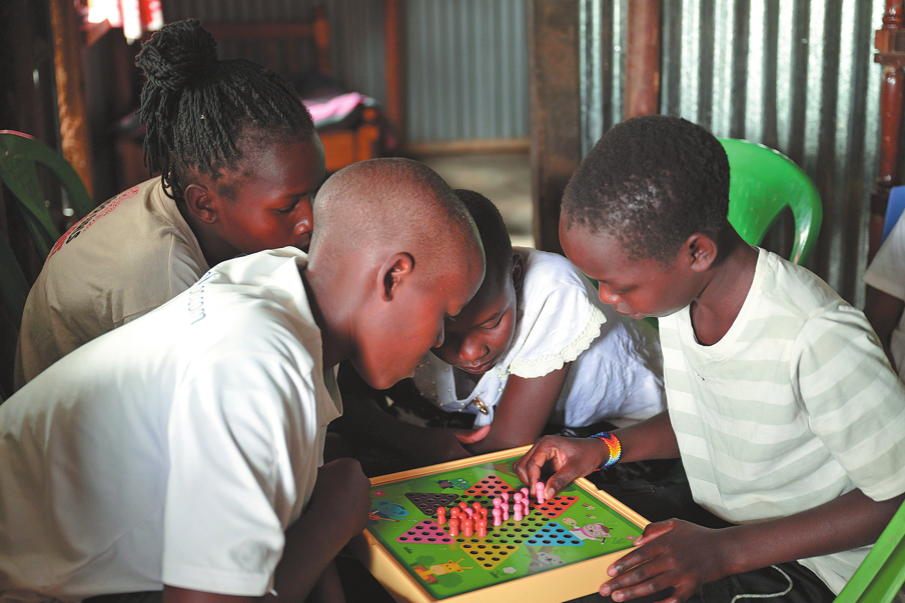
China has also been increasing its education budget over the years. As a result, even many small village schools are equipped with online teaching facilities today-and China runs the world's largest higher education system, with its universities enrolling over 10 million students every year.
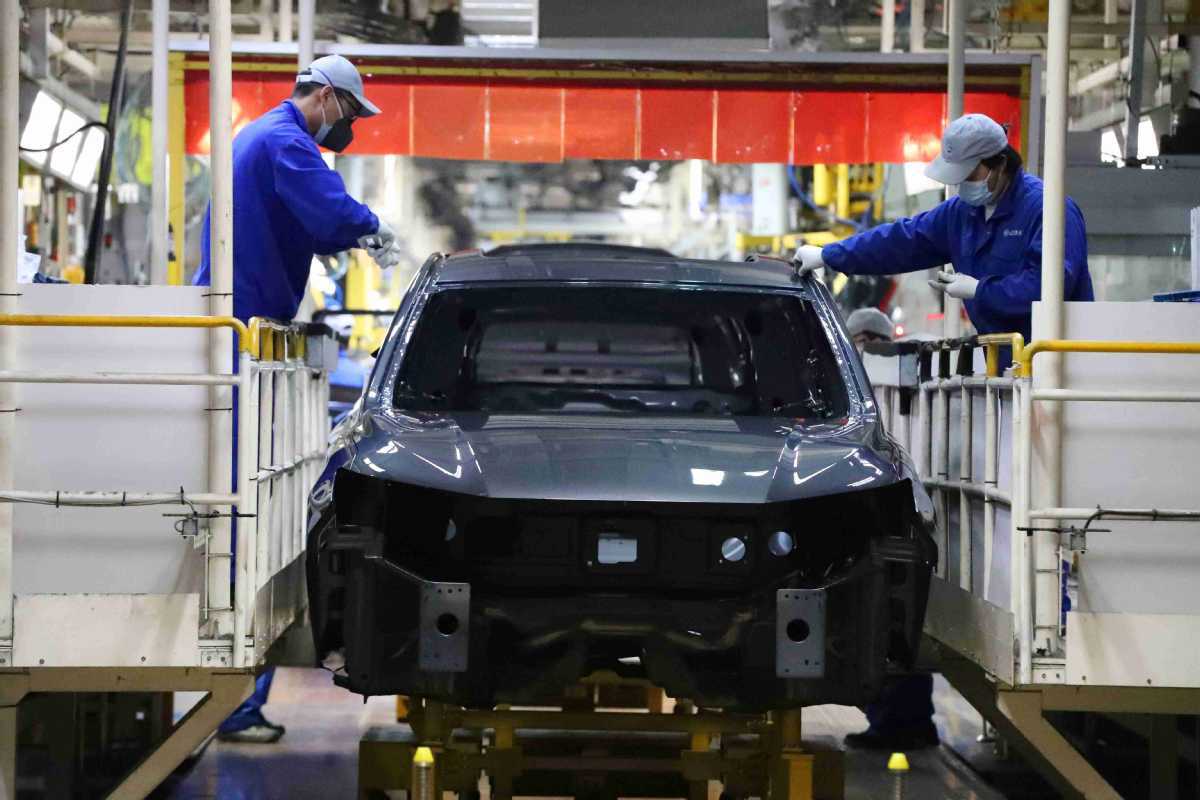
Upgrading the science and technology sector has long been an integral part of China's development policy, because US sanctions against, and restrictions on high-tech exports to, China have highlighted the importance of being self-reliant in key sectors. That's why China invested 2.79 trillion yuan in research and development last year, second only to the United States, with the aim of upgrading its science and technology sector. Some observers even say China could surpass the US in R&D investment in a few years.
Also rising fast is the expenditure on environmental protection-821 billion yuan last year. Some years ago, it was common for people to post photographs of urban landscapes on their WeChat accounts to complain about the serious air pollution and smog problem. Now, they show off the blue skies and clean rivers in their cities.
True, such investments cannot bring quick economic returns. But they lay a solid foundation for China's further development and help improve people's well-being.
Talking about families' well-being, I usually leave family matters, including financial matters, to my wife. Approaching retirement about 10 years ago, my wife and I were sure we could adjust to a slower pace of life and lower income.
But that has not happened. Our income has kept increasing, not least because of the profits my wife makes on the stock exchange. In fact, with the money we have made in the past decade, we bought two small apartments in Sanya, Hainan province, for our retirement, a car for weekend outings and paid for a dozen tours to other countries.
Will this trend continue through the next decade? I keep my fingers crossed.
kangbing@chinadaily.com.cn
The author is former deputy editor-in-chief of China Daily.
If you have a specific expertise, or would like to share your thought about our stories, then send us your writings at opinion@chinadaily.com.cn, and comment@chinadaily.com.cn.