Relics restoration reveals stories of the past and prospects for the future









In 138 BC, Chinese diplomat Zhang Qian carried with him the great expectations of the emperor of the Western Han Dynasty (206 BCAD 24) to travel westward, seeking closer links with China's neighbors in Central Asia. Dayuan, as it was called in ancient Chinese documents, became his first station on the route.
This state, located in Fergana Valley in present-day Uzbekistan, was influenced by Greek culture.
Zhang Qian's journey has been widely hailed by scholars as one of the earliest recorded contacts between Chinese and Western civilizations, lifting the curtain on the centuries-long saga of the ancient Silk Road.
From 2012 to 2018, a group of Chinese archaeologists cooperated with their Uzbek counterparts to unearth history in Fergana Valley. The splendor of the 2,000-year-old Mingtepa site emerged from beneath the soil.
According to Liu Tao, an archaeologist from the Chinese Academy of Social Sciences who led the excavation for a time, a large complex of city walls, gates, streets, remains of handicraft workshops and tombs were discovered at the site.
"That was the largest-scale excavation ever done at the Mingtepa site," Liu recalled. "As the largest city ruin in the Fergana Valley, we had demonstrated that it was probably the capital city of Dayuan."
In the past decade, thanks to the Belt and Road Initiative, Chinese archaeologists have had frequent academic exchanges with Uzbekistan, helping to unveil a grand historical picture concerning a much longer time spectrum.
Scholars from Northwest University based in Xi'an, Shaanxi province, joined local researchers to investigate and excavate along the western edge of the Tianshan Mountains. Among the 39 sites that were investigated, 31 were newly found by the joint team, revealing the histories of many key ancient civilizations such as the Bactria, Yuezhi and Kushan, as well as other nomadic cultures.
"The research also enabled Chinese archaeologists to contribute on the international stage in terms of Silk Road studies," said Wang Jianxin, an archaeology professor at Northwest University. "We also bear the responsibility to protect the relics throughout our research. Archaeology can thereby enhance people-to-people connectivity."
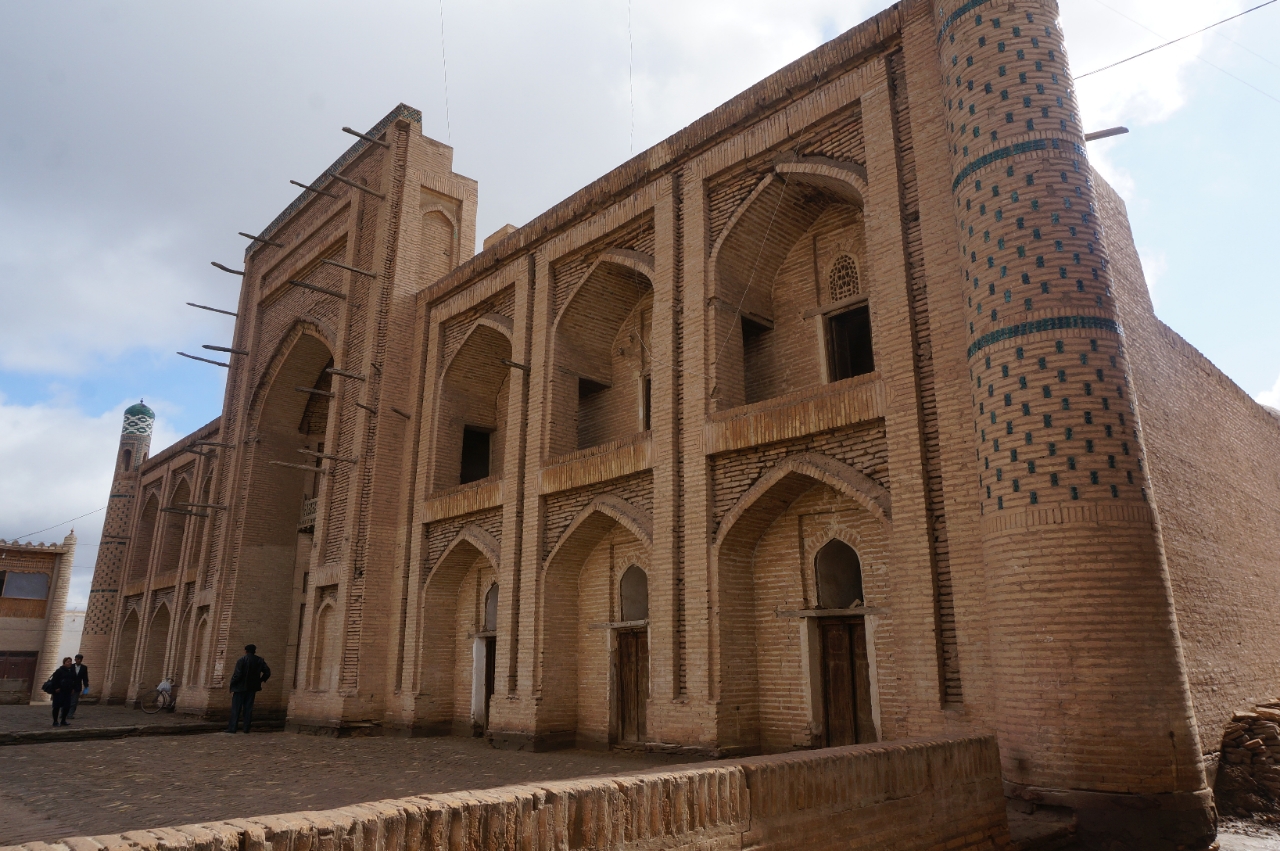
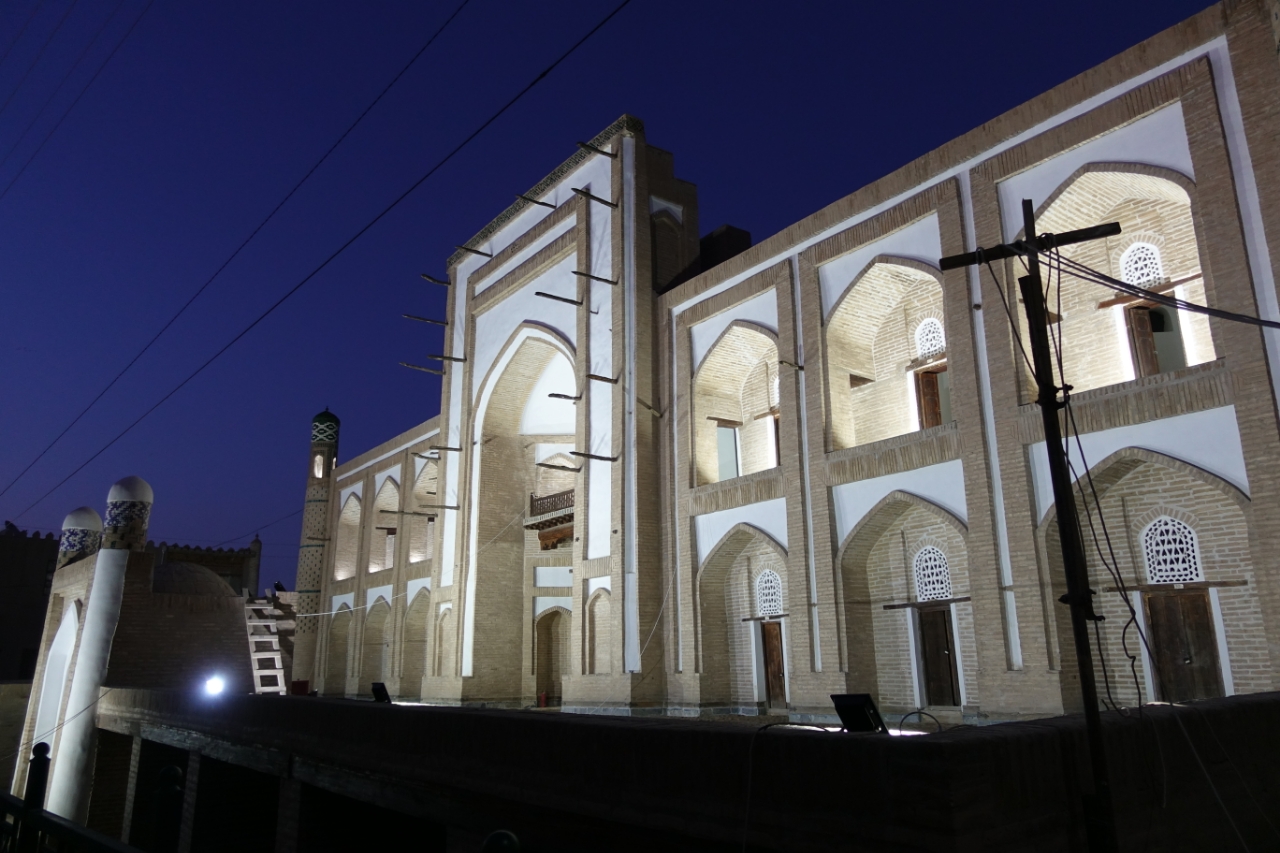
Based on an intergovernmental agreement reached between China and Uzbekistan in 2014, from 2016 to 2019, experts from the China Academy of Cultural Heritage carried out restoration work on two historical buildings located in the ancient city of Khiva-a UNESCO World Heritage Site.
Chinese experts faced the tough task of restoring the Amir Tura Madrasah, built in 1870, and the Khasahmurad Mosque, built in 1770, two buildings in Khiva that had fallen into unstable condition.
The team's dedication to preserving history helped it overcome difficulties, such as ensuring that all restoration work used the same ancient materials as centuries earlier. Despite walls being cracked and foundations subsided, Chinese restorers also used the traditional constructional methods.
"Much historical information was left in those old components," recalled Yan Ming, an engineer from the academy who led the restoration. "It would have been easier to replace them with modern materials, but we cannot lower our standards because history is important."
The restoration team visited residents across the ancient city to look for old bricks, and they also patiently deferred to local artisans when discussing traditional craftsmanship in construction.
According to Yan, some local restorers of historical constructions were also provided with training during this program.
For the conservators of cultural heritage, another major concern was how to improve people's livelihood and revitalize the glory of the ancient city through the restoration.
The historical neighborhood of Khiva was unsuitable for receiving large numbers of tourists, and so the conservation program aimed to not only bring historical glamour back to the two historical monuments, but also provide a comfortable environment for visitors. Better infrastructure was put in place, including lighting, roads and urban landscaping.
"We're fully aware of how important these sites are to the local residents," said Xu Yan, deputy director of the academy. "We're like doctors trying to cure a patient, and we cannot fail in their trust."