From 'Made in China' to 'Created in China'









HK is playing a crucial role with its integration into the Greater Bay Area in helping businesses take their innovative ideas to the market. Zhang Tianyuan reports from Hong Kong.
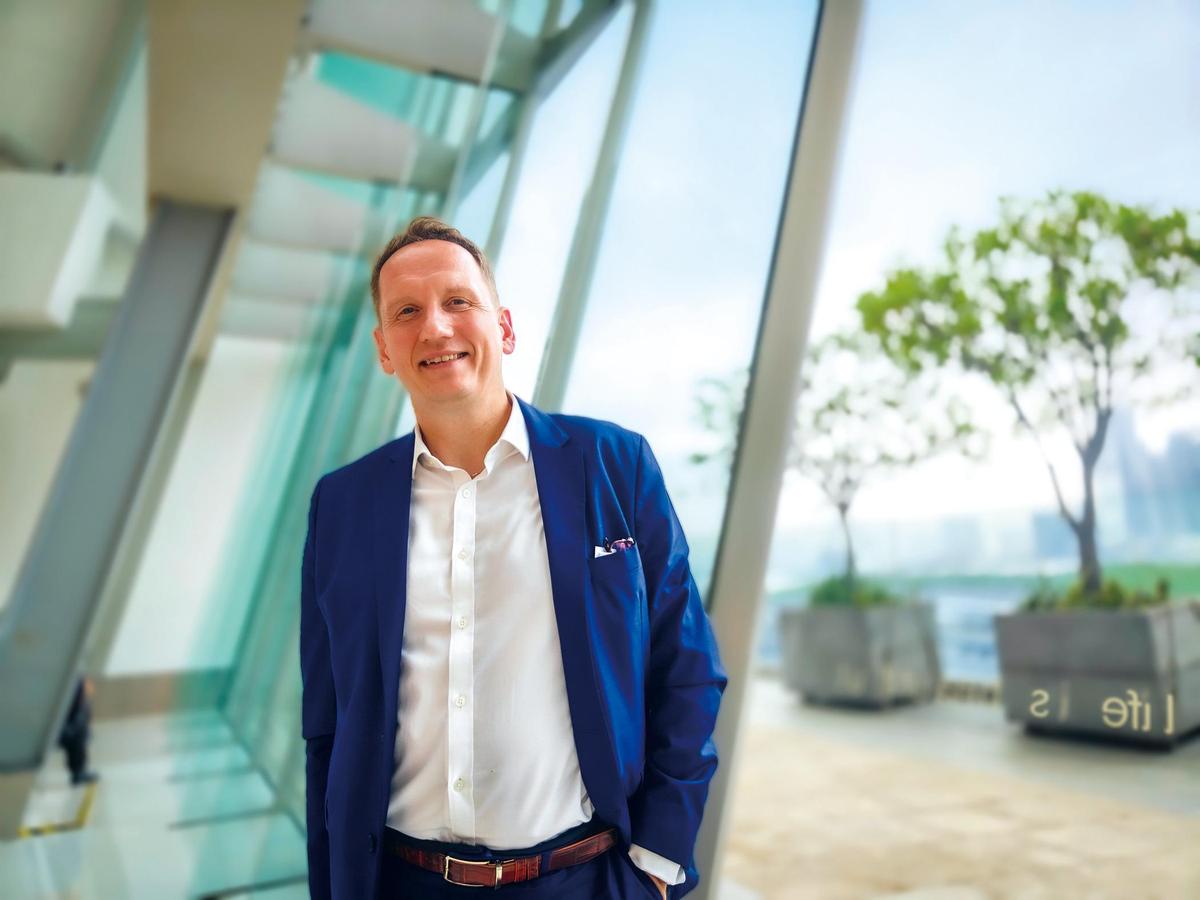
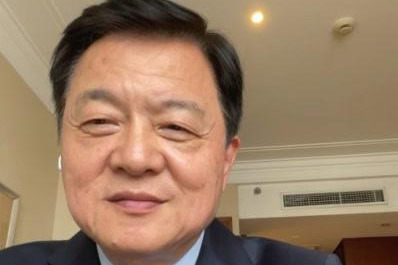
'This is the best smartphone camera in the world," insists Peter Helis, waving his cellphone, with a snazzy camera occupying the top third of its back, to illustrate the potential for technological innovation with which Chinese companies have dazzled the world.
Helis, chief adviser at Guangzhou Huangpu Development District, says he believes that in addition to the burgeoning electronics, that industries such as smartphones, artificial intelligence, biomedicine, new energy and new materials will elevate the Guangdong-Hong Kong-Macao Greater Bay Area to the "knowledge economy stage".
The chief adviser, who hails from Germany, has been living in Hong Kong and Guangzhou for nearly two decades, or years before the Greater Bay Area concept came into being. He started his career as a marketing manager in Hong Kong and is now working for the Guangzhou Municipal People's Government in the Guangdong provincial capital's Huangpu district as chief adviser to foreign investors.
Recalling his first visit to Hong Kong on Dec 31, 1999, for the millennium countdown at the city's landmark nightspot, Lan Kwai Fong, he marveled at the social transformation and economic achievements made both on the mainland and in Hong Kong in the past two decades.
In a nutshell, Helis, dubbed the "China hand" among expatriates, says the significant transition has been from "Made in China" to "Created in China".
"Chinese companies are now investing in their own research and development, assembling their own teams, and producing products with their unique designs and technologies," says Helis, pointing to his phone. "The old days of manufacturing goods for clients in the United States or Europe using their technology, and selling the products at very low profit margins, are gone."
Most importantly, the days of "copycatting" Western products are gone, says Helis. Now, it's innovation and creativity that have set Chinese products apart from the rest of the world with their "better and cheaper" labels. He sees the year 2008, when the world was mired in one of the worst economic crises in history, as a turning point.
The crisis led to crumbling global financial markets, with a flood of companies going bankrupt. However, the chaos provided an opportunity for shift workers to shine. "Chinese companies began focusing on creating their own brands and products, moving to higher-end manufacturing," says Helis.
"Some notable investments included those of Hyundai, which built its first offshore fuel-cell plant in Huangpu, and Swiss company Lonza, which offers cGMP (current good manufacturing practices) custom manufacturing in 1,000L and 2,000L bioreactors at its first China-Singapore Knowledge City plant," says Helis, believing Huangpu is playing its part in making the Greater Bay Area the "engine" of the knowledge economy.
He also is upbeat about Hong Kong's future as part of the "Created in China" ecosystem. Amid deeper integration with the Greater Bay Area, Hong Kong has emerged as an ideal location for companies seeking to translate their innovative ideas into commercial achievements.
With scores of Hong Kong factories having shifted north decades ago to take advantage of cheaper labor there, the special administrative region now seeks to coordinate with the other Greater Bay Area cities and development zones, such as the Guangzhou Huangpu Development District, to thrive as a technology and innovation hub.
One potential avenue for Hong Kong businesses is technology transfer, whereby innovative ideas can be sold or shared with companies on the mainland, Helis says. "This could involve selling intellectual property rights or getting into a cooperation agreement."
He continues: "Hong Kong should strive hard to retain its relevance as 'Asia's world city', but at the same time, it needs to embrace the opportunities of the Greater Bay Area. There should be eagerness on both sides to learn from each other and take advantage of each other's strengths."
The SAR is indeed a superconnector linking overseas and Chinese mainland markets, although the city's image as an international financial center has been ruffled by the recent exodus of expatriates. Hong Kong's Western lifestyle and English-speaking culture make it an attractive location for innovative global professionals who can contribute to the development of the Greater Bay Area's ecosystem, Helis says.
However, attracting world talent to the region requires overcoming certain challenges, especially when international ideological confrontation is heating up. Helis believes access to information is crucial to understanding the Greater Bay Area's potential, and this can be challenging for non-Chinese speakers. The current geopolitical situation can also create a distorted view of China's realities in the Western media, making it harder for investors to make informed decisions.
To address these challenges and realize the full potential of the Greater Bay Area's ecosystem, Helis says there has to be more promotion and readily available information about business and market opportunities in English and other languages. The economy zones on the mainland, including Qianhai and Huangpu, are now tapping Hong Kong's bilingual services for their international exchanges, and for fostering greater understanding and cooperation with the West.
"If we learn from the success of the Silicon Valley, we can see the success stories of many immigrants. Elon Musk is from South Africa; Sergey Brin, a co-founder of Google, came from Russia; and Jensen Huang, founder of Nvidia, is from Taiwan, China. So I could imagine Hong Kong as a place where communication in English is still very common, and a Western lifestyle is still more prevalent."
In addition, the Greater Bay Area ecosystem is considered even more complete than that of San Francisco's Bay Area. While the Silicon Valley has research and development, as well as headquarters, the Greater Bay Area boasts a complete production and supply chain, as well as a rapidly growing consumer market, Helis says.
More than 50 percent of China's patents are now registered in the Greater Bay Area, according to Helis. Leading companies in the region, like tech giant Huawei, fast-fashion retailer Shein, and electric-car makers Xiaopeng and BYD, have conquered global markets.
While China was previously known for "copycat practices", significant progress has been made in the past decade. Three specialized intellectual-property courts have been set up in Beijing, Shanghai and Guangzhou.
"As a result, copyright infringement cases have drastically decreased, and international companies have won many disputes," Helis says.
In his view, the mainland is an "incredibly dynamic" place, and the situation there is constantly changing. Those who had lived on the mainland for an extended period, but had left for even one or two years, cannot consider themselves as "China experts" anymore, as they may not be aware of the latest developments on the mainland.
Drawing a parallel to the situation in Hong Kong, he suggests: "We must address the biases and misunderstandings among foreigners who are far away from the mainland and Hong Kong."
Contact the writer at tianyuanzhang@chinadailyhk.com


- Oyster fossils offer new insights into history of global warming
- Shanxi firefighters simulate complex cliff rescue scenarios
- Influencer fabricates death in online hoax
- China, Central Asia further strengthen educational cooperation
- Xi calls on countries to work together for world peace, stability, prosperity
- China to offer visa-free policy to 5 countries in Latin America and the Caribbean: Xi