Japan threatens planet with radioactive water









A costly lesson for humankind
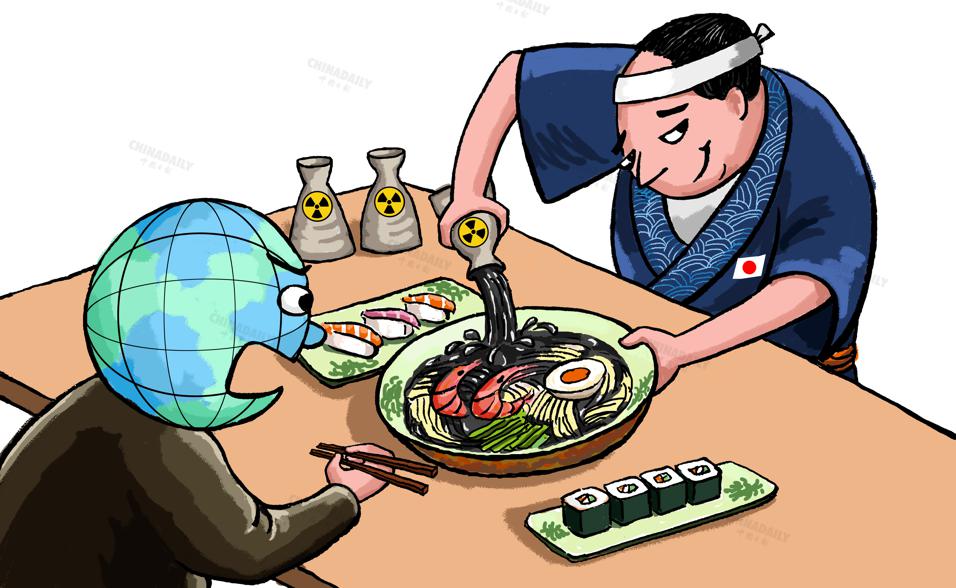
The challenge of disposing nuclear-contaminated water is one that all countries with nuclear power facilities could face in the future. Face-to-face with this problem, Japan is testing the waters, so to speak. But Japan's failure to consult other countries and explore other, safer means to dispose the radioactive water means it is shirking its domestic and international duties.
Past transgressions by Tokyo Electric Power Company, such as data falsification and providing misleading information on the nuclear-contaminated water, have eroded people's trust in it. Addressing this issue is paramount, as the repercussions will impact both national and global interests, and threaten the marine ecosystem and human health. Transparency and scientific objectivity — along with proper monitoring, testing and analysis — are necessary for any decision made in such cases reasonable and acceptable.
A pivotal concern arises from the fact that neither the International Atomic Energy Agency nor the United States has the authority, granted by an international body like the United Nations, to "green light" Japan's water discharge plan.
Therefore, the agreements between the IAEA, the US, and Japan cannot be used as a license to discharge the radioactive water into the sea. While the US might have agreed to Japan's plan due to political reasons, the IAEA's endorsement of the plan has set a hazardous precedent. This could significantly impact future nuclear disaster management protocols, despite the IAEA's promise of continuous expert oversight in Fukushima.
The Japanese authorities' move is a severe violation of the Convention on the Prevention of Marine Pollution by Dumping of Wastes and Other Matter 1972, or the "London Convention" for short, and the United Nations Convention on the Law of the Sea. So both the Japanese government and the IAEA have to address such legal concerns.
There are three major problems with Japan's decision: the accuracy, scientific validity and transparency of data (given TEPCO's history of data manipulation); uncertainties over the short-, medium- and long-term impacts of Japan's action (due to the absence of definitive scientific conclusions); and the violation of international laws and treaties. To address the three problems, the IAEA needs to provide a comprehensive, scientifically sound, impartial and transparent rationale and guarantee.
The release of the radioactive water into the sea will deal a blow to Japan's domestic economy first, but its impact will be beyond the Japan. Japan must earnestly address this issue, as the potential impact of the radioactive water on the marine ecosystem is a matter of global concern.
The development of nuclear disaster management technologies, the choice of methods to deal with a critical problem like this and the adherence to set precedents will decide how such issues will be addressed in the future, and serve as a shared experience and lesson for humankind in its pursuit of peaceful nuclear technology and its preparedness to deal with nuclear accidents.
Zhou Weisheng, a professor at the College of Policy Science at Ritsumeikan University and director of the Research Institute of Global 3E in Japan.