Thai collaboration with Initiative yields fruit









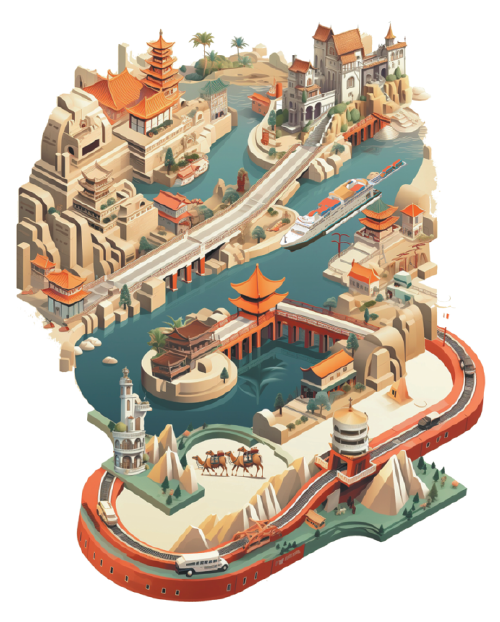
With the China-proposed Belt and Road Initiative completing 10 years, Thailand-China relations are set to strengthen in terms of economic cooperation. China is already the top foreign investor in Thailand, with Chinese electric vehicle (EV) manufacturers continuously increasing investment in the country.
As the second-largest economy in the Association of Southeast Asian Nations and given its advantageous geographical location, Thailand plays an important role in and benefits from the Belt and Road Initiative. Besides, the Thai government upgraded its Eastern Economic Corridor (EEC) development program recently with the hope of transforming the country's eastern provinces into a new corridor of innovation and economic growth. The EEC plan promotes targeted 10 industries, including automotive and robotics sectors, most of which Chinese companies have expertise in.
While China is seeking to upgrade its hi-tech sector through digitalization, Thailand strives to attract those same industries in which China has gathered rich experience, especially the new energy vehicle and robotics sectors through its EEC program.
Thanks to its collaboration with China under the Belt and Road framework, Thailand has attracted more Chinese investors to various EEC targeted industries, with the biggest investors being large and medium-sized Chinese companies. Chinese EV manufacturers have increased their investments in Thailand also because it is the second-largest car market among the ASEAN member states.
Also, the Thai government's 30/30 policy is aimed at ensuring that EVs account for 30 percent of all vehicles manufactured in the country by 2030.
Moreover, along with attracting more investors and investments, the EEC plan's key goal is also to build a seamless transportation network between Bangkok and eastern Thailand, and develop an overland route for transporting Thai-produced goods to southern China via Laos.
In fact, Thailand is building a high-speed railway from Bangkok to Nakhon Ratchasima, which is a gateway to northeastern Thailand, and has plans to extend it to the Thai-Laos border in the future. The railway will be connected to the EEC via another high-speed railway linking Bangkok's two international airports, Don Mueang and Suvarnabhumi, with the U-Tapao airport in the EEC region.
The Thai government realizes that the Belt and Road Initiative and its EEC program, whose aim, among other things, is to build a thriving economic hub in the Southeast Asian region, complement each other and will boost both countries' development.
Moreover, there are new opportunities for cooperation between Thailand and China beyond the EEC plan and the Belt and Road Initiative. First, Thailand and China could enhance the complementarities of their development plans. By aligning the policies, laws and enforcement measures of the Belt and Road Initiative and the EEC plan, the two countries can further deepen cooperation.
In addition, the two sides should increase the use of advanced technology to facilitate cooperation in new industries, new energy, modern agriculture, high-end manufacturing, the digital economy and other fields, and make sure economic linkages yield fruit.
Second, both Thailand and China are developing countries, and both have to fulfill the task of achieving balanced economic and social development and avoid being stuck in the middle-income trap. While Thailand upholds the "Sufficiency Economy Philosophy" development plan proposed by Late King Bhumibol Adulyadej and is working on a national development plan for the next 20 years, China is pursuing innovative, green, open and shared development. Therefore, Thailand and China should consider holding in-depth discussions on their respective development policy, philosophy and measures.
Third, the two countries should strengthen all-round people-to-people and cultural exchanges, and establish cooperation in education, science and technology, and cultural sectors, promote knowledge and technology sharing, as well as talent exchange and training, especially targeted training for high-speed railway technology and the digital economy. Also, Thailand can learn from China how to reduce poverty, boost rural development, and support think tanks, media, and the youth to facilitate cooperation.
And fourth, the two countries can expand cooperation in regional and international affairs, and take the lead in promoting open and inclusive cooperation in the region in order to build a community with a shared future in Asia.
Importantly, Thailand strives to play a positive role in enhancing ASEAN's centrality in regional cooperation and work with China to deepen ASEAN-China collaboration and Lancang-Mekong cooperation.
In summary, the friendship and cooperation between Thailand and China, characterized by political mutual trust, strong economic ties and healthy people-to-people exchanges have strengthened since 2013 when the Belt and Road Initiative was proposed. So both sides should consider consolidating their partnership to expand their economic and non-economic cooperation.
The author is an associate professor at the Faculty of Economics, Thammasat University, Thailand.
The views don't necessarily reflect those of China Daily.