Youth find novel ways to fight environment crisis









During my formative years in Kisumu town, western Kenya, the shores of Lake Victoria significantly shaped my early experiences and memories.
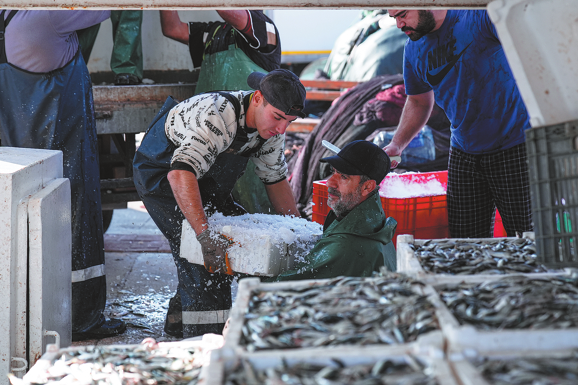
As the world's largest tropical and second-largest freshwater lake, it offered plentiful fish for consumption and served as a source of income for local fishers selling their catch in the markets.
As primary school students, we would visit the lake's beach after school, basking in the cooling water for a refreshing swim. On weekends, armed with our improvised hooks, lines, rods and worms, we would troop to the lake's shores for lighthearted fishing escapades.
However, climate change has affected the mother lake for many Africans.
In the early 1990s, the majestic lake fell victim to an invasion by the intrusive water hyacinth plant, which cast a suffocating green cloak across its surface. Following the complete occupation by this invasive aquatic weed, the previously blue lake turned to a field of green. The leaves of the floating plant extended like an immense green carpet, blown gently into the horizon by the wind.
The absence of natural predators for the weed, coupled with the perfect temperature conditions of the lake, facilitated rapid spread of the plant. It thrived by gorging on open space, cutting off fishing routes and creating a conducive environment for disease-carrying mosquitoes.
At the dawn of the hyacinth problem in Kenya, the government was at a loss on how to tackle the pervasive floating weed. The spread of this invasive species, challenging to manage and reverse, posed a significant threat to biodiversity, economic development and human well-being.
The government's early efforts to control the weeds included chemical methods, namely the use of herbicides. Physical methods were also deployed, including the manual removal of the weeds and the employment of machines such as weed harvesters.
Despite showing initial success, these methods proved to be unsustainable because the use of chemicals might degrade water quality and put aquatic life at risk, and the deployment of crusher and destruction boats turned out to be expensive.
While working on an environmental protection assignment for China Daily, I came to admire the ingenious attitude of Africa's youth in developing sustainable solutions for environmental challenges.
During the assignment, I interacted with Rahmina Paulette, a young Kenyan who had started a venture of turning water hyacinth into fiber for making baskets, bags and printing paper.
To widen my sources, the assignment led me to other inventive biological methods devised by Kenyan youth to fight the pervasive weed. One such venture was set up by Biogas International, a Kenyan energy technology company. It has invented a machine that converts waste, such as water hyacinth, into biogas, a cleaner alternative for cooking fuel.
At Maasai Mara University in Kenya, students have done research on water hyacinth's ability to remove algae, fecal coliform bacteria, trace amounts of toxic metals, organic substances and other dissolved impurities from wastewater. The research has materialized into a system that can recycle wastewater from bathrooms and kitchens by collecting effluents and purifying them using water hyacinth.
It is said that when life gives you lemons, make lemonade. Climate change might be a real threat to human existence, but young people in Africa are demonstrating that some of these environmental and climate challenges can be tackled by simply tapping into the innovative and tech-savvy nature of the youth of today.