


Paradise found
Over the course of centuries, China's literati were drawn to Jiangnan, viewing it as a spiritual sanctuary, Zhao Xu reports.









Elite retreat
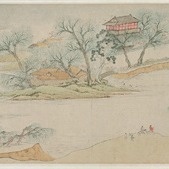
Paintings based on the Jiangnan scenery and attributed instead to Xiaoxiang were created in such great numbers starting from the early 12th century that many of them eventually found their way to Japan and the Korean Peninsula, where the misty, water-saturated views were interpreted as giving visual expression to Chan (Zen) Buddhism's belief in the illusory nature of reality.
Buddhism first spread to Jiangnan following an exodus from northern China that took place in the early 4th century, upon the transition between the Western and Eastern Jin dynasties (265-420).
The political upheaval that continued largely unabated for the next three centuries bred discontent and disillusionment. A sense of escapism started to develop among members of the society's educated elite, who turned to nature for consolation. Tao Yuanming (365-427), a politician-turned-poet who lived his life in Jiangnan during the time of the Eastern Jin, was probably the most famous of them all.
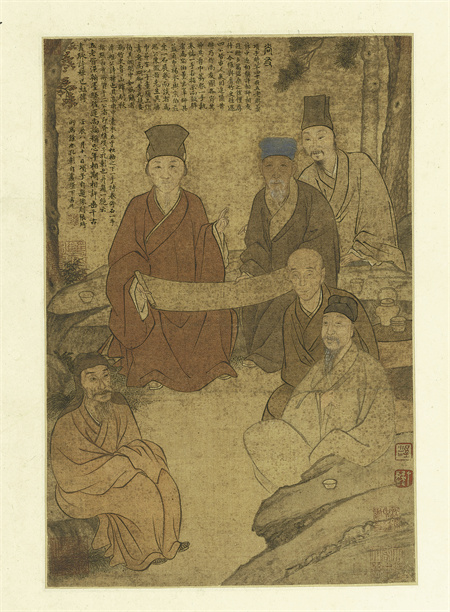
The Cleveland Museum of Art exhibition features a portrait of Tao from the 17th-century painter Chen Hongshou, who was also active in Jiangnan, testifying to Tao's lasting cultural relevance.
Other hermits were getting their fair share of the attention, too. Also on display at the Cleveland Museum of Art, two rubbings, made of murals from an excavated 5th-century tomb in the Jiangnan region's city of Nanjing, depict a gathering of seven men known collectively as "the Seven Sages of the Bamboo Groves". Keeping in mind that the gathering actually took place between 240 and 249 in today's Jiaozuo city, Central China's Henan province, the discovery of the murals, two centuries down the line and more than 600 kilometers away, stands as another example of Jiangnan's adoption of classical motifs from the country's cultural history.