Will Manila stop creating trouble in 2024?









The Ferdinand Marcos Jr government in the Philippines veered away from the previous Rodrigo Duterte administration's South China Sea policy in 2023, by making provocative moves that have raised tensions in the region.
True, Philippine President Marcos Jr, acknowledging the souring of Sino-Philippine relations, has said that his government will "solve that problem of Ren'ai Reef" itself, raising hopes that Manila might navigate a different course and appropriately handle the South China Sea disputes. But the shift in the Marcos Jr government's South China Sea policy is not merely a result of inexperience or wrong policies; it is the result of a confluence of internal and external factors.
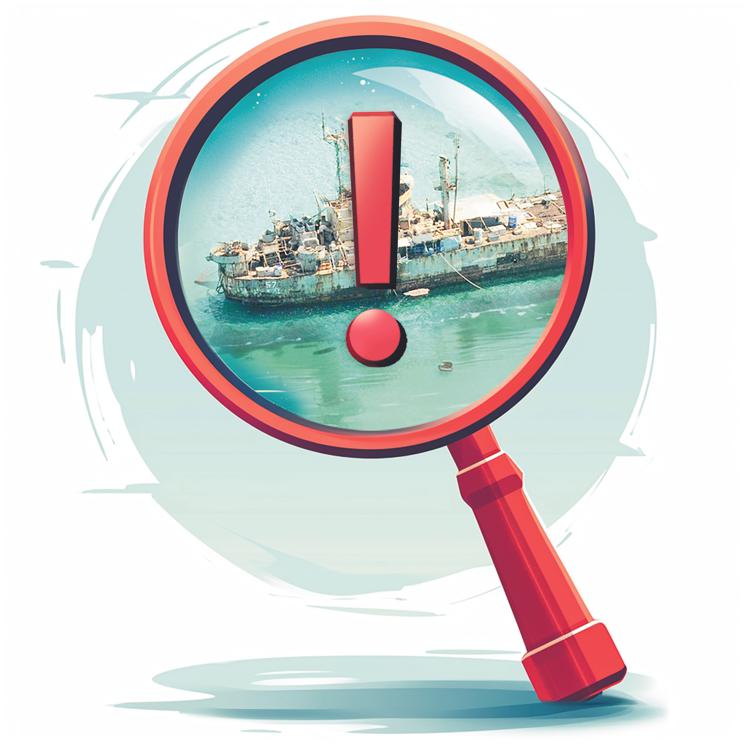
First, the imminent deterioration and disintegration of the vessel, BRP Sierra Madre, is the direct reason behind the Philippines' frequent attempts to create troubles in the region. In May 1999, just one day after a US missile dropped on the Chinese embassy in what was then Yugoslavia, the Philippine authorities intentionally ran aground the dilapidated tank landing ship on Ren'ai Reef. Using the excuse of a leaking hull, they refused to tow it away later.
For quite some time, Manila had been transporting construction materials to the reef to reinforce the stranded vessel. Due to continuous erosion caused by sea waves and winds, BRP Sierra Madre seems to be on the verge of disintegrating, prompting Manila to accelerate the large-scale transportation of construction materials to repair the stranded ship and turn it into a permanent structure with the aim of unlawfully occupying Ren'ai Reef.
Second, the escalating domestic political strife is a key reason why the Philippines has changed its South China Sea policy with the tacit help of the United States. The situation became increasingly clear last year due to an imminent rupture in the political alliance "UniTeam" between the Marcos and Duterte families.
Particularly noteworthy is the intensifying dispute between Martin Romualdez, a cousin of Marcos Jr and the current speaker of the House, and Rodrigo Duterte and his daughter Sara Duterte. The dispute stems from the Marcos Jr camp's attempt to break free of the influence of the Duterte family, establish its own authority and expand the Marcos family's influence.
As a result, either driven by Marcos Jr himself or by his camp, there has been a shift in the Philippines' domestic and foreign policies. It is now "leaning towards the US and opposing China". This move serves two purposes: garnering the support of the military and police, as they can benefit significantly from appropriations; and securing the support of the US to weaken the power and influence of the political rivals.
And third, the US' intensifying efforts to contain China is an external factor prompting the Philippines to take risky actions. Over the past decade, the US, identifying China as its primary competitor, has been meddling in the South China Sea, the East China Sea and other regional issues to sow discord between China and its neighbors, and build a unified front to counter China. The US has been using the Philippines, a treaty ally and a crucial link in the "first island chain", as a key lever to interfere in the South China Sea issue, consolidate its military presence in the region, and trigger regional confrontations.
After encouraging the Philippines to stir up trouble in the South China Sea, the US said that its Mutual Defense Treaty with the Philippines is applicable to the South China Sea issue. The two countries also released the US-Philippines Bilateral Defense Guidelines in 2024, asserting that "an armed attack in the Pacific, including anywhere in the South China Sea, on either of their public vessels, aircraft, or armed forces — which includes their Coast Guards — would invoke mutual defense commitments under Articles IV and V of the 1951 US-Philippines Mutual Defense Treaty".
This has emboldened the Philippines to test the reliability of the US' commitment, by frequently creating trouble in the South China Sea.
The three factors mentioned above do not seem to have diminished this year, when the erosion of Sierra Madre could accelerate, widening the cracks between the different political camps in the Philippines.
Moreover, in the past year, while transporting construction materials to Ren'ai Reef, the Philippine authorities invited a large number of journalists to visit the reef in the name of "transparency". In reality, Manila fabricated false information and edited video clips to arouse public anger against China.
The frequent provocative moves of the Philippines in the South China Sea last year have further damaged Sino-Philippine ties and undermined regional stability, forcing knowledgeable individuals and businesspeople, both in the Philippines and other countries, to criticize the Philippine government's moves.
In short, the prospects of the Philippines changing course, exercising restraint and appropriately handling the South China Sea issues in 2024, are not high. But it is clear that Manila's wrong approach will create more troubles not only for the region, but also itself.
The author is an associate research fellow at the China Institutes of Contemporary International Relations. The views don't necessarily reflect those of China Daily.
If you have a specific expertise, or would like to share your thought about our stories, then send us your writings at opinion@chinadaily.com.cn, and comment@chinadaily.com.cn.