Climate change an alarming health threat









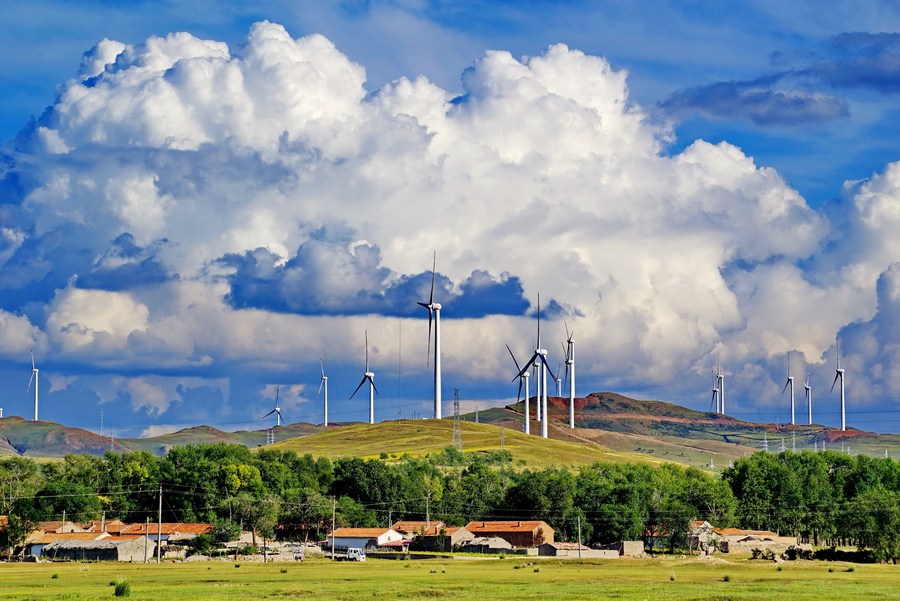
If our planet were a patient, it would be admitted to intensive care. Its vital signs are alarming.
It is running a fever, with each of the last nine months the hottest on record, as we hurtle towards the 1.5 degree threshold.
Its lung capacity is compromised, with the destruction of forests that absorb carbon dioxide and produce oxygen.
And many of the earth's water sources – its lifeblood – are contaminated.
Most concerning of all, its condition is deteriorating rapidly.
Is it any wonder, then, that human health is suffering, when the health of the planet on which we depend is in peril?
The health of humans, animals and our environment are woven together in a bond that is inextricable, yet fragile. We belong to the same unique, finely balanced ecosystem.
This is not a new realisation. Hippocrates, the father of medicine, wrote in the 5th century BCE that, "The physician treats, but nature heals."
We are now re-learning what humans have always known, but which, since the industrial revolution, we have forgotten or ignored – that when we harm our environment, we harm ourselves.
For centuries we have plundered our planet. Now we are paying the price, with a triple planetary crisis: climate, change, biodiversity loss and pollution.
There is, of course, the immediate impact of more frequent and severe weather events, which cause deaths and injuries, and damage to health facilities and other essential infrastructure.
Then there are the medium- and longer-term sequelae:
More heatwaves contribute to more cardiovascular disease; air pollution drives lung cancer, asthma and chronic obstructive pulmonary disease;
Chemicals such as lead cause intellectual disability, cardiovascular and kidney disease;
Certain pesticides are associated with higher rates of suicide in countries where they are readily available;
And drought and water scarcity affect food production, making healthy diets less affordable.
Small island developing states are especially at risk, as land becomes less arable and oceans encroach.
Meanwhile, climate change is leading to shifts in the behaviour, distribution, movement, range, and intensity of mosquitoes, birds and other animals that are spreading infectious diseases such as dengue and malaria to new areas.
Since the turn of the century, the number of reported cases of dengue has increased eight-fold, now affecting over 130 countries.
Illegal wildlife trading also increases the risk of zoonotic spillover that can trigger a pandemic, highlighting the importance of primary prevention to reduce risk.
The threats to health from climate change, pollution and biodiversity loss are not hypothetical risks in the future. They are right here and right now, which makes health the most compelling reason for climate action.
And yet, almost 30 years since the first UN Climate Change Conference, COP28 in Dubai last year was the first COP to include a day dedicated to health.
WHO estimates that pollution, waste and chemicals account for an estimated 14 million deaths a year, or about a quarter of the global disease burden.
The impacts are not equal. People in low- and middle-income countries bear the brunt of the health consequences, especially those in rapidly developing urban areas.
Around the world, WHO is supporting countries to prepare for and respond to these threats, by making their health systems more climate-friendly and climate-resilient, and by providing the evidence to tools to address the health impacts of pollution, waste and chemicals.
But no single agency can do this alone. The causes of this crisis are multisectoral. So too are its impacts, and so too must be the response. Collectively, we got ourselves into this mess. Collectively, we must get ourselves out of it.
That's why the World Health Organization, the United Nations Environment Programme, the Food and Agriculture Organization of the United Nations and the World Organisation for Animal Health are working together in a group called the Quadripartite to support countries to take a "One Health" approach, recognizing that policies on human health, animal health, agriculture and the environment must be mutually informed, and mutually reinforcing.
At the recent United Nations Environment Assembly in Nairobi , countries adopted important resolutions on air quality, chemicals and waste, sustainable lifestyles, hazardous pesticides, and water policy that are important for driving sustained, multisectoral action to protect the health of people and planet.
They also committed to continue work on the negotiation of an international legally-binding instrument on plastic pollution.
One Health is likewise an important element of the legally-binding pandemic agreement that WHO's Member States are now negotiating.
The patient is in peril. Band-Aid solutions will not do. At the national, regional and global levels we need transformative action in energy and transport systems, food systems and health systems. And as UN agencies, we must do better at breaking out of our siloed mindsets and working together for effective, inclusive and sustainable multilateral action - because we have no other choice.
On Christmas Eve 1967, less than four months before his assassination, Martin Luther King said, "It really boils down to this: that all life is interrelated. We are all caught in an inescapable network of mutuality, tied into a single garment of destiny. Whatever affects one destiny, affects all indirectly."
For everything that makes us different, we are one species, sharing the same DNA, and the same planet. We have no future but a common future.
The author is director general of WHO.
The views don't necessarily reflect those of China Daily.
If you have a specific expertise, or would like to share your thought about our stories, then send us your writings at opinion@chinadaily.com.cn, and comment@chinadaily.com.cn.