


Tweaking the taste of spring
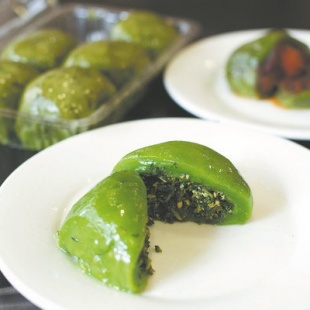
Traditional Qingming Festival snack gets makeover with novel stuffings, earning it appreciation beyond the Jiangnan region, Lin Shujuan reports.









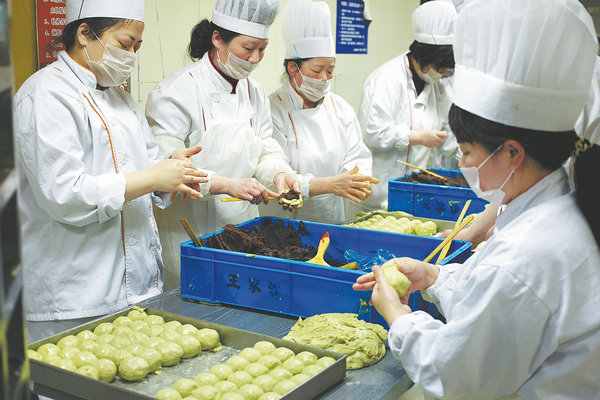
While qingtuan has long been cherished as a taste of spring by the people of the Jiangnan region, in 2016, Xinghualou, a century-old Shanghai brand, introduced a novel filling — salted egg yolk and pork floss — which was quickly championed by key social media influencers.
Since then, the delicacy has broken free of its status as a regional snack, and has become a must-buy for foodies around the country every Qingming. Despite initial doubts about its sustained popularity, it has proved to be an exception. New fillings have been introduced every year, and this creativity has prompted a reconsideration of the magic of this traditional yet seemingly mundane snack.
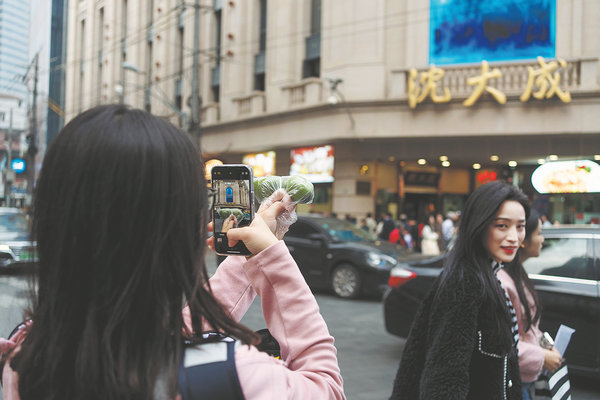
Each year, established Shanghai names, including Shendacheng, Wangjiasha, and especially Xinya, introduce new varieties, attracting novelty-seeking customers. The range of fillings has expanded from the traditional sweet red bean paste to include salted egg yolk with shredded pork, hairtail fish, dried bean curd with Indian aster, pickled freshwater fish, hairy crab roe, and even beef curry.
Xinya has been at the forefront of the most innovative offerings, with its new varieties often being the most unexpected. This year, it has incorporated hairtail fish and Chinese toon, both seasonal ingredients, into its list of fillings. According to Chen Jie, the store manager at the Xinya branch on Nanjing East Road, it has proved particularly popular.
Currently, the daily sales at the store range from 7,000 to 8,000, peaking at close to 20,000 during busy times, Chen says.
A similar level of popularity can be seen at the Changli branch of Dexingguan, a time-honored brand that dates back over 100 years, which primarily serves qingtuan with traditional flavors.
Zhang Jian, the inheritor of intangible cultural heritage at Dexingguan, emphasized that their qingtuan are made and sold on the spot, following traditional methods and using pure natural barley grass juice, which imparts a fresh aroma and retains the traditional taste. The sales of qingtuan currently range from 3,000 to 5,000 a day, with an estimated peak of around 10,000 during Qingming.
"The traditional method of making green rice balls allows residents to taste the spring in a timely manner," Zhang Jian says.
One resident, also surnamed Zhang, who has been a regular customer for years, agrees. He says purchasing qingtuan at Dexingguan has become a family tradition to welcome the arrival of spring.
Qingtuan also appeals to the younger generation. One tourist recently purchased eight at Dexingguan, saying that her daughter, who previously studied in Shanghai, had been feeling nostalgic for freshly made qingtuan from the old brand stores.
While many attribute the rise of new flavors and the enduring appeal of old sentiments to the longstanding popularity of the delicacy, Zhang Min slightly disagrees.
Though she is a Shanghai native, Zhang Min disliked the delicacy until 2018, when she participated in a small qingtuan workshop where her interest was piqued. It was then that she realized that it was a tradition, rather than a cheap snack.
"Once you understand the culture and tradition qingtuan embodies, you'll appreciate it as a seasonal delight," Zhang Min says. "It is generally believed that the essence of Chinese cuisine is to consume the right food in the right season. Qingtuan is the very embodiment of that essence."
Since then, she has become an enthusiastic maker of the delicacy and has devised a number of new fillings. Following numerous trials, she introduced new varieties featuring fillings such as jujube paste and pine nut, that have earned her a constant following.
Zhang Min is careful to use only high quality ingredients and takes a precise, caring approach to making the qingtuan.
"In qingtuan, I see the respect our ancestors had for food and nature, which is its enduring appeal for me," she says.
Liu Kexin contributed to this story.