'Subject Three' dance belongs to the world









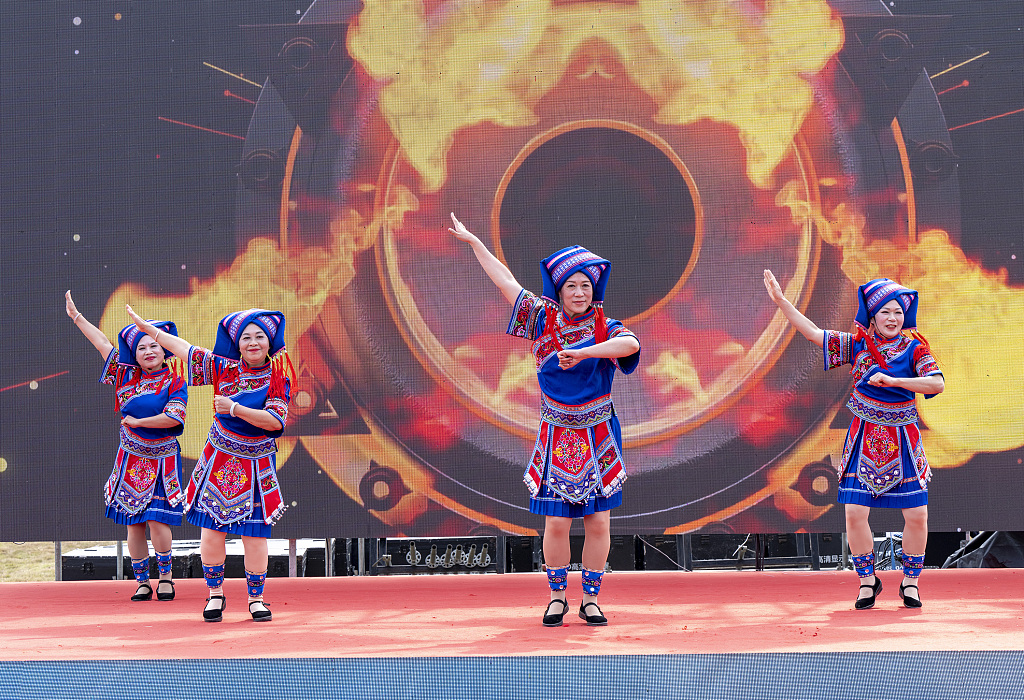
A special popular dance has attracted attention widely. There are two stories about the origin of "Subject Three" or kemusan (also known as "Guangxi Subject Three"). One story traces the dance's roots to a wedding in Wuzhou, Guangxi Zhuang autonomous region, where guests spontaneously broke into a dance as part of the celebrations. The other story suggests Guangxi local people undergo three tests in their life: singing folk songs ("Subject One"), slurping rice noodles ("Subject Two"), and dancing ("Subject Three").
In the popular dance style, performers show off some swag dance moves, such as swinging their knees sideways as they execute a series of fast hand actions, including fast wrist-twisting moves. The dance is accompanied by music that sounds like a mix of Western disco beats and traditional Chinese folk songs.
"Subject Three" continues to captivate audiences around the world. From self-amusement to international dance competitions, people of different nationalities, races, cultures and social backgrounds are shaking their legs to "Subject Three". This dark horse showcases China's cultural diversity and transcends language and cultural boundaries.
Why has "Subject Three" dance become so popular around the world? The magic of "Subject Three" lies in its simplicity and inclusivity. It has transcended cultural differences and language barriers to become a unique form of expression in the digital age, and allows people worldwide to find a common emotional ground.
Some scholars said the key to the success of "Subject Three" lies in its simplicity, which allows mass imitation and wider participation. Its inherent joy is the secret to its popularity, tapping into people's social, psychological needs. While some others attribute its popularity to optimism and openness.
But "Subject Three" does not belong to Guangxi alone; it belongs to the world. Throughout history, popular culture has included both highbrow and grassroots elements. The works that are loved by the common people are always universally appealing. "Subject Three" showcases the diverse but inclusive elements of Chinese culture. As such, the central and Guangxi regional authorities should take advantage of this opportunity to introduce more Guangxi cultural products to the world and showcase the charm of Chinese culture.
The global popularity of "Subject Three" shows that cultural creations know no political boundaries. China's stories can be conveyed to the world even through simple, short videos of a dance. Rooted in Chinese grassroots culture, "Subject Three" embodies the warmth and reality of the Chinese people's well-being, providing a deeper understanding of the inner world and living conditions of the Chinese people for the international community.
From Psy's "Gangnam Style" in 2013 to "Subject Three" in 2023, over the past decade, some dance styles, songs and other performances have broken boundaries and won over audiences across the world, making it all the more important for cultural exchanges to break free from static cultural perceptions and include more popular art forms.
When it comes to telling China's stories, we often focus on the word "good" to showcase high-brow Chinese culture to the world. But in 2023, the breakout success of "Subject Three" became a classic example of how to tell a good Chinese story. Hopefully, in the future, more stories like "Subject Three" will be heard by the world and loved by people across the globe.
The author is a faculty member specializing in the research of ethnic cultures at Guangxi University of Finance and Economics.
The views don't necessarily reflect those of China Daily.
If you have a specific expertise, or would like to share your thought about our stories, then send us your writings at opinion@chinadaily.com.cn, and comment@chinadaily.com.cn.