



Interpreting art in a different light










"One must try to forget what one has already learned, and open up fully to new (artistic) influences and techniques, in order to come up with works that appeal to the cultural sensibilities of his new audience," wrote French Jesuit painter and missionary Jean Denis Attiret (1702-1768) in his diary during his stay in Beijing, which lasted from 1739 until his death in 1768 at the age of 66.
There, in the capital of the Qing Dynasty, Attiret painted inside the Forbidden City, the vast imperial palace that today houses most of his works under the name of the Palace Museum. And the words Attiret, whose Chinese name Wang Zhicheng denotes sincerity and earnestness, had put down were probably meant as much for himself as for his fellow Western artists who had willingly entered the service of the Qing emperors.
"For one thing, their royal Chinese patrons — like all other Chinese at the time — found shadows on the face highly disagreeable. So that had to go, or at least had to be greatly adjusted, " says Yang Zewen, curator of an ongoing exhibition at the Suzhou Museum that focuses on portraiture from China's Ming (1368-1644) and Qing (1644-1911) dynasties.
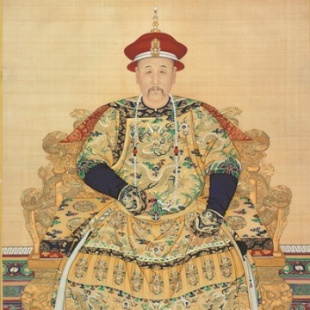
Yang is standing right in front of a portrait of Emperor Yongzheng (1678-1735), whose father Emperor Kangxi, considered the greatest Qing ruler, harbored a passionate interest toward Western painting, which directly facilitated the arrival in China of many missionary artists.
Flanked by two portraits of his royal consorts — one of them the mother of his successor Emperor Qianlong, Yongzheng appears in the painting, done with traditional Chinese colored ink on silk, as a rather benign-looking character with a sense of aplomb. His facial features are delicately rendered, with light shading on the nasal wings and toward the back of his face.
"One gets the feeling that whoever had painted this was fully aware of the element of light, and by extension, shadow, in portraiture," Yang says. "Yet the same person must be equally aware of the Chinese aesthetics as not to upset it.
"While many Western paintings indicated strongly at a single light source through the dramatic interplay between light and shadow, the missionary artists, in their attempt to reconcile two artistic traditions, had made their works appear as if they had been painted in open light, which readily deleted all darkness."
Interestingly, one Western ruler who also insisted that no shadow came across her face is Elizabeth I, the powerful, long-reigning Queen of England from the 16th century. Elizabeth oversaw the creation of many of her likenesses by artist Nicholas Hilliard that look a bit flat, a deliberate decision for the monarch who probably thought naturalistic representation was not entirely helpful in the projection of power and symbolism.
The aforementioned Emperor Yongzheng portrait has been tentatively attributed to Giuseppe Castiglione (1688-1766), an Italian Jesuit missionary painter who served three Qing emperors — Kangxi, Yongzheng and Qianlong. A friend of Attiret and a master of fusion when it came to mixing artistic influences, Castiglione, whose Chinese name Lang Shining implied serenity and harmony, saw his fame reach its height during the reign of Emperor Qianlong, who declared him as "standing head and shoulder above all other portraitists (in my court)".
Under the auspices of Qianlong, Castiglione and other Western artists gave lessons to young Chinese trainees deemed talented. They also helped raise the status of studio-trained portraitists, long considered lesser mortals to literati painters who, as their collective name suggests, were usually highly educated, well-versed in poetry, and dominated Chinese landscape painting since around the 10th century.




















