US tariffs a sign of weakness, not strength









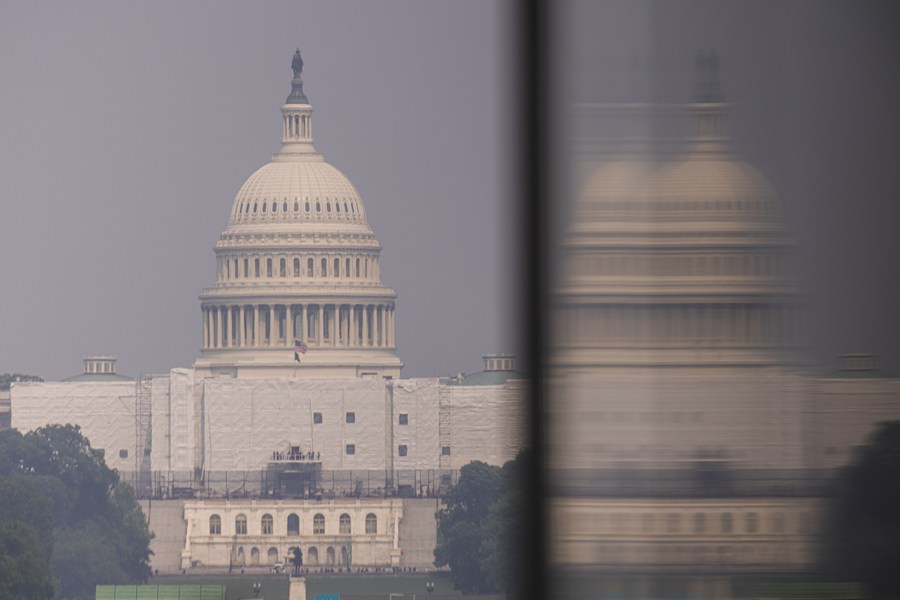
The United States has imposed tariffs of up to 100 percent on imports from China, encompassing electric vehicles (EVs), EV batteries, and battery parts. This move has spurred a chain reaction among its allies, leading to the European Union's recent imposition of preliminary additional tariffs of up to 38.1 percent on Chinese EVs, with Canada now also deliberating on potential actions.
But the aggressive stance does not reflect the United States' strength; instead, it highlights its relative decline and waning confidence. The tariffs will burden US consumers and businesses with higher costs, weakening the US' economic outlook.
Trade protectionism is a chronic disease the US is afflicted by, particularly during election years. Politicians seeking re-election often resort to protectionist measures to appease key voter blocs and industries. This strategy is well-documented, notably by economist Mancur Olson in his book, The Logic of Collective Action. According to Olson, industries that derive benefits from protectionist measures, such as tariffs, have a stronger incentive to lobby for these measures than the dispersed consumers who actually bear the costs.
Historical patterns show the political nature of the US' trade protectionism. For example, in late 2000, the Bill Clinton administration targeted steel imports from China, India and Ukraine amid a contentious election battle between Democrat Al Gore and Republican George W. Bush, both of whom aimed to win the votes of steelworkers and other labor groups in crucial swing states. And in 2002, former US president George W. Bush imposed steel tariffs to gain the favor of the steel industry ahead of the midterm elections.
Biden, despite his economic advisers understanding the irrationality of additional tariffs, has been succumbing to the same political pressure. During his last campaign, Biden criticized the then US president Donald Trump's tariffs, arguing that they were ultimately paid by US consumers, not China. Yet given his falling ratings in key battleground states, Biden has resorted to trade protectionism.
The Cold War mentality, which views China as the US' primary global strategic competitor, fuels US trade protectionism and sanctions. The US administration's push and emphasis on EV production have not closed the gap between US and Chinese manufacturing. On the contrary, China's EV industry has surged ahead, leaving US competitors struggling to catch up. This gap has prompted the Biden administration to resort to protectionist measures rather than engaging in open market competition, which reflects the failure of Biden's economic policy.
Despite the new tariffs, China's industries, particularly its EV sector, are likely to continue their upward trajectory. At present, China exports relatively few EVs to the US, minimizing the immediate impact of the tariffs. Plus, China's automotive industry, both in terms of production and sales, has already surpassed that of the entire European Union and US markets combined.
China's production scale ensures that its industries will maintain their competitive edge through economies of scale, even without access to the US market. Since this advantage will only increase over time, it's unlikely that the US' protectionist measures will significantly hinder China's industrial progress.
The US, once a champion of global free trade, has increasingly adopted protectionist and politically-motivated trade policies, which have undermined the global economic system and hindered innovation by prioritizing domestic political gains over broader economic benefits.
China, as a leading advocate for free trade, must offer a more compelling vision for the global economic order. By championing development-oriented trade rules and opposing the protectionist policies of the West, China can lead the world toward a more prosperous and equitable future.
Therefore, China's response to US tariffs should be measured and strategic, targeting the protectionist factions without antagonizing the US people or trade partners, while Chinese enterprises should navigate these challenges by mitigating risks and finding alternative channels to the US market. Simultaneously, China should continue to promote global economic cooperation and development, countering the regressive trends of protectionism and excessive regulation.
The author is a researcher at the Chinese Academy of International Trade and Economic Cooperation. The views don't necessarily reflect those of China Daily.
If you have a specific expertise, or would like to share your thought about our stories, then send us your writings at opinion@chinadaily.com.cn, and comment@chinadaily.com.cn.