Human capital dividend to propel modernization









The resolution of the third plenary session of the 20th Central Committee of the Communist Party of China, which concluded recently, said the country will further deepen reform comprehensively to advance Chinese modernization by, among other things, improving the education system, strengthening the science and technology sector, and cultivating talents.
According to the resolution, China will follow an innovation-driven development policy, and promote the integrated reform of institutions and mechanisms pertaining to education, science and technology.
The country will also expedite the development of human capital, and optimize capital and labor distribution in order to promote Chinese modernization and high-quality development. The expeditious development of human capital is necessary to facilitate the structural transformation of the economy.
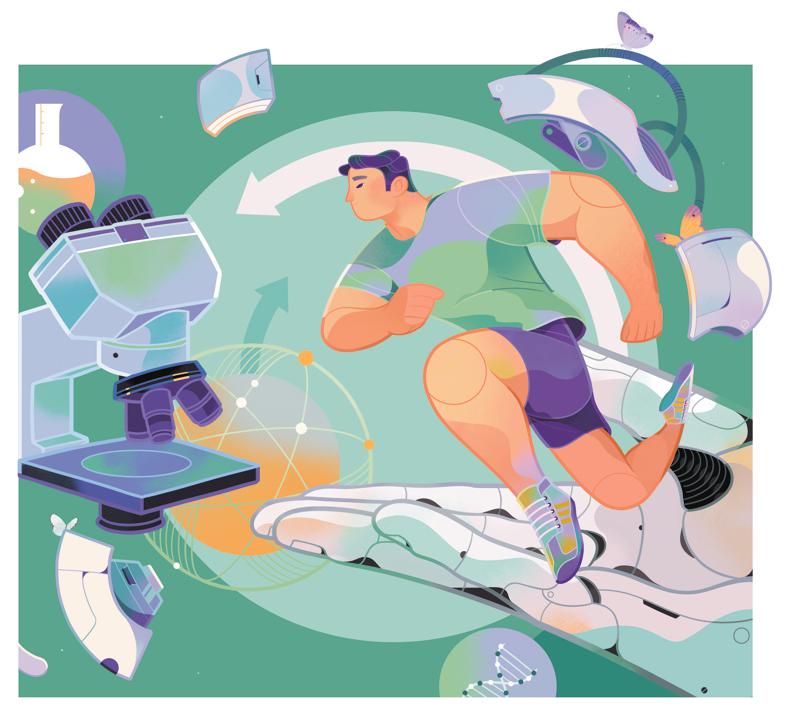
China is losing some of its demographic dividends because of the decline in its working-age population and rapid increase in the aging population. And since China's demographic dividend of low labor cost is declining, the country has to pursue innovation-driven high-quality development to maintain its competitive edge in certain key sectors. Innovation-driven development, in essence, is people-driven development. That's why the new growth momentum mainly relies on human capital and innovation capability.
Compared with major economies at a similar stage of development, China enjoys three advantages.
First, the country has a massive pool of human capital. The gross enrollment rate in higher education rose from 1.55 percent in 1978, when reform and opening-up were launched, to 60.2 percent in 2023. The estimated number of university graduates in China in 2024 is expected to reach 11.79 million, compared with 1.14 million in 2001. Plus, the average years of education for the newly added workforce each year has reached 14 years.
Therefore, China is moving from being a just populous country to a country with strong human resources, which will propel Chinese modernization.
Second, China's rapidly aging population has led to a decline in the total workforce, but since the younger generation comprises a higher level of human capital, it will cushion the effects of a declining workforce. The new jobseekers entering the labor market have higher educational degrees and are more capable of leading innovation-driven high-quality development. Thus the replacement of the old with the new promotes economic growth.
And third, the promotion of gender equality in China is bolstering human capital. Chinese women have made progress in all key fields including education and health, and social and political participation, and continue to have a positive impact on society. In fact, women today outnumber men in college enrollment — according to a 2021 report by the National Bureau of Statistics, the percentage of women is higher than men in all forms of higher education.
However, the dividend of human capital, like the traditional demographic dividend, does not necessarily transform into productivity or lead to economic growth. It can only help promote Chinese modernization and break institutional barriers if it is gainfully applied to industry.
Reform and opening-up helped turn China's massive population into demographic dividends. So comprehensive deepening of reform is the key to transforming China's massive human capital into development dividend despite the declining demographic dividends.
So, to strengthen the country's innovation capabilities and develop new quality productive forces, it is necessary to establish a high-level socialist market economic system, implement women-friendly policies, and increase the labor participation rate.
Also, since people with low education levels find it difficult to master new skills, efforts should be made to encourage middle-aged and elderly people to pursue adult education and upgrade their skills by joining special training programs, so they too can promote Chinese modernization.
The world is experiencing a new round of science and technology revolution, but China is at a disadvantage in international competition due to its weak basic innovation capability. Not to mention underemployment and structural contradictions are hindering the country's economic and industrial transformation, mainly because Chinese workers, in general, lack skills.
Therefore, China should increase investment in the education sector, and make greater efforts to promote innovation and cultivate talents in the new era. The country also needs to strengthen scientific research, and ensure that the research results are applied to industry, as well as integrate human resources with modern industries.
Efforts should also be made to build China into a major global center of professional talents and innovation, for which the authorities need to take measures to develop a learning-oriented society which emphasizes both professional and general education. And the authorities should grant more say to employers and create a more accommodating environment for talent development, and improve human resources allocation.
The author is an associate professor at the Institute of Population and Labor Economics, Chinese Academy of Social Sciences. The views don't necessarily reflect those of China Daily.
If you have a specific expertise, or would like to share your thought about our stories, then send us your writings at opinion@chinadaily.com.cn, and comment@chinadaily.com.cn.