Peaceful coexistence policy makes China benign power









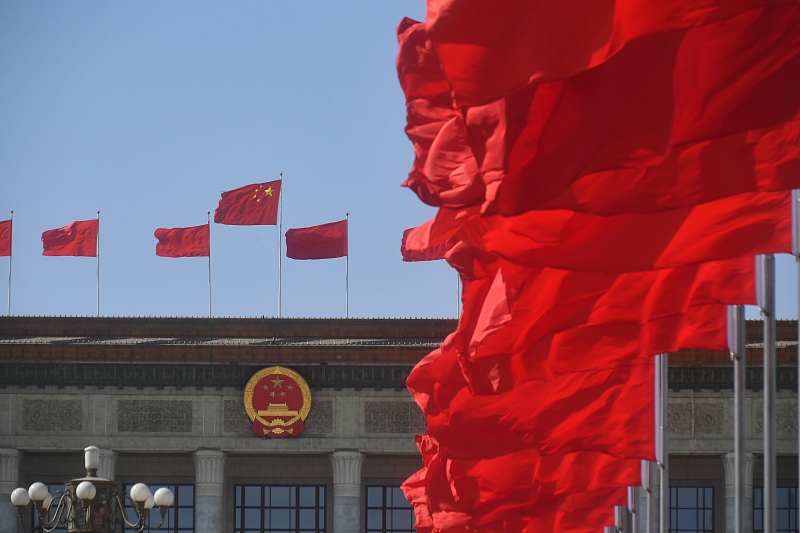
This year marks the 70th anniversary of the Five Principles of Peaceful Coexistence. To mark the occasion, President Xi Jinping called on the international community on June 28 to carry forward the Five Principles of Peaceful Coexistence in the new era and jointly build a community with a shared future for mankind and promote human progress.
I first visited China in 2001 to study at the National Defense University of the People's Liberation Army. During that time, I also visited the Hong Kong Special Administrative Region.
When I landed in China again in 2010 as the ambassador extraordinary and plenipotentiary of the Kingdom of Tonga to the People's Republic of China, I was amazed to see the dramatic changes that had taken place in the intervening years. For instance, the number of terminals at Beijing Capital International Airport had increased from one back in 2001 to three.
I prefer to go hiking or on a picnic with some friends outside the city on weekends, with the Great Wall being a favorite site. I have also visited small villages with charming sceneries, observing the traditional lifestyle of the local people. Amid the idyll, serene locales, only electric wires and solar panels on rooftops reflect the modern side of the villages.
The Communist Party of China has led the country in making great achievements. From about 50 Party members when founded in 1921 to the current 99.18 million members, the CPC has done an amazing job of leading a country of 1.4 billion people to socioeconomic success. There is no doubt that China will play a greater role in the world arena. And I am confident that China's peaceful rise is for greater global common good, because China has never been an aggressive power.
China's peaceful foreign policy is reflected in its policy toward the South Pacific island countries, which is based on the Five Principles of Peaceful Coexistence of mutual respect for each other's territorial integrity and sovereignty; mutual non-aggression; non-interference in each other's internal affairs; equality and mutual benefit; and peaceful coexistence.
Beijing's relationship with the Pacific island countries dates back to the early 1970s when China established diplomatic relations with a number of independent developing nations in the South Pacific. Over the past few decades, China has become a major aid donor to the Pacific island countries. According to research by the Lowy Institute, China is the third-most significant source of official development finance to the Pacific Islands, with a total of $3.9 billion disbursed between 2008 and 2021. In April 2004, China joined the "South Pacific Tourism Organization" as the first member state from outside the region.
Moreover, most Pacific island states have benefited from China's increasing trade and investment as well as from debt relief and debt extensions. In fact, China has given debt relief worth $2.1 billion to developing countries under the G20 framework, the highest among all G20 member states in terms of the amount deferred.
China adheres to the Five Principles of Peaceful Coexistence, which also advocates for respecting the Pacific island countries' political system and their right to choose their own development path; non-interference in their internal affairs; helping the Pacific island countries safeguard their sovereignty and territorial integrity, and maintain political stability; and promoting socioeconomic development.
China values peace. The bitter sufferings of the Chinese people due to war and poverty have taught them to value peace and promote economic development. As such, the central goal of China's diplomacy is to create a peaceful and stable international environment for its development.
Also, China will make its due contribution to world peace and development, never engage in aggression or expansion, and never seek hegemony.
So the Pacific island countries must monitor and review their relationship with China, especially in the context of the Five Principles of Peaceful Coexistence, so that our interests are safeguarded and a win-win situation developed.
The essence of the Five Principles of Peaceful Coexistence was also reflected at the recent third plenary session of the 20th Central Committee of the Communist Party of China. The third plenary session said China must pursue an independent foreign policy of peace, be dedicated to helping build a community with a shared future for mankind, and foster a favorable external environment for further deepening reform comprehensively to advance Chinese modernization.
The plenary session was not only important for China's own development, but will also have a significant impact on the global economy. According to my knowledge, the resolution of the third plenum put forward more than 300 important reform measures to advance Chinese modernization. And I believe their implementation will create huge opportunities for the world, including the Pacific island countries, and they should seize the opportunity to engage in mutually beneficial cooperation, and prosper together with China.
The author is secretary general of the Tonga China Friendship Association and former ambassador of Tonga to China.
The views don't necessarily reflect those of China Daily.
If you have a specific expertise, or would like to share your thought about our stories, then send us your writings at opinion@chinadaily.com.cn, and comment@chinadaily.com.cn.